The Floor
ABB Adds Physical AI to Fashion-Inductor Sorting Cells
ABB has integrated its AI Robot Trainer into the Fashion Inductor, adding fashion-specific vision models, rapid retraining and a digital twin to the apparel-sorting module. The company says the upgrade can cut engineering and commissioning effort by up to 75%, and plans to extend the approach to other vision-based applications through the first quarter of 2027.
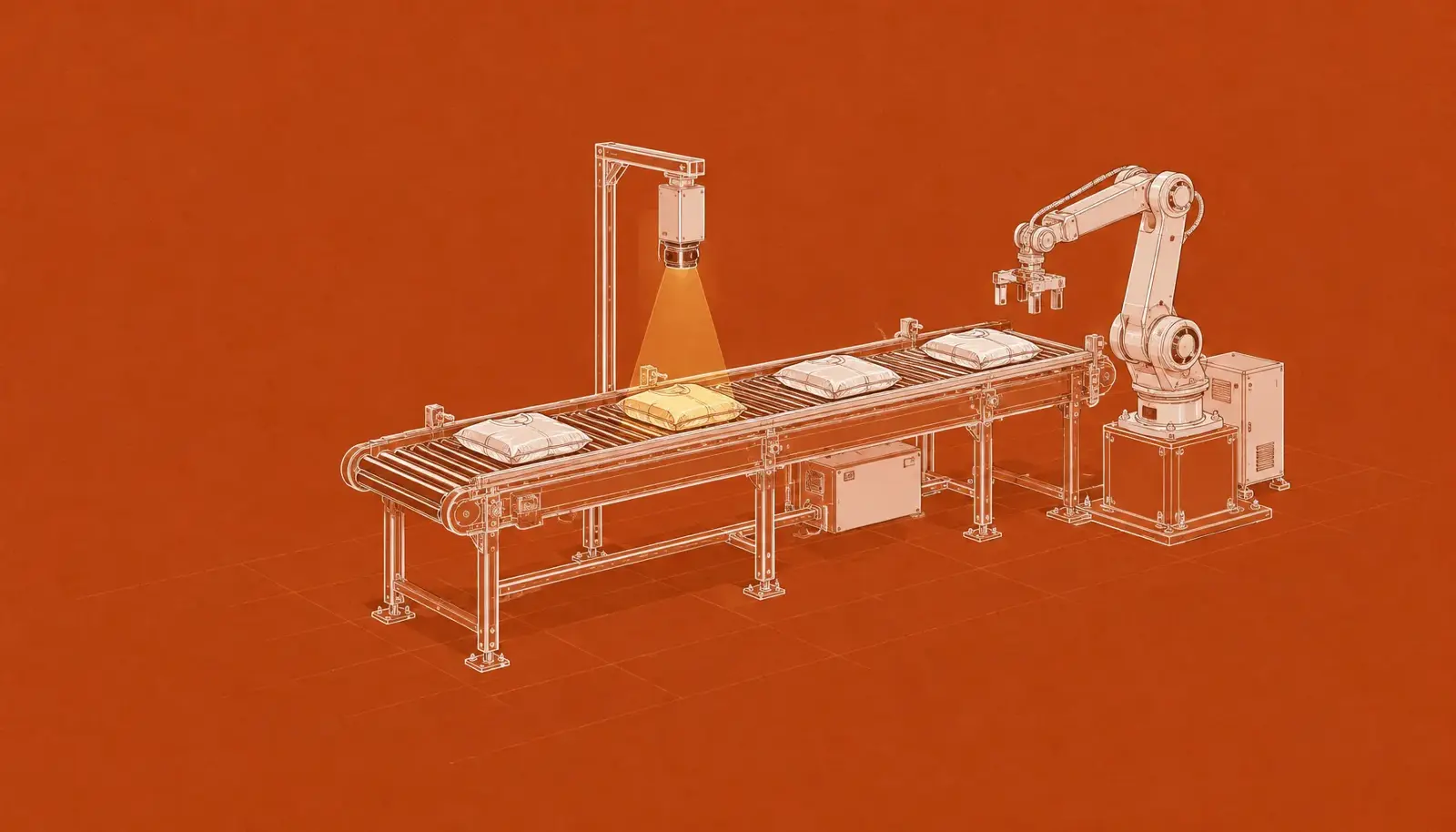
ABB Robotics announced on October 15 that it has added its AI Robot Trainer to the Fashion Inductor, a sorting module for apparel logistics. The company calls the combination its first end-to-end, vision-based industrial-grade physical AI solution. The upgrade can reduce engineering and commissioning effort by up to 75% for system integrators deploying fashion-sorting applications, ABB says.
Source abb.com
Training models for changing apparel
Fashion sorting presents a variable mix of products, packaging and operating conditions. The existing Fashion Inductor handles up to 1,300 items per hour per cell, with picking accuracy targets above 99.5%, ABB says. Those figures are enabled by its AI-powered Automatic Path Planning, motion accuracy and application-specific vision technology, the company says. They are the module’s stated performance figures; the announcement does not provide results from a named customer installation.
AI Robot Trainer adds pre-trained vision models tailored to fashion, application-specific tools and rapid retraining. Integrators can adapt applications as requirements change without specialist AI expertise, ABB says. The release describes the system as supporting deployment, adaptation and continued optimization as requirements evolve, with reduced effort and risk for integrators.
“Some of the greatest opportunities for physical AI are in applications that have traditionally been difficult to automate because of high variability.” Craig McDonnell, Managing Director, Business Line Industries, ABB Robotics
A digital twin links the control tools
The updated module includes a digital twin that ABB describes as an exact replica of the module software. It connects the Application Controller Platform, Automatic Path Planning, AI Robot Trainer and RobotStudio. The twin is intended to speed commissioning and provide more setup flexibility, including support for third-party components such as grippers.
RobotStudio provides the virtual design, simulation and validation environment, while the OmniCore robot controller executes the application in production. Together, those tools connect preparation and testing in software with operation on the physical cell. The release does not give a separate commissioning-time figure for the Fashion Inductor upgrade beyond the claimed reduction of up to 75% in engineering and commissioning effort.
Retraining continues after deployment
ABB describes a closed-loop process for improving models over a cell’s operating life. AI Robot Trainer monitors performance, identifies anomalies, generates new training data and sends model updates back to the physical robot. This allows structured, cell-specific retraining against real performance targets and changing operating conditions, with improvements deployed back to the robot, the company says.
Fashion Inductor is the first application in ABB Robotics’ broader rollout of vision-based physical AI, which the company links to developing more autonomous and versatile robotics. ABB plans to extend the AI Robot Trainer approach to additional vision-based applications through the first quarter of 2027. The announcement sets out that rollout timetable but does not name the next applications.
Sources
- Original source ABB abb.com
Related stories
- FMC³ shows factory-worker data system for robot learning
- Agility’s Digit 5 Got Bulkier to Lift More and Work Near People
- A3 Reports Q3 Robot Orders in North America Up 24.8% to 10,989 Units Worth $723.5M
- Panasonic Targets Humanoid Robot Production by 2029; Results Remain Undisclosed
- RobCo Tops $1B Valuation as CEO Moves to the US