The Floor
Seven Aitu Sewing Robots on Shengtai’s 12-Person Shirt Line
Seven Aitu Aini robots operate in Shengtai Group’s Line King system, which uses 12 workers to produce output that would require 40 on a conventional line, Beijing News reports. The report also details the system’s fabric-cutting, delivery and inspection equipment, along with company-reported production and efficiency figures.
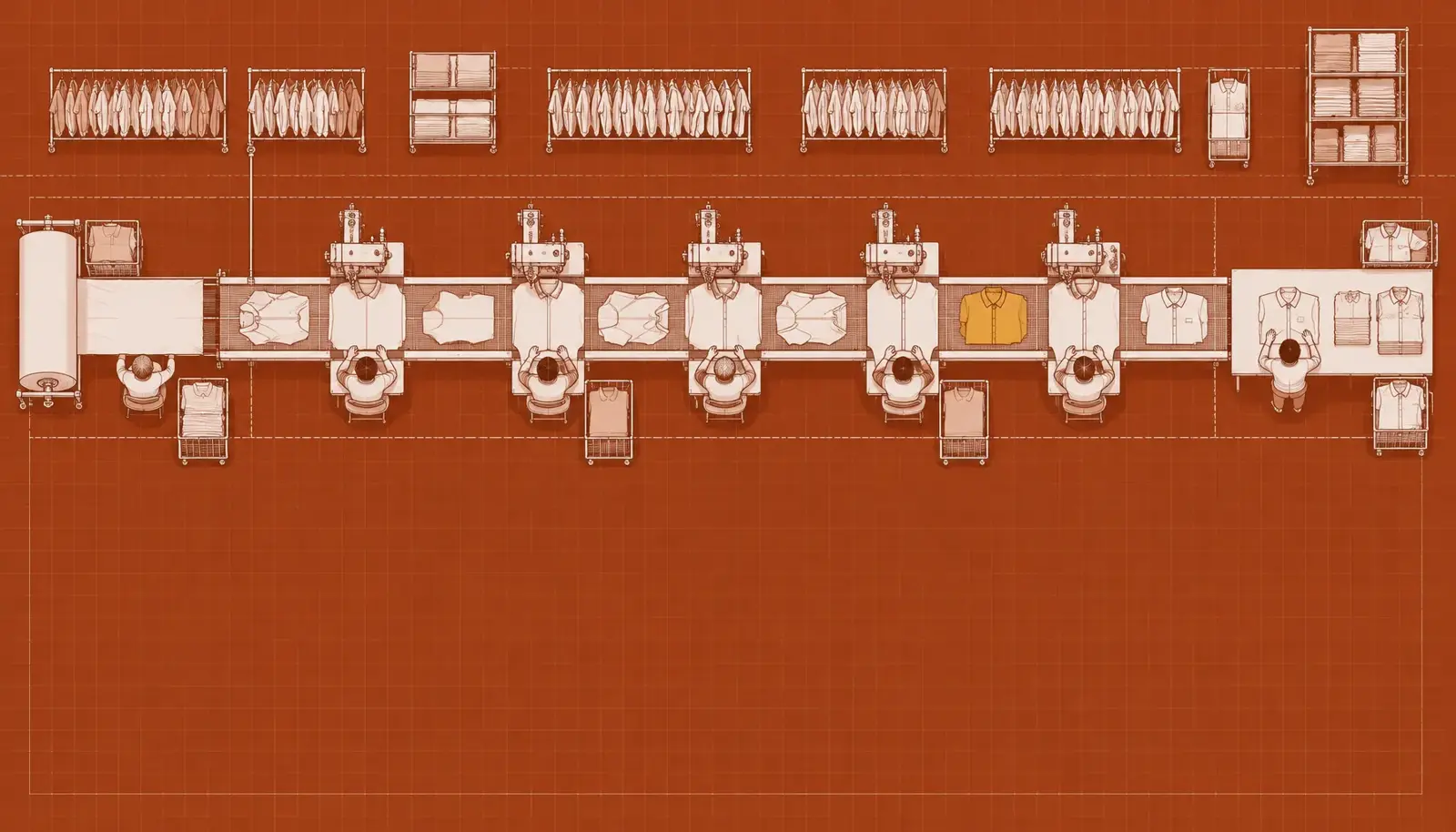
Seven robots, 12 workers, one shirt line
A shirt line fitted with seven Aitu Aini sewing robots uses 12 workers to produce the same output as a conventional line staffed by 40, according to company data reported by Beijing News. The installation is at a Shengtai Group factory. Under a 20-hour operating schedule, the line is reported to make 1,000 plain shirts or 700 patterned shirts a day. The report attributes those figures to the company and describes them as production under the stated operating conditions.
The line is part of Aitu’s Line King system, which has entered Shengtai’s factory. Seven Aini robots work with CNC sewing stations and the system checks five core garment components, Beijing News reports. A digital twin mirrors the operation of the full line. The system also includes automated delivery, which replaces manual carrying, counting and bundling of materials.
Handling cloth is a central challenge
Clothing production involves more than stitching seams. Fabric can be soft and easily deformed, while manufacturers work with many kinds of material. Grasping, smoothing and correcting fabric are tasks that have depended heavily on experienced workers’ skill and feel, as Beijing News describes them. Those requirements are a longstanding obstacle to bringing sewing robots into production at scale, the report says.
Aitu’s Aini robot is designed for factory sewing operations. Aini has achieved autonomous sewing in five shirt-making processes, the company reports: collars, cuffs, pocket attachment, buttonholes and button attachment. At Shengtai, Line King combines sewing with other equipment and logistics, including an automated cutting station, delivery equipment and inspection. The reported setup coordinates these stages as part of the production line.
Reported output and labor figures
The automated cutting station reduces seven conventional cutting jobs to one inspection position, company data say. It identifies and sorts cut fabric pieces in 72 seconds, with a reported first-pass sorting success rate of 99.9%. The line also shows 5% less fabric use, a 30% improvement in quality and a 20% improvement in delivery time, according to the company.
For the Shengtai installation, the company’s figures put staffing at 12 people for output that would require 40 on a conventional line of the same capacity. An average of 42 shirts produced per worker per day and an expected project payback period of less than three years are also given in the report. These figures refer to the Line King project and its reported output.
Aini’s China debut price is 308,000 yuan, according to the report. The robot’s estimated payback period is about two years in areas with medium labor costs and about 1.5 years in areas with high labor costs; continuous 24-hour operation could reduce that period to one year, the report says. These are company-reported estimates for the robot, distinct from the project payback estimate for the Shengtai line.
“这条线的价值不只在省人,更在于把服装制造从依赖熟练工经验,转向依赖系统、机器人与数据协同,形成可验证、可复制的整线样板。”
Xu Lei, chairman of Shengtai Group, as reported by Beijing News
Two products introduced on October 28
On October 28, Aitu, a brand under sewing-equipment maker Jack Technology, introduced the Aini sewing robot and the Line King production system, Beijing News reports. The report describes Line King as having entered Shengtai’s factory and lists its equipment and the company’s production figures. It does not describe the introduction as a launch event.
The report presents the Shengtai line as an example of how Aitu’s equipment is being used across multiple garment-production stages. Its account covers the fabric-handling challenge, the five sewing processes assigned to Aini and the cutting, delivery and inspection functions included in Line King. The staffing, output, material-use, quality, delivery and payback figures are reported as company data.
Sources
- Original source Beijing News (新京报) bjnews.com.cn
Related stories
- Otto Group Plans 10 Sereact Robots, With 15 More Arms Conditional
- South Korea Plans About 1,700 Public-Sector AI Robots for 2027
- Agility Expects $465 Million Raise Before SPAC Merger
- Walmart Commits About $6 Billion to Expand Symbotic Automation
- Foundry Robotics Raises $100M for Its Emeryville Assembly Factory