The Floor
Amazon’s Million-Robot Fleet Is Mostly Mobile, Not Arms
Amazon’s millionth robot arrived at a Japan fulfillment center in June 2025; most of its fleet consists of wheeled mobile machines. An October 2026 report details the company’s expanding robotic arms and the unresolved questions about warehouse workers’ pace and injury risks.
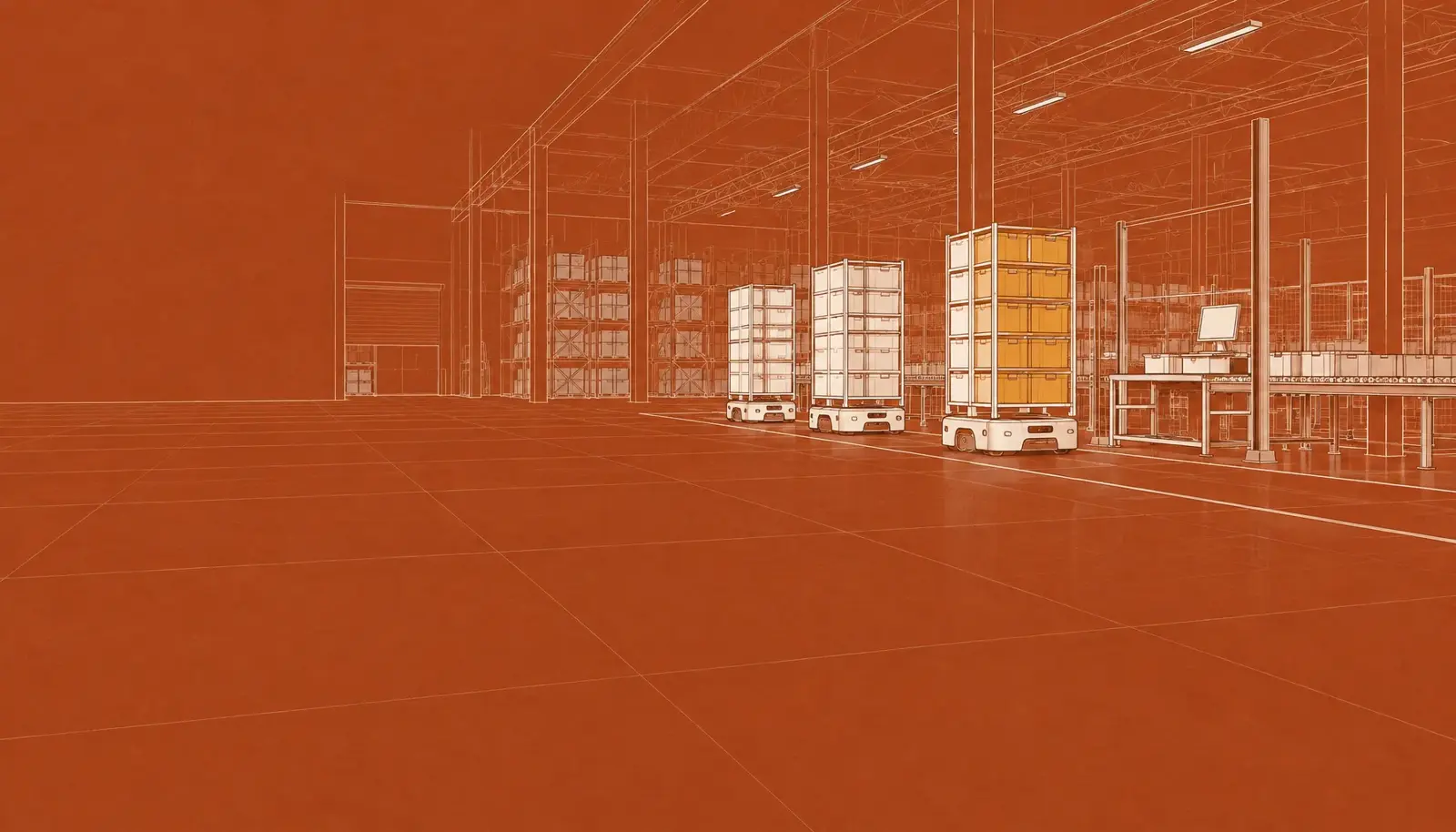
Amazon’s millionth robot arrived at a fulfillment center in Japan in June 2025—not in a new milestone announced this week. The company disclosed the deployment alongside DeepFleet, an AI system it says will improve its robots’ travel efficiency by 10%. An October 12, 2026 report by Ars Technica revisits the fleet’s scale and details Amazon’s push to add more capable robotic arms, while examining the consequences for people working alongside them.
Amazon’s millionth robot arrived in Japan
The million-unit count spans a varied fleet, but wheeled mobile robots make up most of it. Hercules and Titan machines move tall, fabric-sided storage pods stocked with bins, bringing inventory to employees at workstations rather than sending workers to search warehouse shelves. Amazon’s network spans more than 300 facilities; the millionth robot joined a fleet built up since the company acquired Kiva Systems in 2012.
Many of those mobile machines follow floor markers and operate within fenced areas. Proteus, by contrast, uses sensors to move around people and other obstacles in open areas. Amazon’s Sequoia system coordinates groups of robots as they sort and store inventory; the company says it can identify and store items up to 75 percent faster at fulfillment centers.
Congestion among robots moving through narrow warehouse lanes is one reason Amazon developed DeepFleet. The company describes the AI model as a traffic coordinator that uses data about inventory movement to plan routes and reduce delays. Its projected 10 percent improvement is Amazon’s claim about robot travel efficiency, not an independently reported measure of delivery-time gains.
Robotic arms take on packages and varied products
Arms remain a small part of the million-robot total: Amazon told Ars that the number deployed sits in the single-digit thousands. The company expects to more than double that fleet in 2026, according to its chief financial officer’s July earnings-call remarks cited by Ars. The arms handle work mobile drive units cannot do alone, including picking individual parcels and placing goods inside totes.
Robin, Amazon Robotics’ first in-house arm for sorting individual packages, began testing in 2021 and entered a Lakeland, Florida, facility in 2022. Cardinal followed, stacking packages weighing up to 50 pounds into carts; it began operating in Nashville in November 2022. Amazon Robotics vice president Scott Dresser told Ars, “Think of it as a game of Tetris: You’re sorting packages, and you’re placing them into the cart, and you want to be able to pack that as densely as you possibly can.”
Sparrow extends robotic handling to a much wider range of products, using AI models to identify items and choose ways to grasp them. Amazon’s newer Vulcan arm adds force-feedback sensors to vision, giving it touch information as it reaches into inventory pods to pick or stow items. Vulcan began operating in Spokane, Washington, and Hamburg, Germany, in 2025; Dresser said Amazon expects to expand its use in 2027.
Research finds a mixed safety record
The case for automation includes taking physically demanding tasks away from people. But research on Amazon facilities finds that injury patterns can shift rather than simply improve: a 2025 study in ILR Review associated robotic warehouses with 40 percent fewer severe injuries and 77 percent more non-severe injuries. Its authors linked at least part of the increase in less severe injuries to faster work pace; the underlying warehouse data covered 2016 through 2019, Ars reported.
“The rise of collaborative robots really changes that dynamic for two reasons: one is that it is physically proximate, and two, the robot has the ability to dictate the pace of work,” Brad Greenwood, a professor of business at George Mason University and a study coauthor, told Ars. Amazon disputes criticism based on older data and points to companywide improvement: a spokesperson told Ars its global recordable incident rate has fallen 43 percent since 2019, while its global lost-time incident rate has fallen 70 percent. Those figures describe Amazon’s overall rates, not a comparison between robotic and non-robotic sites.
More robots do not settle the jobs question
Amazon says its robotics sites create technical work as well as automate tasks. Its next-generation fulfillment center in Shreveport, Louisiana, requires 30 percent more employees in reliability, maintenance and engineering roles than facilities without that advanced-robotics mix, the company said. Dresser told Ars that Amazon had increased its network of robotic maintenance technicians by more than 30 percent and described those positions as higher-skilled and higher-paid.
Amazon’s 2025 annual report counted more than 1.5 million full- and part-time employees, so the million-robot figure does not mean machines have replaced a comparable number of people. Nor does a fleet count reveal how many individual tasks remain beyond a robot’s reach. As Amazon adds arms with broader grasping abilities and scales up Vulcan, the immediate test is how those machines change work rates and injury patterns at the facilities where people and robots share the operation.
Sources
- Original source Ars Technica arstechnica.com
Other pages read
- Amazon · Amazon million robots AI foundation model aboutamazon.com
- ILR Review journals.sagepub.com
- Amazon · Amazon Annual Report s2.q4cdn.com
Related stories
- Symbotic Adds cellumation to Expand Robotic Sortation
- Walmart’s warehouse automation runs into technical and cost hurdles
- Ocado and AEON Open Second Automated Fulfilment Centre in Japan
- Walmart Commits About $6 Billion to Expand Symbotic Automation
- AEON Opens Kawaguchi XD With Automated Store Sorting and Stacking