The Floor
ANSCER Unveils the ATR 1000 for One-Ton Factory Loads
ANSCER Robotics has unveiled the ATR 1000, an autonomous turntable robot rated to handle loads of up to 1,000 kg. The Bengaluru-based company says the robot combines lifting, 360-degree load rotation and transport in a footprint under one square meter.
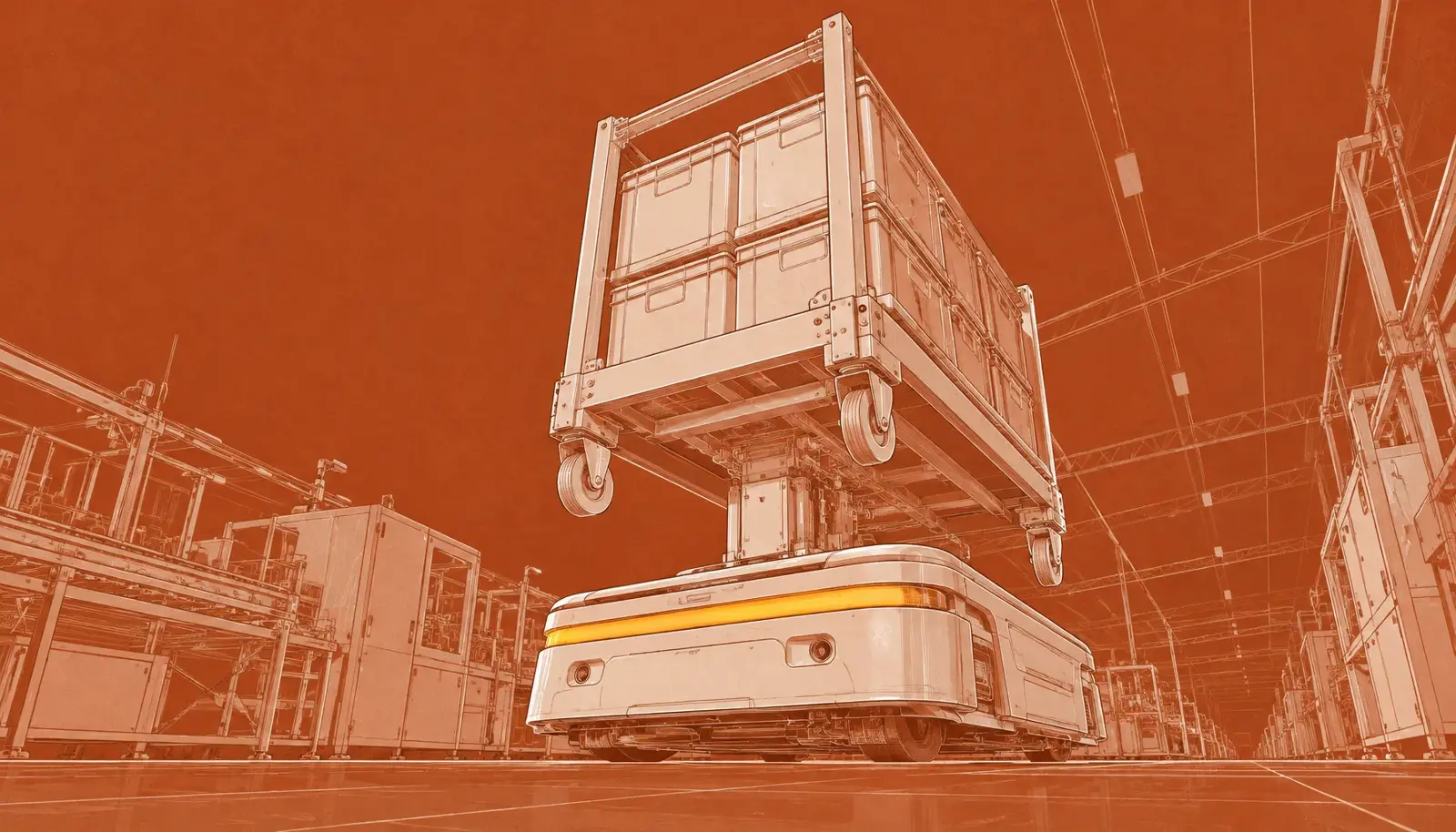
ANSCER Robotics unveiled the ATR 1000 on October 28, pitching it as a way to automate heavy transfers between production steps without requiring more floor space. The autonomous turntable robot can carry loads of up to 1,000 kg and combines lifting, transport and 360-degree rotation in a footprint the company says is under one square meter.
Source einnews.com
The Bengaluru-based manufacturer is targeting factories and warehouses where automated production equipment is separated by transfers that still depend on people. Narrow aisles, closely spaced machinery and changing workflows can make conventional material-handling systems difficult to fit, ANSCER says. The ATR 1000 is designed to pick up and move a load, then rotate it into position for the next station.
Turning the load, not the whole robot
A powered turntable lets the robot rotate a trolley or other load independently of its chassis. The system can dock at specific angles and present different sides of a load at one station, ANSCER says, reducing the need for an operator to reposition it. That orientation could matter at assembly lines and workstations where a heavy carrier must meet equipment from a particular direction.
“Manufacturers should be able to expand automation within the factory they have, with the flexibility to respond as production needs change,” said Ribin Matthew, CEO of ANSCER Robotics. Matthew said the ATR 1000 brings heavy-load capacity, compact mobility and payload orientation into one product, with the aim of automating transfers between production processes.
SLAM navigation and a 1,020 mm turning diameter
The company gives the robot a turning diameter of 1,020 mm and a maximum travel speed of 1.5 m/s. Its standard navigation uses simultaneous localization and mapping, or SLAM, so it can travel without physical tracks or guidance tape; QR-based navigation is also available as an option. Autonomous charging supports continued operation, ANSCER says, but its announcement does not specify battery runtime or charging intervals.
ANSCER lists potential uses including line-side delivery, replenishment, work-in-progress transport, trolley handling, empty-bin returns, scrap removal and point-to-point movement. Fleet-management software can coordinate the ATR 1000 with other robots and connect it to factory workflows, according to the company. The range suggests the robot is intended for transfers across multiple processes, rather than a single fixed handoff.
Safety claims and launch markets
For operation in shared spaces, the ATR 1000 uses 360-degree LiDAR-based collision prevention, adaptive safety zones, visual indicators and audible alarms, the announcement says. ANSCER describes its safety architecture as designed to meet Performance Level d, Category 3 requirements, with safety functions developed in accordance with ISO 3691-4. The company also says the design addresses applicable requirements in ISO 13849-1, ISO 12100, ANSI/RIA R15.08-1 and EN 1175, alongside site-specific risk assessment and integration measures.
Commercial availability across global markets will follow, with India and the United States as priorities, ANSCER says; it did not give a launch date or price. ANSCER’s operating experience includes more than 100 robot deployments and over two million autonomous material-movement trips, the company says. It also calls the ATR 1000 the most compact robot in its payload category, but the announcement provides no competitor measurements to substantiate that comparison.
Sources
- Original source EIN Presswire einnews.com