The Floor
Arbe Introduces Gryphon 4D Radar for Unmanned Ground Vehicles
Arbe Robotics introduced Gryphon, a 4D imaging radar system for unmanned ground vehicles operating on rough terrain and in poor visibility. The company says its 48-transmit, 48-receive-channel design can support obstacle detection, free-space mapping and localization where GNSS is unavailable.
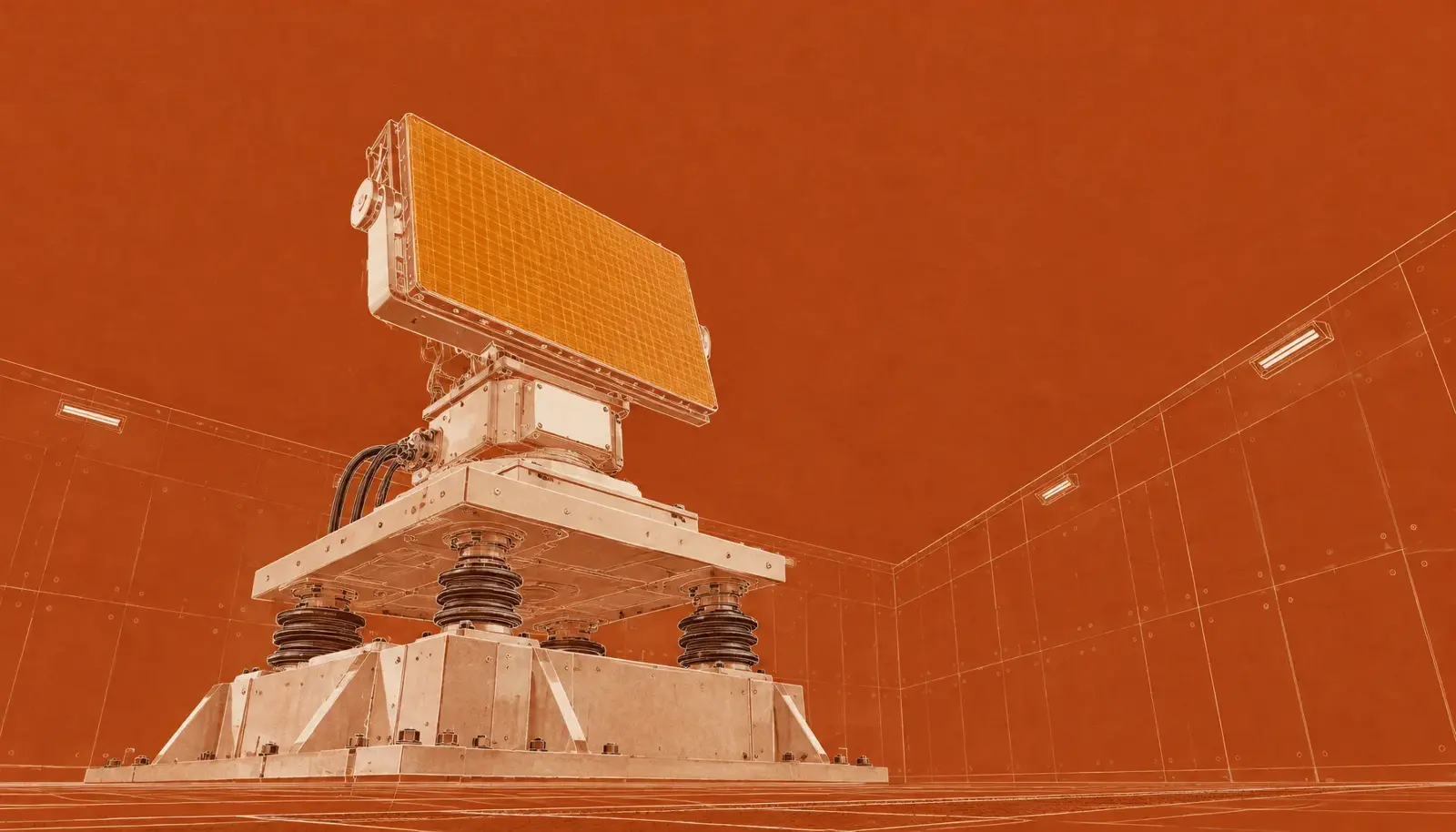
Arbe targets unpaved routes with Gryphon
Arbe Robotics introduced Gryphon on Oct. 19, a 4D imaging radar system designed for unmanned ground vehicles moving through dust, rough terrain and unpaved routes. Those conditions can degrade the imaging from other sensors, the company says. Gryphon is intended to supply detailed environmental data when cameras and lidar struggle, including in darkness, smoke, fog, rain and snow.
The announcement extends Arbe’s radar offering into ground autonomy, a market the company says spans defense, logistics, mining, agriculture and industrial work. The system is suitable, in Arbe’s description, for vehicles ranging from small UGVs to large industrial and heavy-duty platforms. It does not name a customer, a vehicle integration, a price or a delivery schedule for Gryphon.
48 transmitters and 48 receivers build the point cloud
Gryphon uses 48 transmitting and 48 receiving channels to generate a dense 4D point cloud. That data can help a vehicle distinguish rocks, debris, barriers and vegetation, as well as hazards below the surrounding ground surface, such as ditches, holes and washouts, Arbe says. Those negative obstacles can be difficult to detect but may leave a route unsafe.
The radar data can also support free-space mapping, tracking, odometry and localization, the company says. That set of functions matters when satellite navigation is degraded or unavailable: the radar is intended not only to flag objects but also to contribute information an autonomy system can use to estimate movement and identify traversable space. The release does not provide field-test results or independent measurements of performance in those conditions.
One sensor for several operating modes
Arbe positions Gryphon for more than fully autonomous driving. Its stated use cases range from operator assistance and remote operation to leader-follower convoys and full autonomy. The system’s solid-state hardware has no moving parts, and the company says it supports extended data-cable lengths to allow flexible sensor placement on different vehicle sizes.
Arbe CEO Ram Machness said: “We believe that Gryphon will deliver the highly detailed perception that UGVs need to navigate and operate autonomously through dust, unstructured terrain, and other challenging conditions.” He also described the product as a way to bring Arbe’s radar technology stack into a new market. Those are company claims; the announcement does not identify a deployment or customer evaluation that would demonstrate Gryphon in operation.
A product launch, not a fielding announcement
The distinction matters for integrators weighing new sensing hardware. Arbe has outlined the kinds of terrain hazards Gryphon is designed to detect and the navigation functions its radar data is meant to support, but it has not disclosed a production program, a named platform or test results. The release also gives no price or availability date.
For now, the concrete news is the product’s intended scope: a solid-state 4D radar system built for UGVs, with a 48-by-48 channel architecture and support for both assisted and autonomous operation. Whether those capabilities translate into dependable performance on a specific vehicle will depend on integration and validation that Arbe has not yet detailed.
Sources
- Original source · Press release Arbe Robotics ir.arberobotics.com