The Floor
Beijing sets embodied robot payload and reliability targets
Beijing’s 2026–2028 action plan sets targets for embodied robot payload, operating reliability and battery endurance. It also outlines goals for manufacturing capacity, data collection, applications and safety governance.
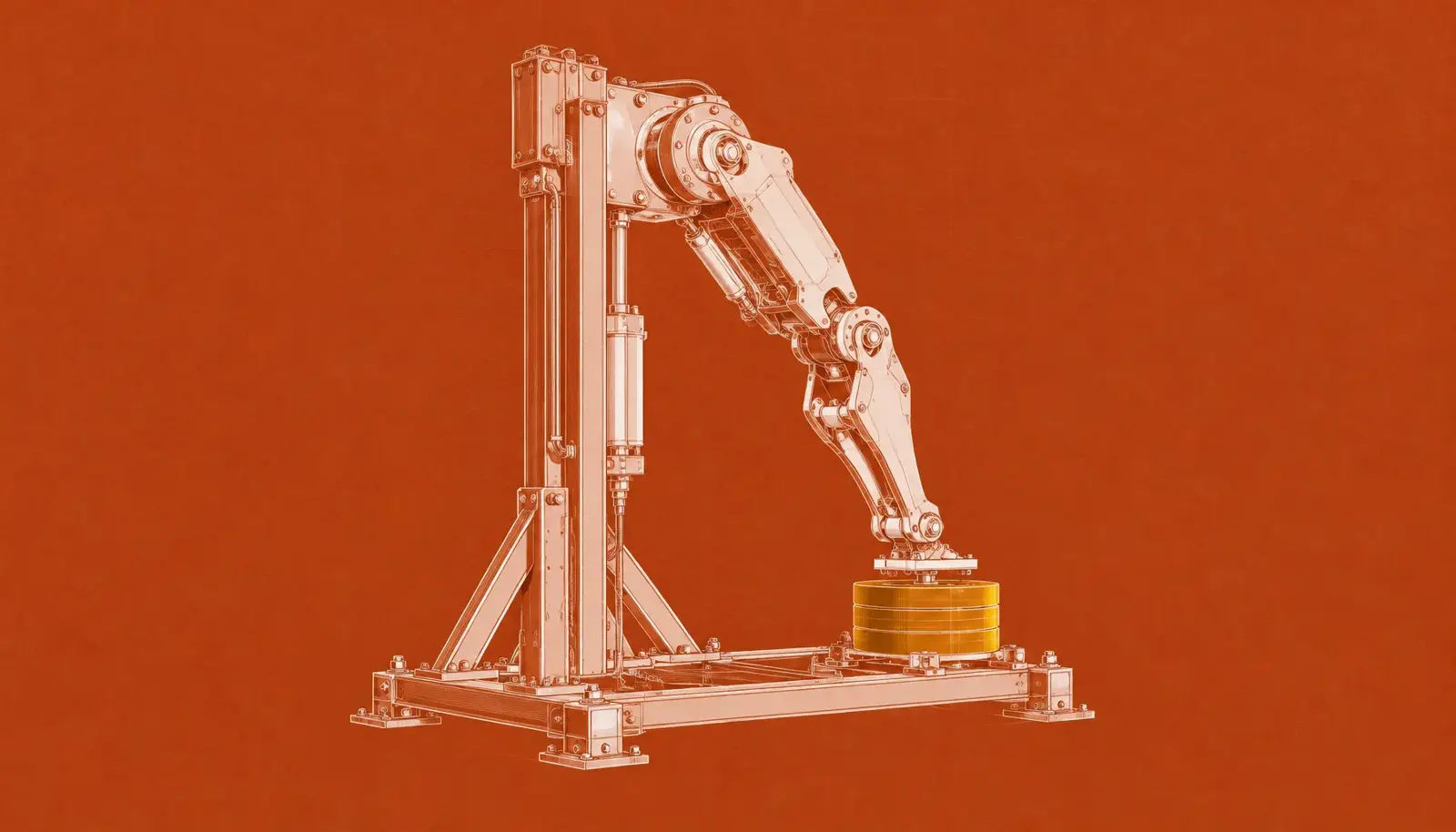
Beijing wants embodied robots to carry rated loads equal to at least 40% of their own weight and achieve an average mean time between failures of more than 2,000 hours. The targets appear in a 2026–2028 action plan issued by the Beijing Municipal Bureau of Economy and Information Technology.
The plan, published in Chinese on November 11, sets goals for robot hardware, manufacturing, data collection and applications. It also seeks to cultivate at least five internationally first-class and 10 domestically leading humanoid robot manufacturers by 2028.
Its regional goal is for the Beijing-Tianjin-Hebei area to account for 25% of national complete-robot production capacity, with a key-component supply matching rate above 60%.
Hardware targets
For complete robots, the plan targets an annual failure rate below 10% for core motion components and end effectors, and a design life of more than five years. The battery target is at least four hours under continuous operating conditions.
The plan calls for three to five complete-robot platforms that are modular, offered in series and definable through software. They are intended to meet requirements for scaled deployment across different settings.
Component targets include integrated joint modules with torque density of 100 newton-meters per kilogram and transmission efficiency above 85%. For tactile sensors, the plan specifies force resolution of no more than 0.01 newtons and spatial resolution of no more than 1 millimeter.
The document also sets goals for dexterous hands: a rated-load life of 1 million cycles, fingertip force-control resolution of 0.1 newtons and a cost within 10,000 yuan per hand. These are development targets, not results from a robot test.
Production and data
Beijing aims to establish complete-robot production capacity of 200,000 units a year in the city, combining contract manufacturing with companies’ own production lines. At least five manufacturing service platforms are planned to provide pilot-scale validation covering functions, performance, reliability, safety and environmental adaptability.
The regional manufacturing plan also supports at least 10 shared processing platforms. These would provide services such as structural-part processing, surface and heat treatment, surface-mount technology assembly and wiring-harness manufacturing.
The plan supports multiple approaches to embodied intelligence, including vision-language-action models, world models and reinforcement learning. It identifies research areas including real-time inference, transfer across robot bodies and self-learning.
A proposed national data infrastructure would collect more than 1 million hours of high-quality data across at least 100 real-world settings. The action plan also calls for new dedicated embodied-intelligence computing clusters with a combined scale exceeding 50,000 PFlops.
For model evaluation, the city plans a test site based on real application settings and offering different robot bodies. It also proposes real-world task challenges for embodied-model development teams.
Applications and safety
The plan seeks at least 20 benchmark application settings in industry and at least 20 in services, plus at least 10 in special-purpose fields. The industrial tasks identified include transfer, inspection and sorting, connector assembly and assisted processing.
Another target is at least 15 solutions that can be promoted at scale across areas including production, commercial services, home life and services for older people. The plan also supports application innovation platforms and real-world training in specialist fields.
A proposed safety governance system would assign each robot its own code for management throughout its lifecycle. The document calls for identification, traceability and behavioral auditing covering research and development, production, retirement and recycling.
The plan also calls for research into hardware overload protection, energy and power-distribution safety, and active emergency braking. Other research areas include auditing model decisions, protection against malicious attacks and handling sensitive private data.
Sources
- Original source · Government or agency page Beijing Municipal Government beijing.gov.cn