The Floor
Entangle researchers report results on unseen robot tasks
The Entangle world-action model uses a human demonstration video and robot observations to predict actions for unfamiliar manipulation tasks. Researchers report results on a physical robot and in simulation, with further fine-tuning for the simulator.
A robot using the Entangle model scored an average of 83.5 out of 100 across six unfamiliar physical tasks after being shown human demonstration videos, researchers report in a preprint. The model also reached a 69.5% average success rate on seven unseen tasks in the RoboTwin simulator, where it received additional training for the simulated environment.
The researchers submitted the preprint on November 21. Entangle takes a human video and the robot’s current observations as inputs, then predicts future visual states and executable actions without task-specific fine-tuning.
Paired videos for training
The training dataset contains 21,269 paired episodes across 635 tasks. It combines real recordings of people reenacting robot trajectories with synthetic human videos generated from robot recordings.
For the real pairs, people watched the recorded robot videos and reenacted the movements in the same workspace, matching interactions, paths and tempo. For synthetic pairs, the researchers edited keyframes to replace visible robot arms and grippers with human hands and forearms, then used the original robot clips as motion references for video generation.
A vision-language model checked generated clips for visual quality and consistency with the source trajectory. The accepted videos were paired with the original robot observations and actions.
Following a demonstration
The model predicts future video and action sequences together. During execution, it carries out part of a predicted action sequence and replans using updated observations and the demonstration video.
Its training includes a contrastive objective that distinguishes the action trajectory paired with a video from other trajectories for the same task. The researchers designed that objective to encourage the model to follow the demonstrated motion rather than rely on identifying the task alone.
The six physical-robot tasks were absent from pretraining and continued training. They included using a mouse, wringing a towel, sweeping with a cup and following a specified route around obstacles. Scores measured both the demonstrated goal and procedural constraints, with results averaged over 10 trials per task and configuration.
The researchers report that the mean physical-task score rose from 40.8 to 83.5 as the fraction of aligned continued-training data increased from 10% to 100%. The pretrained backbone scored zero across the tasks without that aligned data.
Simulation and transfer
For simulation, the model was fine-tuned jointly on 43 RoboTwin training tasks before evaluation on seven unseen tasks. The benchmark evaluation used three seeds and 100 episodes per task per seed, with one fixed generated human context for each task.
In that evaluation, Entangle achieved 69.52% overall success, compared with 46.95% for Zero-WAM, according to the paper. The Zero-WAM results came from its published benchmark table; the paper reports results as means over three seeds.
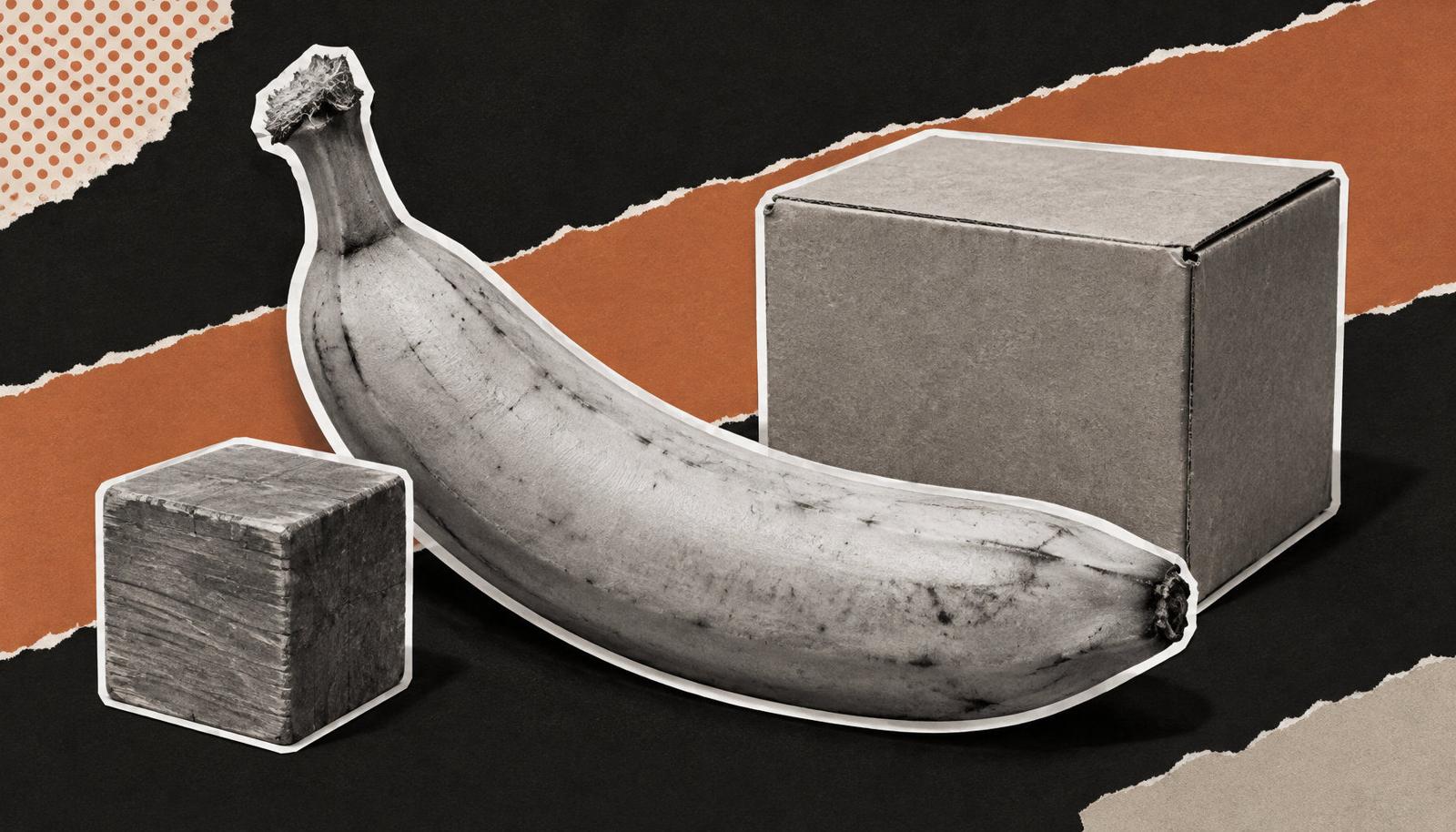
The authors also describe qualitative tests in which the robot followed demonstrations despite changes to the scene or objects. In one case, it used a banana to sweep a wooden block into a box after a demonstration using a brush and dustpan.
The paper notes that physical-robot evaluation was limited to one embodiment and that the data pipeline depends on the fidelity of generated human videos. Cross-scene transfer and use of generated context were demonstrated through qualitative cases, and the authors say broader quantitative evaluation is needed.
Sources
- Original source · Preprint Entangle: Scaling Human-Video In-Context World-Action Models across Unseen Tasks and Contexts arXiv:2611.28732
Related stories
- SANA-Robot researchers report faster control with hybrid memory
- Robot calibration method probes hidden shifts before tasks
- Meta researchers report exact collision gradients for ellipsoids
- RoboClock preprint tests robot timing across 60 simulated tasks
- AsyncMixVLA preprint reports faster robot policy handoffs in simulation