The Floor
JR East Begins Data-Led Cleaning Trial at Akabane Station
JR East, SoftBank and two partners begin a station-cleaning trial centered on Akabane Station on October 27, 2026. Sensors, AI image analysis and a toilet-cleaning robot will help test cleaning schedules based on use and reported conditions.
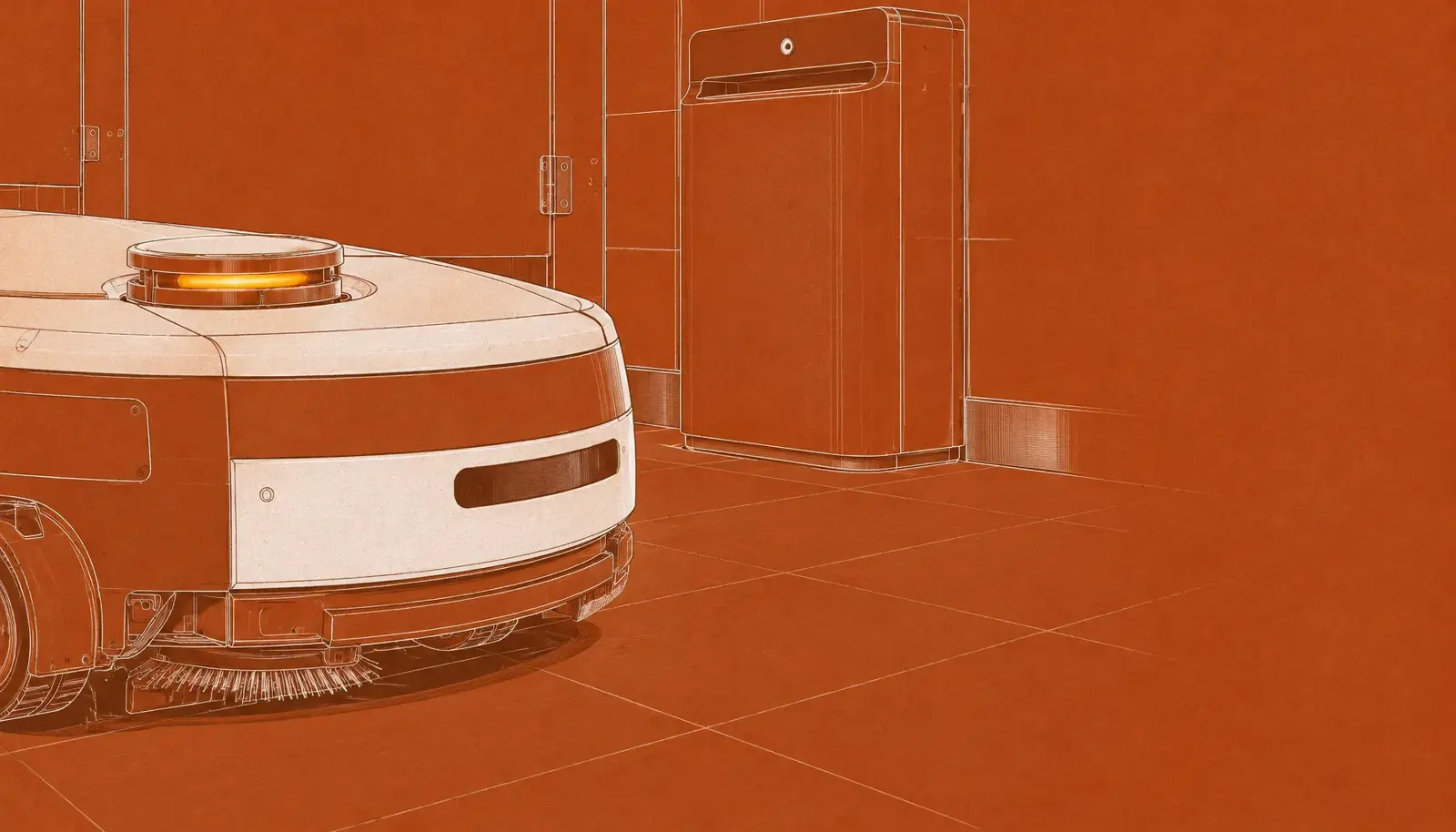
JR East’s station-cleaning trial puts two demands side by side: maintain service quality while easing the workload on cleaning teams facing staff shortages. Starting October 27, 2026, the railway and its partners will test whether sensors, AI analysis and a toilet-cleaning robot can help direct work to places and times when it is needed. The announcement, issued October 16, sets the trial to run until mid-January 2027.
Source softbank.jp
Four stations, but only Akabane gets the full test
Akabane Station is the main test site. Sensors in toilets and waste bins will track use and equipment status; passengers can also submit toilet-cleaning requests through QR codes. A temporary camera in the ticket-gate concourse will feed images to an AI system being tested for detecting dirt.
Three nearby stations—Oji, Jujo and Higashi-Jujo—have a narrower role. They will use sensors to measure toilet and waste-bin use, but the announcement does not assign them the camera-based detection, QR-code request system or robot trials. That distinction matters: the broader set of tools is being assessed at Akabane, not rolled out across all four stations.
The robot runs after the last train
At Akabane, a physical-AI cleaning robot will be tested in a restroom. Its trial runs after the last train, while the broader experiment operates between the first and last trains. The announcement does not identify the robot’s manufacturer or provide performance targets, so it offers no basis yet for comparing the machine’s cleaning results with staff work.
QR requests and AI detections are intended as reference information for cleaning decisions, not a promise of immediate service. The partners say they will analyze how usage frequency and time of day relate to cleaning demand, then assess whether the combined data can support demand-led and predictive cleaning. They have not published a response-time target or a threshold that triggers a cleaning visit.
SoftBank connects the equipment; JR East Commerce leads
JR East provides the trial locations and coordinates with the stations through its WaaS Co-Creation Consortium. JR East Commerce is responsible for planning and overall operation, including equipment procurement and analysis. SoftBank is coordinating the devices and building the platform that will bring the trial’s data together.
JR East Environment Access, the group company that handles station cleaning, is coordinating with cleaning operations and advising on the digitalization effort. The platform is meant to display and manage the different data streams in one place so they can inform cleaning plans and work decisions. The announcement describes that as something the trial will evaluate, not a system already proven in routine station service.
The test is about operating decisions, not just robot performance
The partners’ stated goal is to judge whether usage data, passenger requests and AI-based dirt detection can help maintain service quality while making cleaning operations more sustainable. That puts the management process alongside the robot: the trial must establish whether the information is useful to the people deciding where and when to send cleaning staff. The release does not provide a baseline for current cleaning frequency, staffing or cost, so the scale of any improvement cannot yet be quantified.
After the trial, the partners say they will use the data and findings to assess the approach and consider expansion to other stations. For now, the defined test is concentrated at Akabane, with the three other stations supplying usage data only; the robot’s scheduled run is confined to the hours after the final train.
Sources
- Original source SoftBank softbank.jp
Related stories
- Agile Robots raises $500 million at $8.5 billion valuation
- Wonik Robotics commits 100 billion won to Wanju production hub
- Agility Reveals Three Paid Digit Programs but Withholds Manufacturers’ Names
- Aurora and Charger Plan a 500-Truck Driverless Fleet
- Bedrock Robotics Raises $600M to Expand Autonomous Excavators