The Floor
MicroVision Starts MOVIA Pro Production, but Names No Customers
MicroVision has begun commercial production of its MOVIA Pro short-range lidar and is shipping sensors to meet customer demand, the company says. The company describes onboard perception and industrial connectivity, but gives no customer names, order volumes or pricing in its announcement.
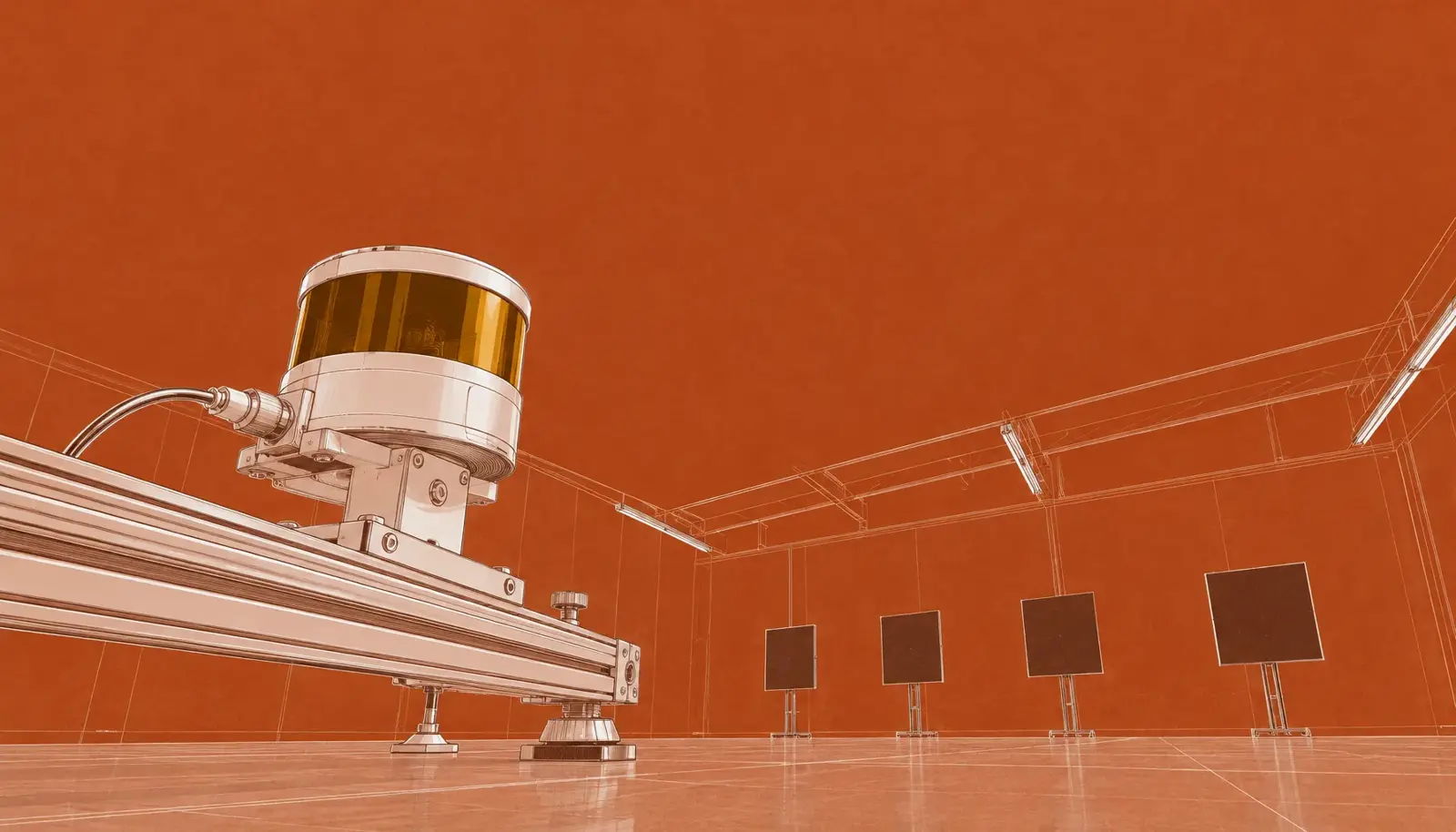
MicroVision has moved its MOVIA Pro lidar into commercial production and is shipping sensors, but its October 22 announcement names no customers and gives no order volumes or prices. The company describes demand and a transition from prototype evaluation to commercial programs; the release offers no figures by which readers can gauge the scale of that transition.
From MOVIA S to a shipping product
MOVIA Pro is the production version of MicroVision’s MOVIA S short-range lidar, according to the company. MicroVision is manufacturing the sensor at its production facility in Orlando, Florida, and the device is available for customer orders. The announcement does not say how many units are shipping or identify the customers receiving them.
“Customers are ready to progress from evaluation of prototypes to launching commercial programs, and we are pleased to support their progression,” said Glen DeVos, MicroVision’s CEO. The statement describes the company’s view of customer readiness, but does not specify a design win, contract value or deployment schedule.
Perception runs on the sensor
MicroVision’s pitch rests on combining lidar sensing with onboard computing. MOVIA Pro can process point-cloud data on the sensor and produce object-level perception outputs through its Open Software Framework, rather than relying exclusively on an external computer to interpret the data, the company says. The Linux-based framework is intended to let customers develop, deploy and update applications on the device.
The company also lists multi-echo sensing, which captures multiple returns from a single emitted pulse, and connectivity options including CAN, Gigabit Ethernet, 100Mbit Ethernet and industrial-ready inputs and outputs. This combination can reduce cabling and external hardware requirements, MicroVision says. The announcement provides no measurement figures for range, resolution, detection performance or unit cost.
Applications span factories, roads and aircraft
MicroVision is targeting uses where near-field sensing and onboard processing may fit together: warehouse robots and automated guided vehicles, forklift assistance systems, unmanned aerial platforms, traffic monitoring and infrastructure surveillance. The company also lists autonomous ground and marine systems, commercial vehicles and selected low-speed automotive applications.
Those are proposed application areas, not named deployments. The release does not identify a customer program or report that MOVIA Pro is already operating in any of them. Its commercial claim is narrower and concrete: production has begun, sensors are shipping, and customers can place orders.
Orders will test the commercial claim
The launch moves MOVIA Pro beyond prototype evaluation, as DeVos describes it, but the announcement leaves the scale of production and demand undisclosed. MicroVision gives no production capacity, shipment target or revenue contribution for the product. It also does not provide a price or say when customer programs might enter broader deployment.
For now, MOVIA Pro is available for orders from MicroVision, with the company positioning onboard perception and industrial connectivity as reasons to integrate sensing and processing in one device. The next evidence of market uptake will be customer programs and disclosed shipments; neither is quantified in the launch announcement.
Sources
- Original source · Press release MicroVision, Inc. ir.microvision.com
Related stories
- Panasonic Targets Humanoid Robot Production by 2029; Results Remain Undisclosed
- Agility’s Digit 5 Got Bulkier to Lift More and Work Near People
- A3 Reports Q3 Robot Orders in North America Up 24.8% to 10,989 Units Worth $723.5M
- RobCo Tops $1B Valuation as CEO Moves to the US
- FMC³ shows factory-worker data system for robot learning