The Floor
Mind Robotics taps Doug Field to lead its factory-robot push
Mind Robotics has hired former Ford executive Doug Field as president, putting him in charge of product, engineering and operations. The Rivian-backed startup is developing purpose-built robots and foundation models for industrial work, with Rivian as its first customer.
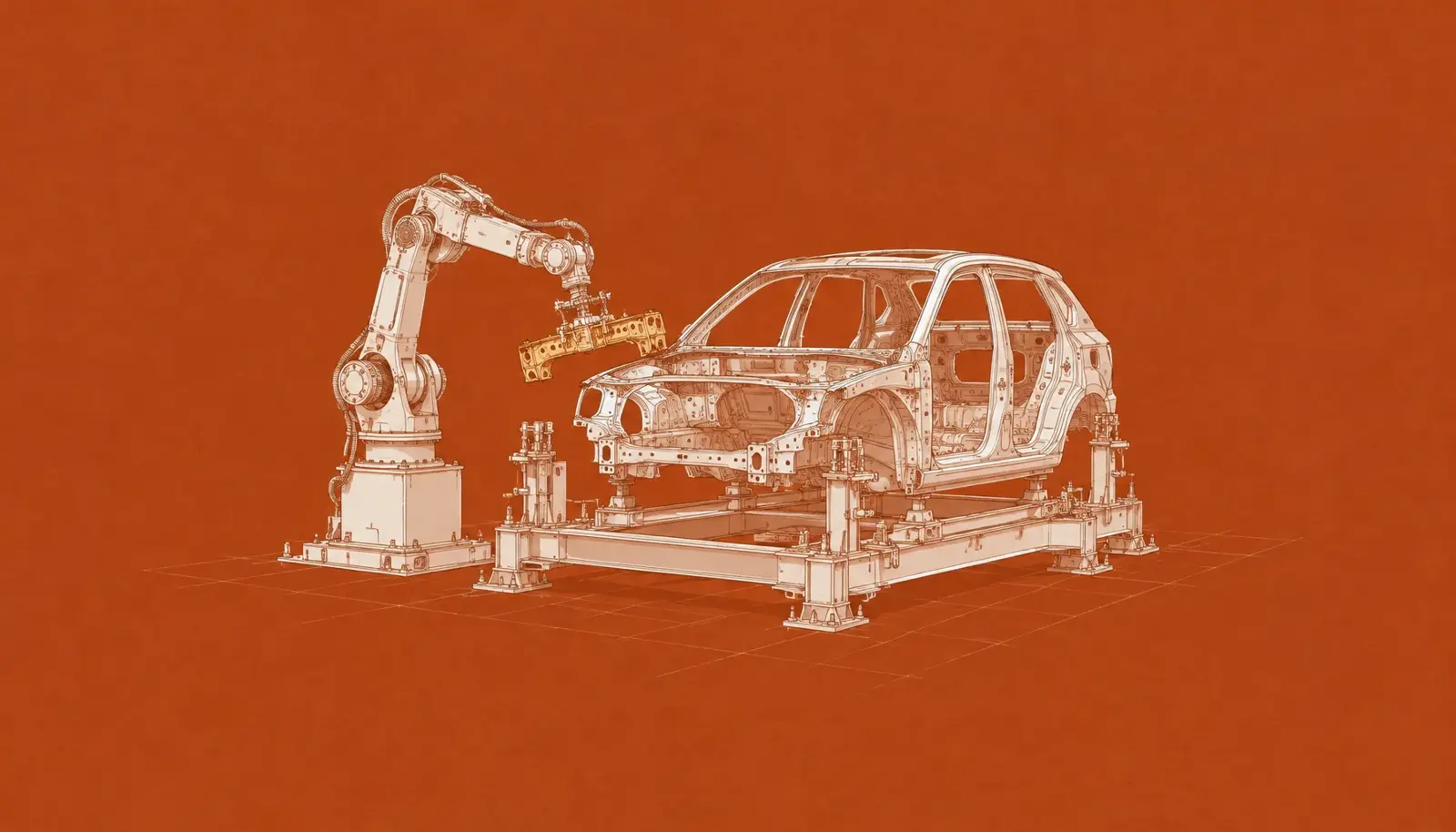
Mind Robotics is putting former Ford executive Doug Field in charge of its day-to-day business, even as founder RJ Scaringe draws a line between the startup’s factory machines and humanoid robots. Scaringe says the company does not plan to reproduce all of human biomechanics. The appointment, announced onstage at TechCrunch Disrupt in San Francisco on October 13, gives Field responsibility for product, engineering and operations.
Field joins as president about a year after Scaringe created the industrial AI and robotics venture. Scaringe will remain involved, while Field takes on the operating brief as Mind prepares to expand its early work. The hire brings an executive who has worked across electric vehicles, consumer hardware and vehicle engineering into a company aiming to automate manufacturing tasks.
Field takes charge of product and operations
“Integrating AI and robotics is one of the most important — and difficult — engineering challenges of our time,” Field said in a statement. Doug Field, president of Mind Robotics He said Mind can deploy and learn inside a real, high-volume factory from its first day.
Field left Ford in April after five years shaping the automaker’s electric-vehicle and technology strategies. Before that, he led Apple’s Project Titan, the company’s electric and autonomous car project, which was canceled in 2024. At Tesla, he served as senior vice president of engineering and oversaw development of the Model 3.
Mind rejects a one-size-fits-all humanoid
Mind’s stated approach differs from the humanoid programs Scaringe points to at Tesla and other companies. Rather than trying to reproduce the full range of human movement, the startup is building purpose-made robots for industrial and manufacturing work. Its systems are intended to run on foundation models, connecting the robotics hardware to AI designed for factory tasks.
The choice puts the factory job, rather than a human-shaped form, at the center of Mind’s pitch. That distinction matters to Field’s remit: product and engineering decisions must serve the company’s stated manufacturing goals, while operations must turn those systems into something that can work on a production floor. The announcement did not specify a first robot, a deployment schedule or which manufacturing tasks Mind will automate first.
Rivian becomes the first test site
Rivian is Mind’s first customer and a live, high-volume manufacturing environment for training and deploying its models, according to TechCrunch. The relationship gives the young company a factory setting in which to develop its systems, rather than relying only on demonstrations or laboratory trials. Rivian backs Mind, but the two operate as standalone companies.
Mind has secured more than $1 billion in backing from Accel, Andreessen Horowitz, Eclipse, Kleiner Perkins and the venture arms of Volkswagen and Salesforce. That support accompanies a broad ambition: to build a full stack for industrial manufacturing, from purpose-built robots to the models that control them. The first customer and intended place to train and deploy those models is Rivian’s manufacturing operation.
A leadership change with a factory assignment
Scaringe said he first contacted Field to ask for a recommendation for someone to help run Mind. Their conversations, he said, revealed alignment on the company’s mission and on how to build teams. The result is a division of responsibility: Scaringe stays involved, and Field runs the daily work across product, engineering and operations.
Field’s past roles span Ford’s EV strategy, Apple’s canceled car effort and Tesla’s Model 3 program. At Mind, the task is narrower and more immediate: develop industrial robots and models for manufacturing, then learn from their use in a high-volume factory. Rivian is the startup’s first customer and the factory where it says that work will begin.
Sources
- Original source TechCrunch techcrunch.com
Other pages read
- Business Wire businesswire.com
Related stories
- Panasonic Targets Humanoid Robot Production by 2029; Results Remain Undisclosed
- Schaeffler Builds a Global Physical AI Platform on Wandelbots NOVA
- Promise Robotics Signs D.R. Horton Deal for 1,250-Plus Homes
- Boston Dynamics Taps Amazon AI Leader Rohit Prasad as CEO
- Astribot Raises RMB1 Billion at RMB15 Billion Valuation