The Floor
Nucleus Shows Nearly Two Hours of Factory Work With Human Takeovers
Nucleus shared nearly two hours of uncut factory footage on October 1, 2026, showing its robot handling parts-store logistics. The company described the run as 60% autonomous and 40% teleoperated but did not explain how it calculated the split.
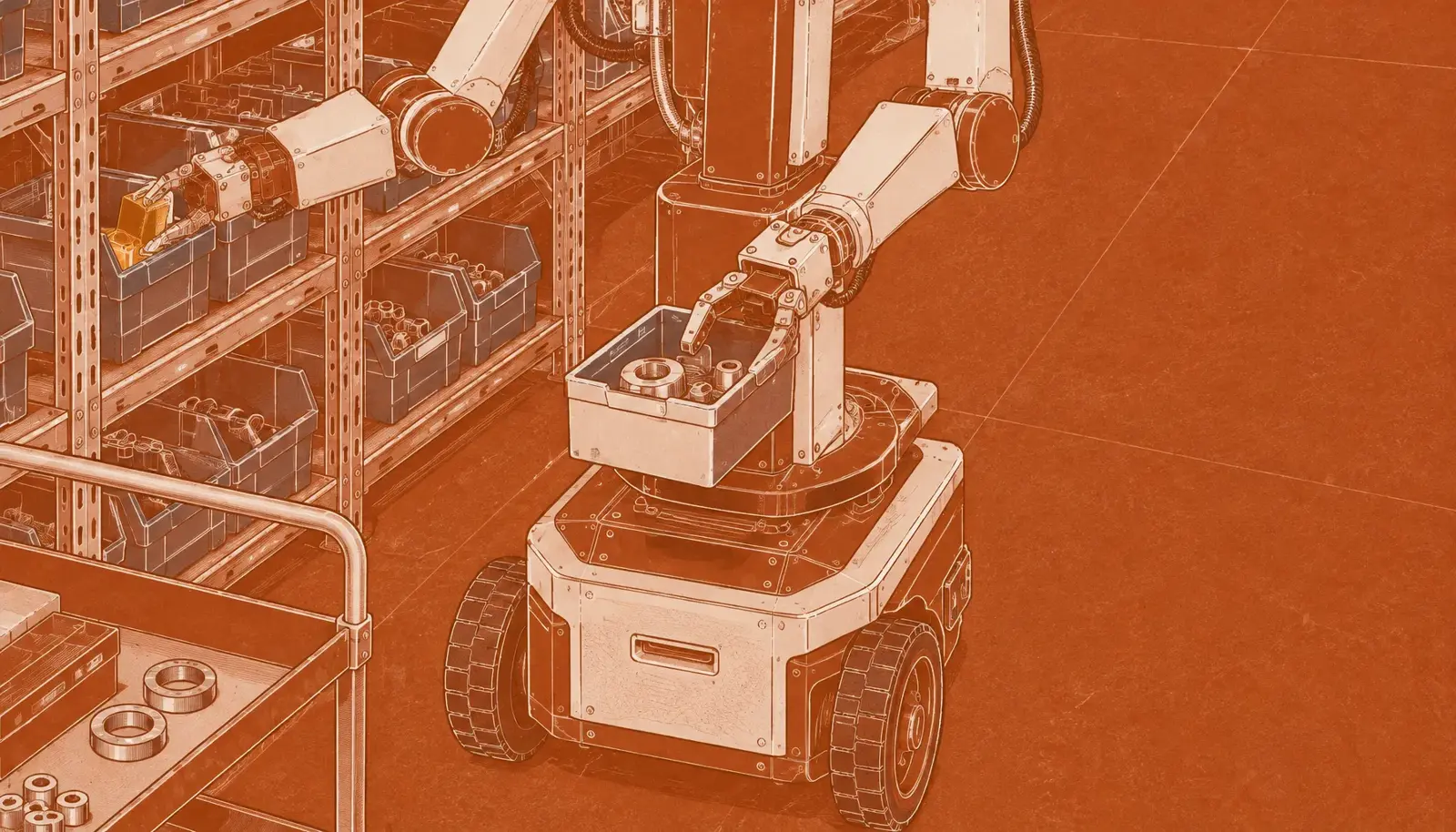
Nucleus’s nearly two-hour factory demonstration comes with a qualification: the company says the robot worked autonomously for about 60% of the run and was teleoperated for the other 40%. The October 1 footage leaves hesitations and human interventions visible, but Nucleus has not explained how it calculated that split. The video offers an unusually long look at work in progress; the autonomy figure is a company description, not a defined benchmark.
Source x.com
Enjoy almost 2 hours of “boring work”. We worked very hard to make it this boring!
Melvin Schwarz, Nucleus
Parts-store logistics, not a staged sequence
The recording follows a Nucleus robot through intralogistics work inside an industrial parts store. The workflow links loading parts containers onto a cart, moving them to shelving and staging material for the next job. Nucleus describes the recording as uncut, presenting the sequence as a continuous job rather than a collection of selected successful movements.
That format makes the pauses and takeovers part of the evidence. A short clip can show whether a robot performs a particular action; a longer recording can show more of the handoffs and interruptions that shape a work shift. But footage alone does not establish how often the robot needs help across other jobs, shifts or factory layouts.
The 60/40 split leaves a measurement gap
Founder and CEO Melvin Schwarz told Humanoids Daily that the demonstration was 60% autonomous and 40% teleoperated. He did not say whether those percentages refer to elapsed time, task segments or another measure. Without that denominator, readers cannot compare the figure reliably with autonomy claims from other robot demonstrations.
The split also applies to this recording, not necessarily to every Nucleus deployment. A teleoperation share says little by itself about how many interventions occurred, how long each lasted or whether one operator could supervise several robots. Those details matter to factories weighing a human-assisted service against other ways of moving and sorting parts.
Long shifts are a separate claim
Schwarz says Nucleus is regularly running four-to-six-hour shifts, with the robot carrying out a complete job from start to finish. That is a claim about shift length and job completion, not a claim that the robot operates autonomously for four to six hours without interruption. The distinction matters because the published 60/40 split explicitly includes teleoperation.
Nucleus’s business approach joins deployment with data collection: its website says the robots record visual observations, depth, motion and contact signals, along with expert corrections and task outcomes. Human assistance can keep a job moving when the system needs help, while also recording where the robot struggled. The footage makes that tradeoff visible, though it does not quantify how much the collected experience improves later performance.
What the recording establishes—and what it does not
Nucleus has put a sustained factory workflow on record and acknowledged that remote human control remains part of it. That is more informative than a brief, polished demonstration, but it is not independent verification of the autonomy split or evidence that the same performance will hold across factories. The next useful measures would be a clear definition of the 60/40 calculation, intervention frequency and results across repeated shifts.
For now, the concrete claim is a long, uncut parts-handling run paired with the company’s own account of substantial teleoperation. Nucleus’s footage shows the robot moving containers through loading, storage and staging; its stated 40% human-controlled share sets the limit on how much of that work the company says ran without remote control.
Sources
- Original source · Social media post Melvin Schwarz on X x.com
Other pages read
- Humanoids Daily humanoidsdaily.com
- Nucleus nucleuslab.ai
- Interesting Engineering interestingengineering.com
Related stories
- Formic Raises $50M to Expand Beyond Task-Specific Factory Robots
- Amap Opens λ₀ Humanoid Model Built on 500 Hours of Human Data
- Agility’s Digit 5 Got Bulkier to Lift More and Work Near People
- AGCO Signs 2027 Digit Pilot Deal for Hesston Factory
- Noetix Humanoid Averages 7.14 m/s in a Timed 100-Meter Sprint