The Floor
Robust AI Carter robots are working alongside warehouse staff
Robust AI’s Carter robots are operating in logistics warehouses and on factory floors, MIT News reported on November 13, 2026. The mobile robots help workers pick and stock shelves and move items around facilities.
Carter’s role on the floor
Robust AI’s Carter mobile robots are already operating alongside workers in logistics warehouses and on factory floors, helping with shelf picking, stocking and moving items around facilities, MIT News reported on November 13, 2026. The report describes a mobile platform designed to work in changing warehouse and factory environments, rather than requiring workers to leave it alone to perform tasks.
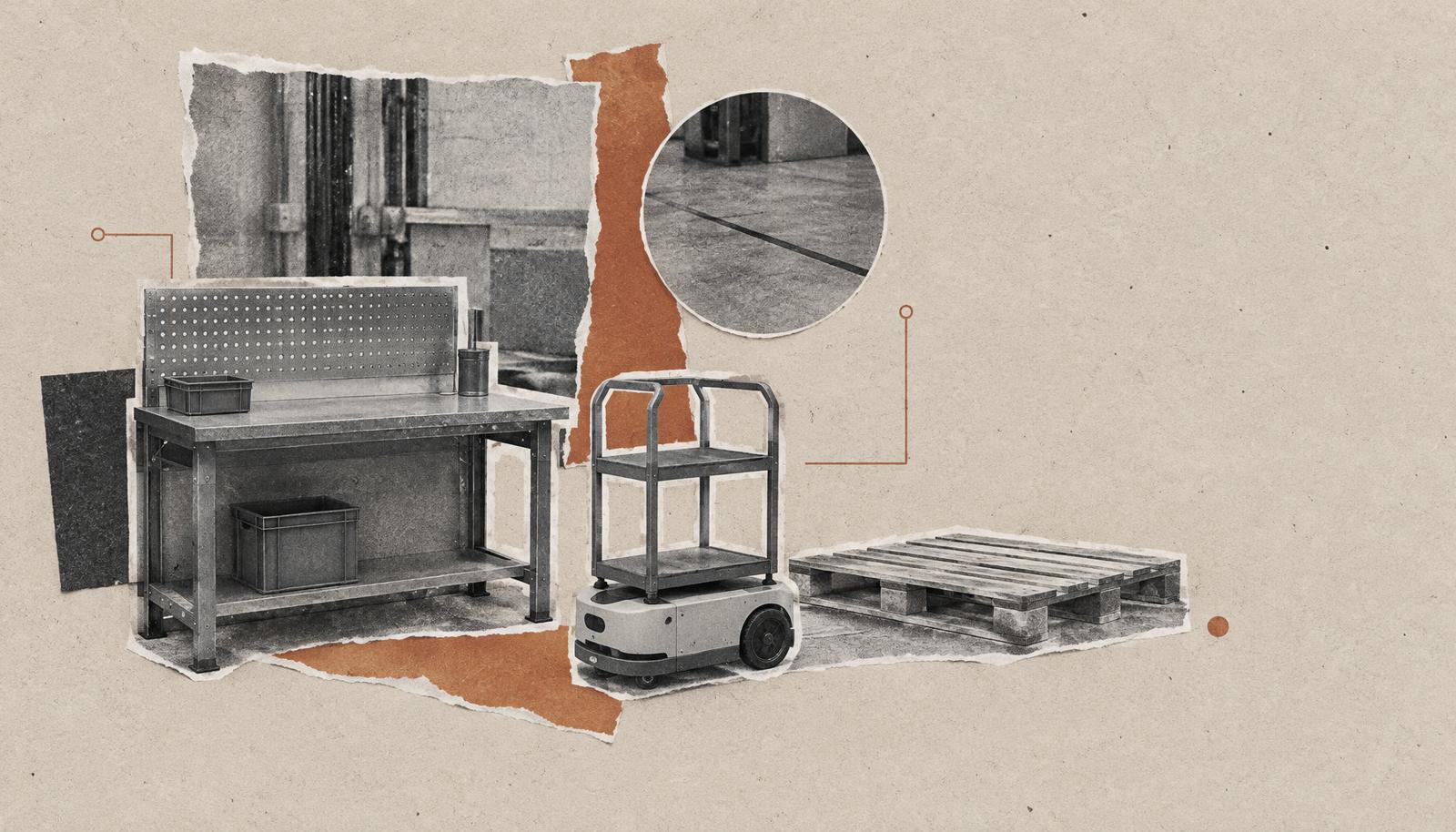
Carter resembles a utility cart on wheels. Its equipment includes a force-sensitive handlebar, an AI-powered vision system and holonomic wheels that allow movement in any direction, according to the report. A worker can push or pull the robot with one hand, including to redirect it, and can also give it directions with gestures or its onboard touch screen.
Several ways to share tasks
The system is used for different workflows, depending on how a customer incorporates it. In one, Carter guides a worker to a location where items can be retrieved; in another, it follows a worker to a loading point. The main task described in the report is moving items between locations in a warehouse or factory.
That work can involve a person loading Carter and sending it to another station. Rodney Brooks, Robust AI’s chief technology officer, described one such trip as potentially covering 400 feet.
Designed around existing work
Robust AI’s founders chose logistics and manufacturing as initial target industries after years of interviewing potential customers during earlier changes in the company’s direction. Anthony Jules, who co-founded the company with MIT Professor Emeritus Rodney Brooks, now serves as its chief innovation officer. Brooks is the company’s chief technology officer.
Brooks was an MIT faculty member from 1984 to 2010 and directed the Computer Science and Artificial Intelligence Laboratory from 1997 to 2007. He and Jules had met while Jules was a graduate student at the lab in the 1990s, though their labs were on the same floor and they did not work together. They later stayed in contact.
Brooks and Jules founded Robust AI in 2019, after Brooks raised the idea of a robotics software company at a conference. The startup initially worked on software for training robots, then shifted during the Covid-19 pandemic to robots that could disinfect surfaces. After the founders learned that Covid-19 was not transmitted via surfaces, they changed direction again and decided to build hardware for logistics and manufacturing.
Keeping workers in the loop
Robust AI’s approach is to study what workers need to do and develop features around those tasks, the MIT News report says. Carter can be introduced into operations in stages, and customers can choose how it is integrated. The report describes a division of work in which people handle some physical tasks, robots handle others, and backend systems contribute as well.
Brooks pointed to a hospital study about robots used to collect dishes, move sheets and transport equipment. In many of the hospitals, a large number of robots had been turned off and left against walls; nurses said they were broken. Brooks said the robots had stopped in hallways when nurses were moving patients on gurneys, leaving them in the way of the nurses’ main tasks.
Leila Takayama, Robust AI’s vice president of human-robot interaction, found the peer-reviewed study, according to the report. Robust AI says it aims to make its technology support workers’ primary tasks, whether a person or a robot carries them out.
Sources
- Original source · Press release MIT News news.mit.edu
Related stories
- GXO and Apptronik plan up to 1,000 Apollo robots, subject to results
- Coding Agents Find a Faster Warehouse-Routing Algorithm in Simulation
- Agile Robots raises $500 million at $8.5 billion valuation
- Arrive AI invests in Ottonomy as deal contemplates 50 robots
- PORT raises €14.5 million to develop delivery robots