The Floor
Starship Plans Software Changes After Tallinn Bus Crash
Starship Technologies plans software changes after one of its delivery robots collided with a bus in Tallinn on October 26. The company is investigating how the robot misread a traffic signal, while Estonian officials outline safety duties for robot operators.
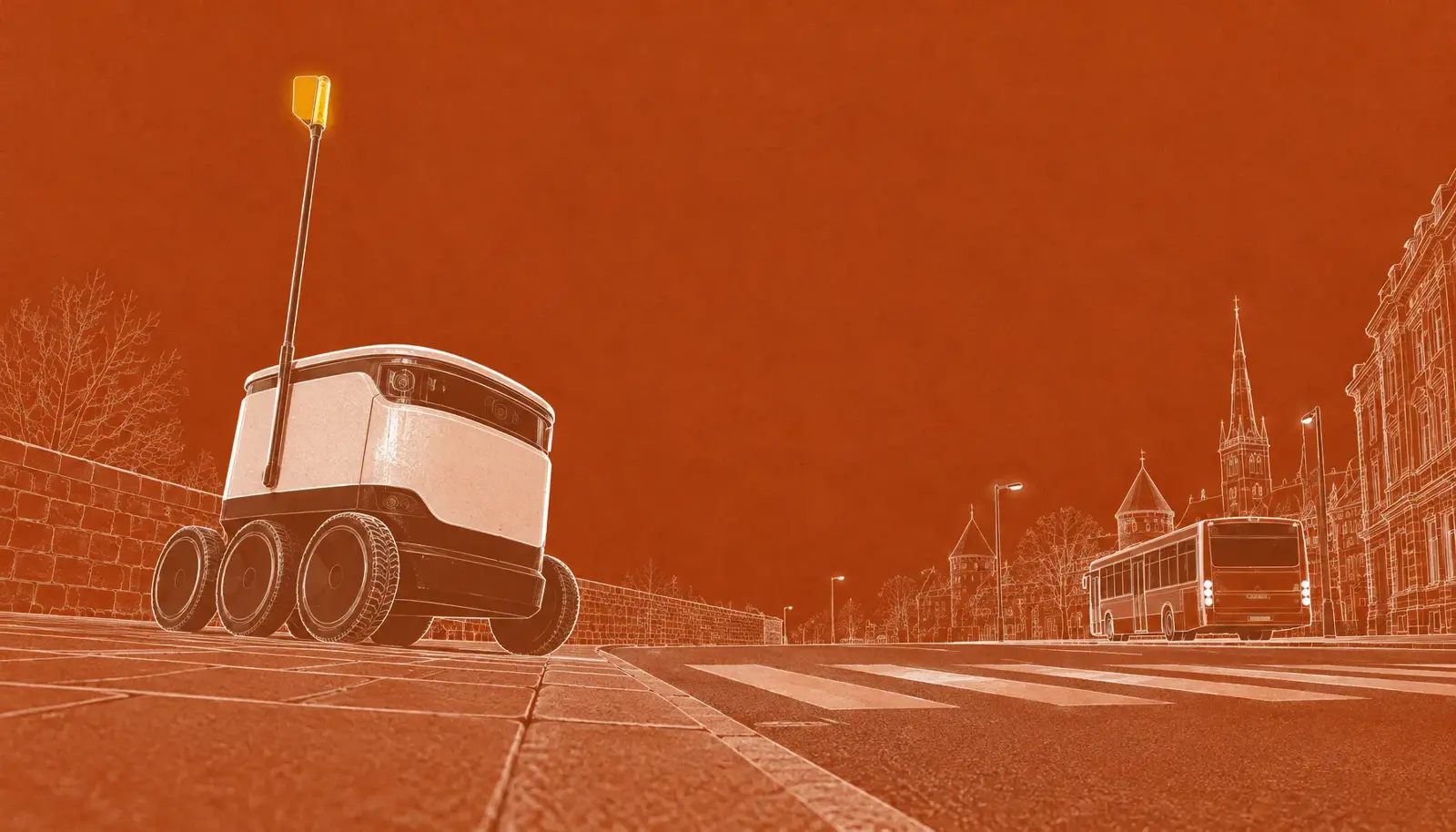
Starship links planned changes to a misread signal
Starship Technologies plans software changes after one of its delivery robots collided with a bus in Tallinn on Monday, October 26. Pepe Aaviksoo, the company’s head of operations, said Starship is investigating the incident and will share its findings with the public and police. The company already knows what it intends to change, he said.
Source news.err.ee
“The robot is largely a software-based machine, and the improvements are primarily software-based,” Aaviksoo said. In comments reported by ERR, he attributed the robot’s decision to cross to a misread traffic signal. Darkness, an illuminated advertisement behind the lights and the robot’s angle of approach also played a part, he said.
The robot’s light sensitivity was not working as it should and had changed for an unknown reason, Aaviksoo added. Starship plans to fix it. There were no cars moving toward the robot as it crossed, he also said, a detail that formed part of the company’s account, not a finding from a completed investigation.
Robot entered on red, TLT says
The collision happened at about 6 p.m. at a pedestrian crossing where Luise and Tehnika streets meet. Tallinn Transport (TLT) said the Bolt-branded delivery robot entered the crossing against a red light; the bus driver and other road users gave the same account, according to ERR. The driver braked sharply, and passengers standing in the bus fell.
As many as nine people were injured, TLT said. The driver stopped and asked whether anyone needed help or an ambulance; passengers did not request one at the time, TLT board member Andrei Novikov told ERR. The driver then called the company’s control center, and they agreed the bus should continue its route because damage was minimal and leaving it in place during rush hour could obstruct traffic. TLT later filed a police report, and a passenger subsequently complained about their health.
The robot left the scene before police arrived, according to early accounts. Aaviksoo disputed that description: he said the robot contacted Starship’s back-office team, which directed it away from the road to a safe place by the curb. The robot remained at the scene for about 10 minutes, he said. Starship’s account and TLT’s initial description differ on what happened after the collision; police are to establish the circumstances.
Autonomy does not mean constant remote watching
Starship’s robots generally travel autonomously, but an office-based team can take control when safety concerns or a particular incident call for it, Aaviksoo said. The team assesses what happened; it does not watch each robot continuously. “This is simply not physically possible or economically sustainable, because we have several thousand robots around the world,” he said.
That distinction matters in this case: according to Aaviksoo, the back-office team became involved after the collision to move the robot out of the road. Starship has not yet published the results of its internal investigation or described the planned software changes in technical detail. The company’s explanation of the signal-reading failure is therefore preliminary.
Estonia’s rules put duties on the operator
Delivery robots must check that it is safe to cross, give way and avoid endangering other road users, said Maria Pashkevich, head of the Transport Administration’s Road Safety Department. After a traffic accident, the robot’s operator or user must ensure it stops and creates no further danger. If the operator can recognize that someone has been injured or killed, including through a camera, they must contact the Emergency Response Center and follow its instructions.
Estonia’s traffic-accident system had not recorded a delivery-robot crash involving human casualties before this incident, Pashkevich said. She cautioned that the absence of registered cases does not mean dangerous incidents have not happened; some may not have been reported to police. Starship’s investigation, the police report and the planned software work now turn on the same unanswered question: how the robot interpreted the crossing’s signal in those lighting conditions.
Sources
- Original source · Press release ERR News · Starship plans software changes to improve delivery robots… news.err.ee
Other pages read
- ERR News · Passengers injured after collision between bus and delivery… news.err.ee
- Riigi Teataja riigiteataja.ee
- ERR err.ee
Related stories
- Up to Nine Injured After Bus Brakes for Delivery Robot in Tallinn
- Deliveroo and Coco Plan Robot Deliveries in Five UK Locations
- Arrive AI invests in Ottonomy as deal contemplates 50 robots
- Preprint Sets Deadlines for Robots Awaiting Language-Model Plans
- ROS 2 Reflex Engine Switches Robot Controllers in Under 0.1 ms