The Floor
TrinaTracker Ships Buildex Solar-Installation Robots to Portugal
TrinaTracker shipped the first batch of its Buildex photovoltaic-module installation robots to a demonstration solar project in Portugal, where it and local partner ESI Robotics plan to provide integration and engineering services. The company reports daily installation of 600 to 700 modules per robot in Southern Europe and says the system reduced module-installation costs and the overall project construction period.
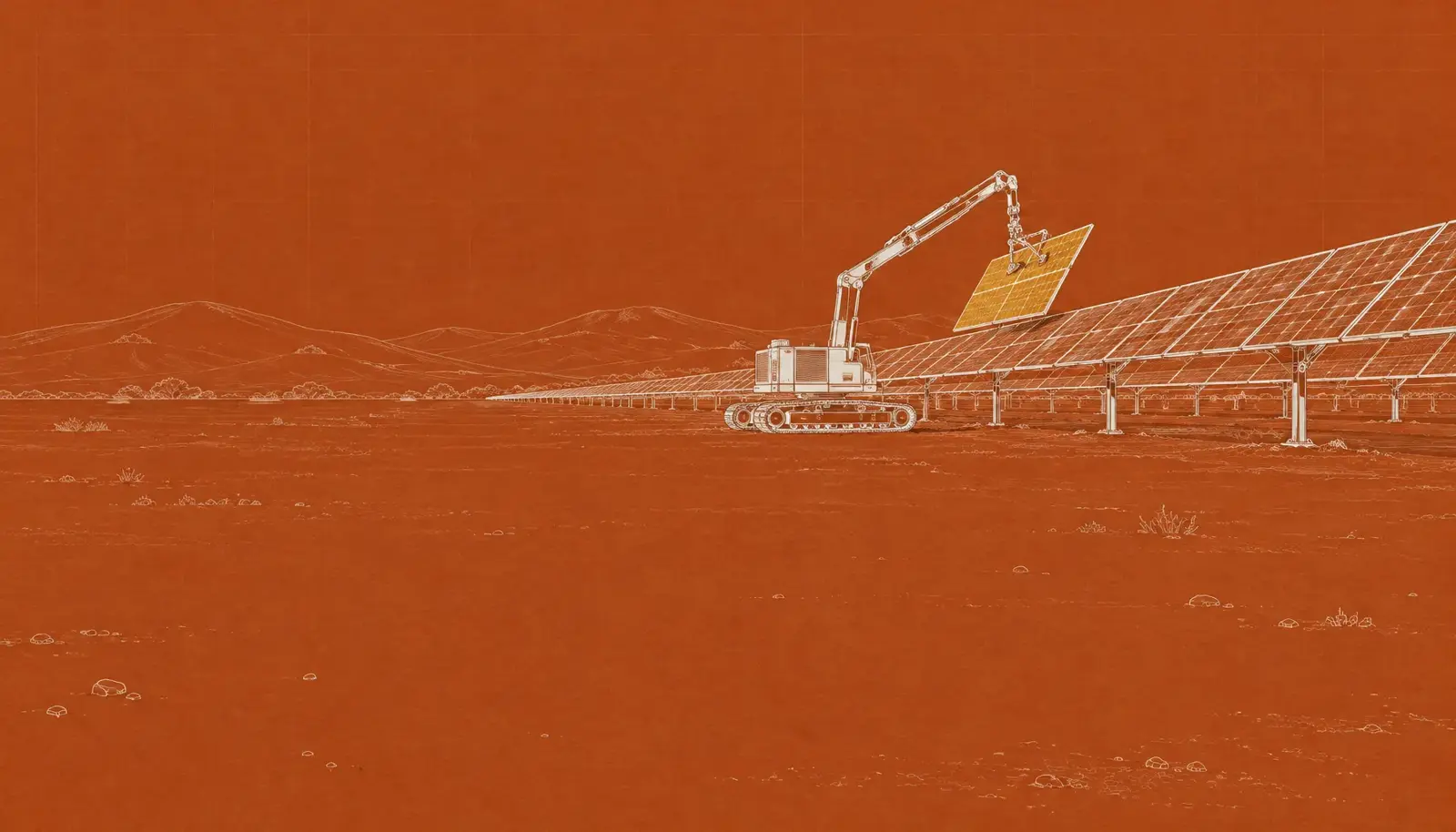
Buildex shipment heads to a Portuguese demonstration project
TrinaTracker shipped the first batch of its Buildex photovoltaic-module installation robots to a demonstration solar project in Portugal. Trina Solar’s announcement is dated October 22, 2026. The company does not identify the project owner, site, generating capacity or number of robots in the shipment. TrinaTracker and local strategic partner ESI Robotics will jointly provide on-site integration, commissioning and engineering services.
The shipment is a step toward testing automated construction at a utility-scale solar plant, not evidence that the equipment has already been commissioned or that the project has completed validation. TrinaTracker presents the Portuguese project as a demonstration and says the solution could be replicated in Spain, Italy, France and other nearby markets after validation. Those are possible future markets, not announced deployments.
Daily output of 600 to 700 modules, the company reports
Southern European data show one Buildex unit installing an average of 600 to 700 modules per day, TrinaTracker says. It compares that figure with manual installation, reporting a three-to-fourfold improvement in efficiency. The announcement also reports a 22.2% reduction in module-installation costs and a 17.5% reduction in the overall project construction period.
The announcement does not give the data’s test location, duration, crew size, module type or calculation method. It does not provide results specific to the Portuguese project, which the company describes as a demonstration that remains to be validated. The reported figures therefore offer no project-specific performance record, and the release does not provide enough methodology to assess how directly they compare with manual work at a particular site.
Leveling and vision systems address varied ground conditions
Buildex has an adaptive leveling system that, according to TrinaTracker, can automatically adjust its angle by up to 17 degrees. It is compatible with fixed-tilt mounting structures and TrinaTracker’s 1P and 2P smart tracking systems. The robot is suited to gentle slopes and undulating terrain common in Portugal and Southern Europe, the company says.
The announcement describes a multi-source vision system that identifies mounting structures and module installation points, with millimeter-level accuracy. For module handling, the robot uses an integrated pickup-and-placement mechanism with flexible suction gripping. LiDAR and artificial-intelligence-based environmental sensing detect people and obstacles. The company describes the robot as taking on strenuous tasks such as lifting and carrying modules, which it says can reduce physical demands and workplace risks.
Portugal is the announced destination, not a source of reported results
Many ground-mounted solar plants in Portugal are on undulating terrain and local rules govern manual handling and construction-site safety, TrinaTracker notes. The release presents those conditions as relevant to the robot’s suitability, but does not say they were the reason for selecting this particular project. It offers no site-specific evaluation of leveling, handling or sensing performance.
Buildex is designed for continuous operation and to reduce constraints associated with physical fatigue, environmental conditions and working hours. The announcement gives no robot price or start date for installation at the Portuguese project. Its stated milestone is shipment to Portugal, alongside a plan for local engineering and integration with ESI Robotics. Further results from the demonstration will be needed to establish how the reported performance applies at the project site.
Sources
- Original source Trina Solar trinasolar.com