The Floor
UK Tests Shared BVLOS Airspace With Three Drone Operators
Wing, Manna and Lancashire Fire and Rescue Service flew beyond visual line of sight in shared airspace over Chorley using a federated traffic-management system. The UK trial sets a 95% flight-plan conformity target and will inform the Civil Aviation Authority’s next steps for scaling drone operations.
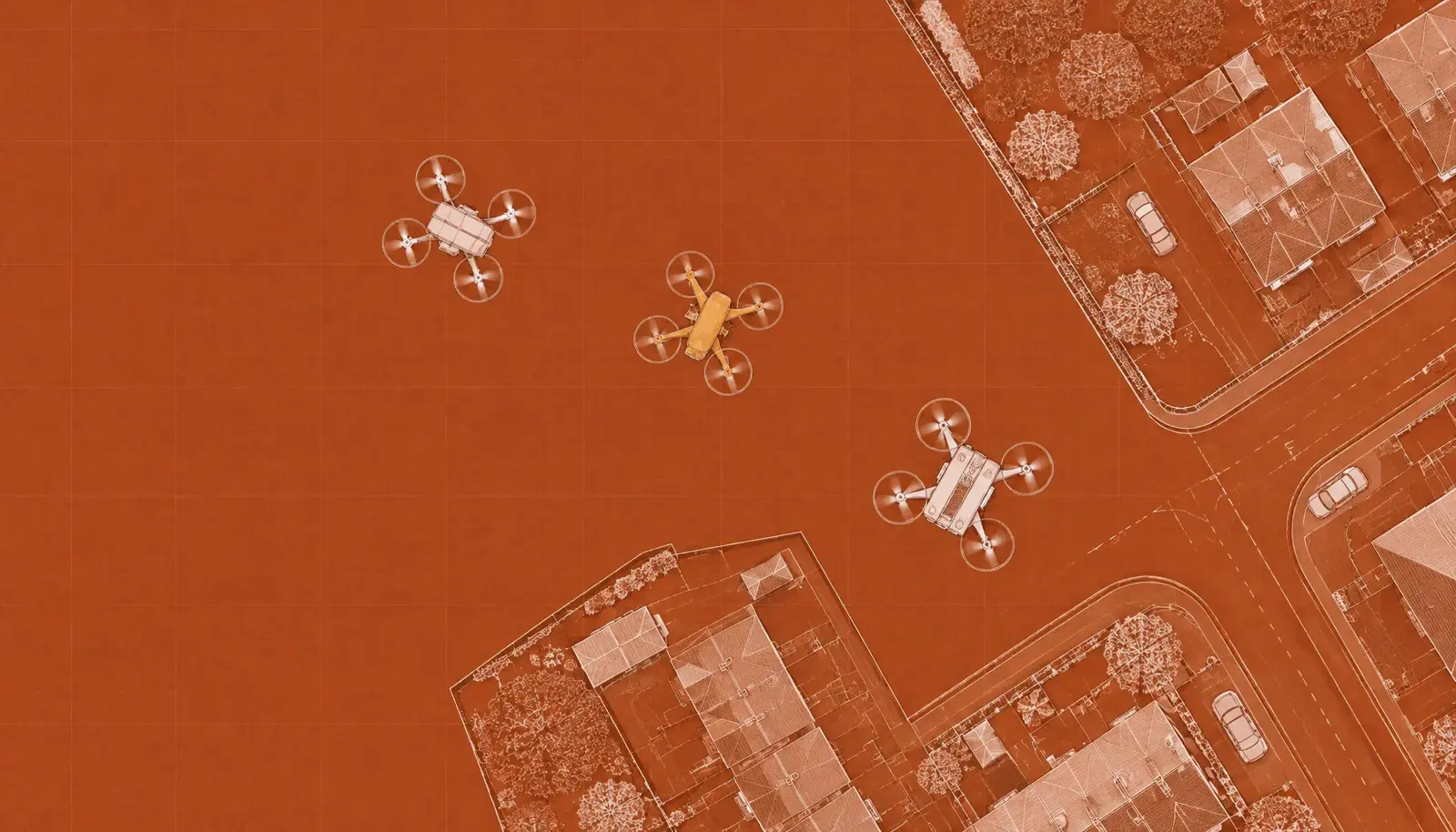
Three operators share Chorley airspace
Wing, Manna and Lancashire Fire and Rescue Service flew beyond visual line of sight (BVLOS) in the same airspace over Chorley on October 21, in the first operational evaluation of the UK’s federated drone traffic-management system. The Civil Aviation Authority (CAA) supervised the flights, which shared operational data and strategic deconfliction through the ASTM F3548-21 interoperability standard.
Source unmannedairspace.info
Wing used its own integrated traffic-management and operator services. Manna and the fire service used ANRA’s UAS traffic-management system. The test brought commercial delivery flights and emergency-service operations into one coordinated airspace arrangement, rather than running each operator as an isolated trial.
“These are operational flights, just as when we started in Texas, but with three operators sharing the same airspace,” said Amit Ganjoo, founder and CEO of ANRA Technologies. Ganjoo, quoted by Unmanned Airspace
A 4-by-4-kilometre test area
The trial operates inside a temporary danger area measuring 4 kilometres by 4 kilometres, with a ceiling of 800 feet above mean sea level. That boundary gives the early evaluation a defined operating environment; it is not evidence that the same flights can yet run throughout unrestricted UK airspace.
The programme sets a 95% conformity target for operators to follow their agreed flight plans. The CAA is evaluating the system’s performance before the next stage, which is expected to include new prioritisation arrangements for drones conducting safety-of-life missions. The regulator also plans to add network remote identification and bring additional participants into the programme.
From a trial to scalable BVLOS operations
The Chorley evaluation forms part of the CAA’s Airspace Modernisation Strategy and a three-step effort to support scalable commercial BVLOS operations. A CAA stakeholder document for the trial identifies ANRA as project sponsor and lists Manna, Wing and Lancashire Fire and Rescue Service among the consortium partners. It describes the project’s aim as demonstrating safe, interoperable traffic-management services and informing future CAA policy.
The UK arrangement draws on the shared-airspace work developed in the Dallas area, while adapting it to UK authorisations, regulatory oversight and local use cases. In Chorley, those use cases include emergency response alongside commercial delivery. The CAA’s role differs from the FAA’s, and the UK programme must assess how the framework performs under its own rules and operating conditions.
Emergency flights are the next test
Giving safety-of-life flights priority would test more than whether separate providers can exchange flight data. The system would also need to manage competing operational needs when emergency crews and delivery operators seek access to the same low-altitude space. The announced next step is to evaluate performance before introducing those prioritisation arrangements.
The trial is also due to expand to other UK locations, but the report gives no date for that rollout or for broad commercial deployment. For now, the measurable test is local: three operators sharing a defined airspace, with a 95% flight-plan conformity target and a CAA review still to come.
Sources
- Original source Unmanned Airspace unmannedairspace.info
Other pages read
- UK Civil Aviation Authority airspacechange.caa.co.uk