The Floor
WHOI and JPL introduce Deep Venture, rated to 11,000 meters
WHOI and NASA’s Jet Propulsion Laboratory introduced Deep Venture, an autonomous underwater vehicle rated for depths of up to 11,000 meters. The vehicle was tested near Bermuda in June 2026 as a scout for the crewed submersible Alvin.
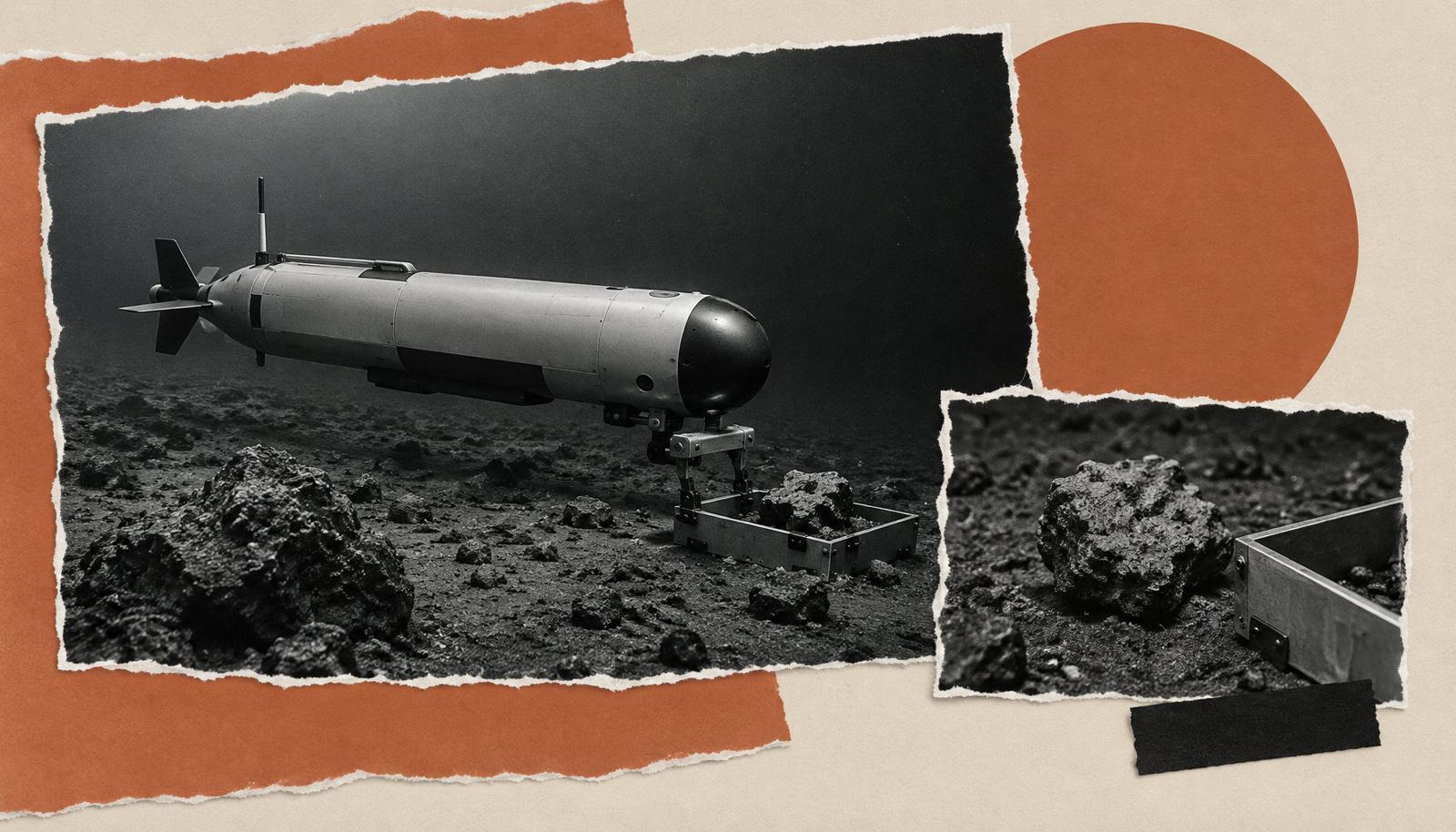
A vehicle rated for full ocean depth
Woods Hole Oceanographic Institution and NASA’s Jet Propulsion Laboratory have introduced Deep Venture, an autonomous underwater vehicle rated for depths of up to 11,000 meters. WHOI’s November 20 release describes it as a research platform intended to work from shallow coastal waters to the deepest parts of the ocean.
The vehicle’s design can be configured for different missions and launched from a wide range of research vessels with minimal specialized support, according to WHOI. Research engineer Allisa Dalpe said it can operate untethered and autonomously after deployment, and that teams can adjust its configuration for different mission types.
Deep Venture weighs 250 kilograms (550 pounds). Its systems include high-resolution imaging and photogrammetry for seafloor observation, mapping and 3-D reconstruction. It can land on the seafloor for sample collection and close-up investigations, while a modular payload bay can carry sensors and samplers.
Scouting for a crewed submersible
The vehicle demonstrated a companion role during a June 2026 expedition near Bermuda, working with the human-occupied vehicle Alvin. Before an Alvin dive, Deep Venture descended approximately 6,000 meters (about 3.73 mi) and gathered high-resolution seafloor imagery. WHOI said the images helped the Alvin team identify relevant locations for its dive.
Robin Littlefield, a WHOI senior engineer who leads the program, said pairing the autonomous vehicle with crewed or remotely operated systems is intended to complement those vehicles, not replace them. According to Littlefield, advance surveys can help teams decide where and how to deploy Alvin and inform dive planning. Littlefield also said WHOI envisions building more vehicles to increase survey coverage or carry different scientific payloads at the same time.
Building on earlier dives
Deep Venture builds on a WHOI-JPL hadal research program that carried out 13 autonomous dives in the Gulf of Alaska in 2024, reaching depths of as much as 5,000 meters (about 3.11 mi) in support of Alvin scientific dives. WHOI said the new vehicle brings that program to a state of operational readiness.
The announcement lists Deep Venture’s mission options as standalone work or coordinated operations with human-occupied and remotely operated vehicles. Its stated science payload includes chemical and biological sensors and samplers. The release also describes limited communications and operation in harsh conditions as features of the technology that could inform future exploration of extreme environments on Earth.
Sources
- Original source · Press release Woods Hole Oceanographic Institution whoi.edu