The Floor
AGIBOT Adds GO-2 to Its Genie Studio 2.0 Platform
AGIBOT’s Genie Studio 2.0 platform now offers access to the GO-2 embodied foundation model, launched in April. The platform can validate new robot tasks in as few as seven days, according to the company, which also cites a separate 14-day CNC deployment project.
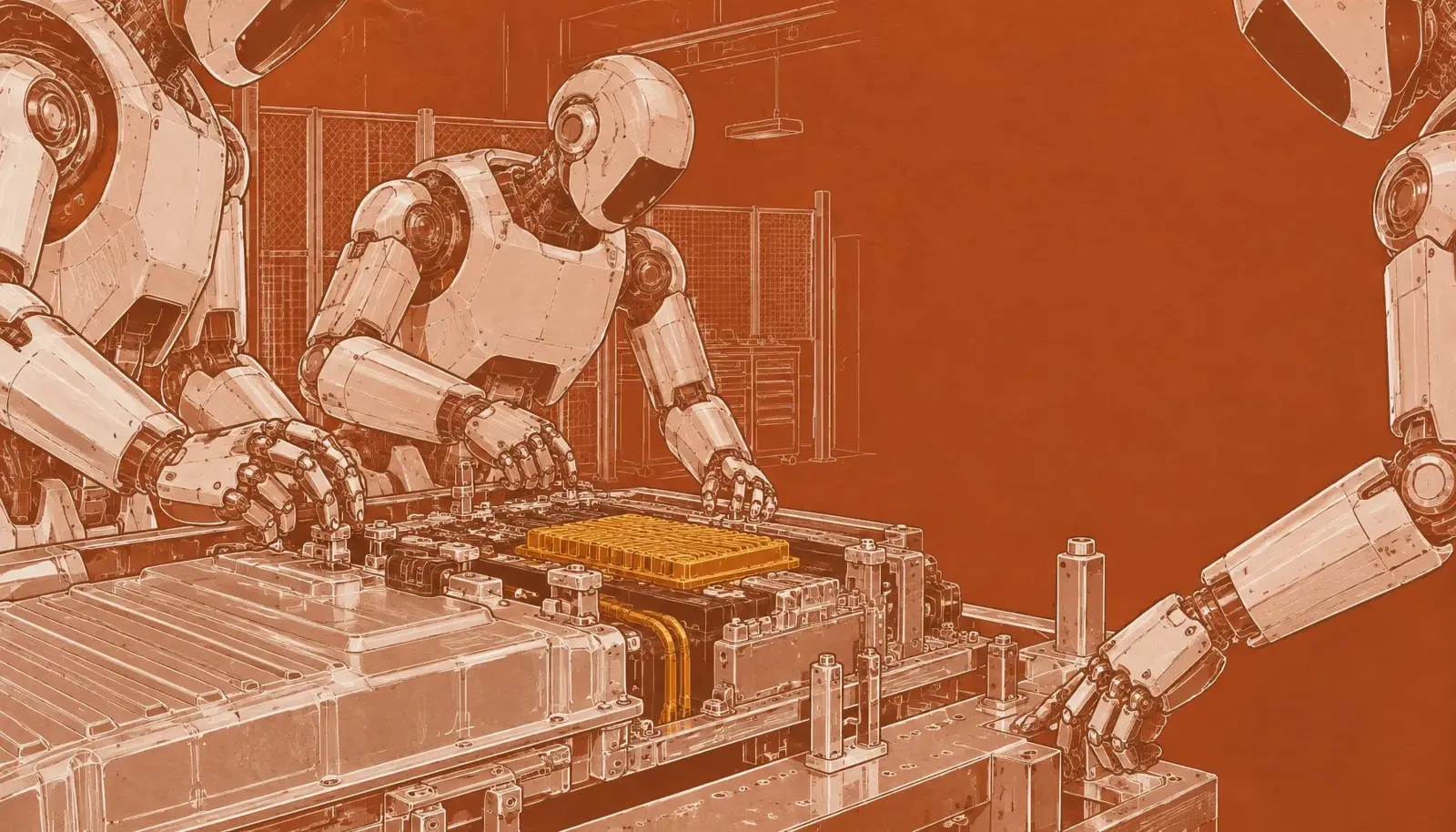
A new robot task can reach deployment validation in as few as seven days with Genie Studio 2.0, a platform that now gives users access to its GO-2 embodied foundation model, AGIBOT says. A six-machine CNC project the company describes took 14 days from requirements definition to production-line validation. The figures refer to different claims: seven days is the platform’s stated best-case timeline, while 14 days is the reported duration of that specific project.
GO-2 moves into a deployment platform
Announced on October 26, Genie Studio 2.0 combines model development, task orchestration and fleet operations in three modules: Flywheel, Agent and Monitor. Flywheel connects data collection, model training, simulation testing and deployment on physical robots; Agent assembles task workflows; and Monitor tracks robot status and supports fleet management. The platform also provides access to GO-2, with tools for fine-tuning, experiment management and compute scheduling.
GO-2, short for Genie Operator-2, was announced on April 9 as the successor to GO-1. The central design is a combination of action-level planning and motor execution: an Action Chain-of-Thought produces a sequence of action intents, while an asynchronous dual-system pairs a slower semantic planner with a faster action-following module. The intended division lets the planner set out task stages while the follower uses live observations to adjust control.
Benchmark results are company-reported
AGIBOT reports a 98.5% average success rate on LIBERO’s Spatial, Object, Goal and Long tasks, along with an 86.6% zero-shot success rate on LIBERO-Plus. It gives a score of 47.4 on VLABench and says a GO-2 model trained only in simulation reached an 82.9% success rate in real-world testing. Components of GO-2 were accepted to CVPR 2026 and ACL 2026, the company says.
Those figures are company-reported results, not independently verified measurements in the launch announcement. The announcement does not give trial counts or a detailed comparison protocol for the scores, so the figures alone do not show how the model performs across different robots, sites or task conditions. According to AGIBOT, GO-2 outperforms models including π0.5 and NVIDIA GR00T, but the company does not supply a full comparative test breakdown in the release.
Factory examples stop short of naming GO-2
AGIBOT cites several deployments of Genie Studio 2.0, including the CNC project and a pilot line where three G2 robots assembled automotive battery-management-system controllers. For that line, the company reports task success rates above 99.9%, cycle times of 13 seconds or less per operation, and validation of round-the-clock production. The release does not say that GO-2 ran those tasks.
The distinction matters: the platform’s industrial examples document Genie Studio 2.0 deployments, while the company’s GO-2 page reports separate benchmark and sim-to-real results. AGIBOT does not identify a named production line running GO-2 or provide a field result for that model within the platform announcement. The documented controller-assembly line remains a Genie Studio 2.0 deployment, not a disclosed GO-2 trial.
Sources
- Original source AGIBOT · page 1 agibot.com
Other pages read
- AGIBOT · page 2 agibot.com