The Floor
Berkeley and NVIDIA pair robot coding agents with a new benchmark
UC Berkeley researchers are releasing code for AI agents to build and test robot programs in simulation, alongside a benchmark for evaluating manipulation tasks. The benchmark covers six task classes and includes standardized variations, success metrics and a library of reusable robot skills.
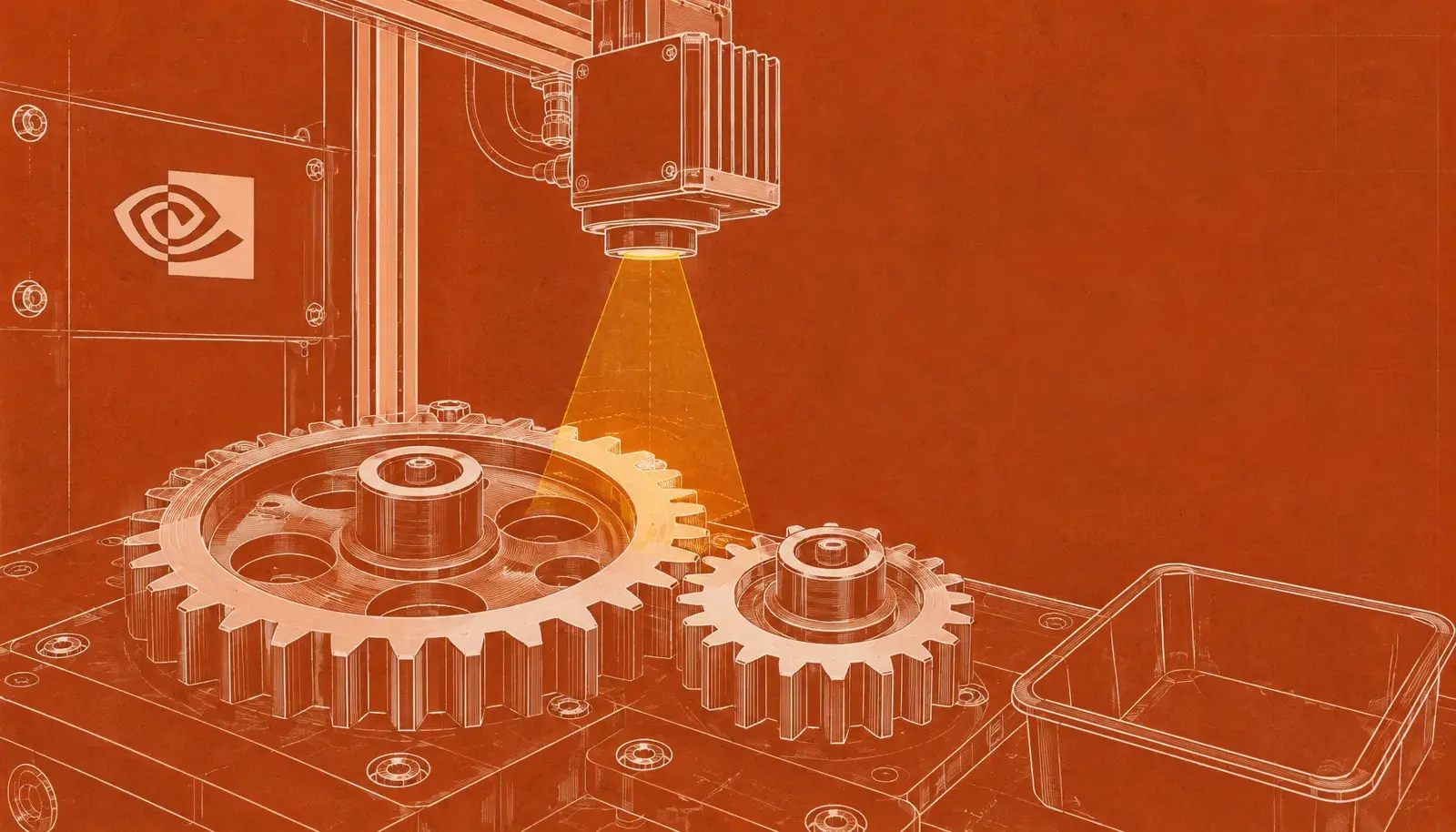
UC Berkeley researchers are releasing open-source code that lets AI agents build and test robot programs in simulation, alongside a benchmark developed with NVIDIA for evaluating manipulation tasks. Berkeley News described the work on November 9 as part of an approach that roboticist Ken Goldberg and NVIDIA robotics engineering director Spencer Huang call agentic robotics.
Known as Graph-as-Policy, or GaP, the framework connects individual robot skills into programs that agents can test and revise. The accompanying Variational Automation Benchmark for Agentic Robotics, or VABAR, supplies simulated tasks and standardized variations for evaluation.
From skills to programs
The framework breaks robot work into skills such as finding an object, planning a grasp and moving a gripper without collisions. AI agents generate and connect those skills into a program. Using NVIDIA’s Isaac simulation libraries, the agents rehearse the program across variations, identify failures and refine it, according to Berkeley.
Goldberg and Huang say the goal is to make robot programming faster and more adaptable while retaining a structure engineers can review. The approach sits alongside methods in which engineers directly program robot behavior and methods in which robots learn behaviors from demonstrations.
“Agentic robotics is a fundamental shift in how robots are controlled,” Goldberg said.
Berkeley’s account describes an experiment in which researchers gave OpenAI’s Astra model access to a simulation interface and a short video of a real robot using a sponge to wipe ink from a metal bar. In less than an hour, the AI tool created and fine-tuned a physics simulation that reproduced the video, including realistic sponge deformations.
The researchers then used the simulation and GaP to generate a control program, which the AI repeatedly tested and improved in simulation. When the resulting code ran on a real robot, the task worked, Berkeley reported. In one trial, the robot pushed the bar over because it did not reliably infer its mass; video of the failure could then be used to revise the simulation and program.
A benchmark for variation
The VABAR preprint describes a simulation-based benchmark with six task classes: tool sorting, tool hanging, gear meshing, syringe packing, cable insertion and cable routing. The tasks address industrial, medical and infrastructure applications. The benchmark is built on open-source tools and includes implementations using the Newton physics engine and Isaac Lab-Arena.
VABAR includes standardized task variations, difficulty tiers, success metrics and a library of 33 generalizable skills, alongside human-authored programmatic reference solutions. The tasks vary aspects such as object shape and pose within bounded settings. For example, the benchmark varies the tools, clutter and bin occupancy in sorting; gear count, size and starting position in gear meshing; and cable type, route and fixture layout in cable routing.
The benchmark website also presents an evaluation of eight coding models on five tasks. The models received the same skill library and execution feedback. The site reports that models starting within a few points of one another ended up 30 points apart after two rounds of feedback. Tool sorting was not included in that evaluation.
VABAR’s design focuses on tasks in which a robot repeatedly performs a particular job while adapting to known differences in object shape and position. Its task descriptions specify initial and goal configurations, assets and robot definitions; evaluation then tests robot policies across generated variations. The benchmark site presents two difficulty levels, with the width of the permitted variation changing while the task objective stays the same.
Sources
- Original source · Press release Berkeley News news.berkeley.edu
Other pages read
- arXiv arxiv.org
- UC Berkeley, NVIDIA and Siemens berkeleyautomation.github.io
Related stories
- 12× Faster Robot-Planning Decoding With VFlash on Jetson Thor, NVIDIA Research Reports
- NVIDIA Opens Flora, a Three-Model Pipeline for Robot Video
- Qvyon launches sensor-based simulation platform with $8 million
- Researchers report new humanoid behaviors in simulation
- NVIDIA details SOMA tool for mapping human motion to humanoids