The Floor
ETAMU study tests motion-based AI for drone GPS spoofing
East Texas A&M researchers tested AI models on flight records to see whether drone movement could reveal GPS spoofing. A model using 10 consecutive readings scored 97.5% on the study’s measure, but the checks have not yet been tested during flight.
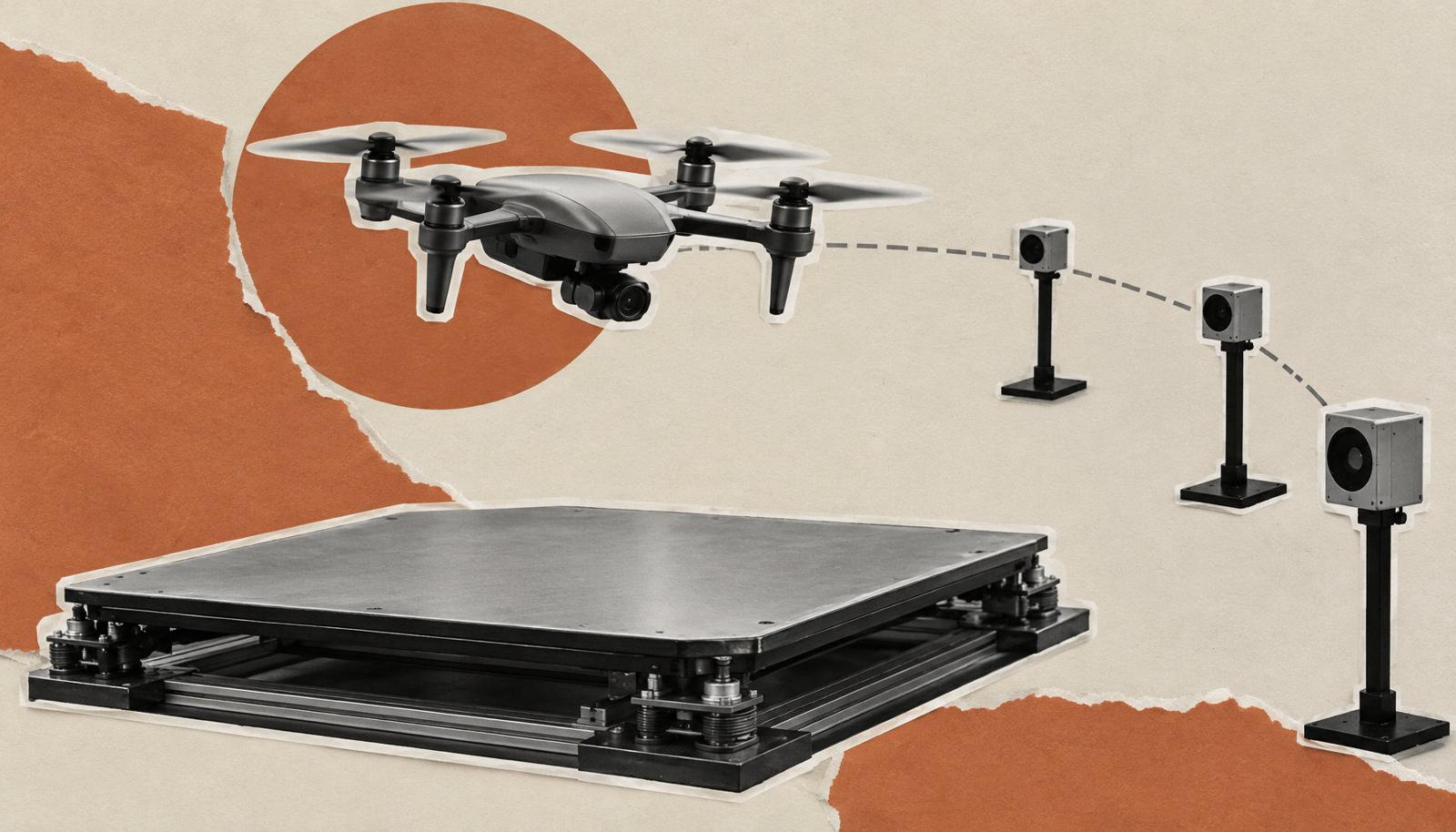
AI models could flag possible GPS spoofing from drone motion data in a study of 96 flight records, without using GPS-related attributes as inputs, according to an East Texas A&M University report published November 16. The work tests whether patterns in a drone’s movement can expose a mismatch between its apparent motion and its reported location; it does not demonstrate a live, in-flight warning system.
Checking motion instead of GPS
GPS spoofing uses false signals to make a receiver report an incorrect location. The researchers’ approach instead examines motion information, including speed, direction and elapsed time, to look for inconsistencies. The university compared the idea to dead reckoning, which tracks movement from a known point.
The WATCH 2026 program lists the paper as “Foundation Models for Trajectory-based UAV Location Integrity Checks.” The workshop took place in The Hague on November 15, alongside the Association for Computing Machinery’s Conference on Computer and Communications Security.
The dataset contained records from 42 normal flights and 54 flights conducted under controlled spoofing attacks. Some attacks supplied one false location; others supplied false coordinates that changed over time. The researchers set aside 22 complete flights for testing, so those records were not seen by the models during training.
Pretrained models lead the comparison
East Texas A&M’s account says the team compared eight AI models, including models trained from scratch on flight records and models that had prior training. The system also used flight records to train a separate component to classify short stretches of data as normal or abnormal.
With 10 consecutive readings, a model called Chronos scored 97.5% on a measure that balances detection of abnormal sequences against the correctness of alerts, the university reported.
The paper’s first author is Iyanuoluwa Alegbeleye, an East Texas A&M undergraduate computer science student and research assistant. Co-authors are Shinhwan Kim, an East Texas A&M master’s student; Sang-Yoon Chang of the University of Colorado Colorado Springs; and Jinoh Kim, a professor at East Texas A&M.
Flight testing remains ahead
Running the checks during flight is a next step, according to the university. The broader project also examines how a drone might estimate its location when reliable information is unavailable. The project is supported by a two-year National Science Foundation grant of about $200,000.
The study was accepted for presentation at WATCH 2026, a peer-reviewed workshop held alongside the ACM conference. Its test set came from actual drone flights, but the spoofing flights were conducted under controlled conditions, and the reported evaluation was on recorded data.
Sources
- Original source East Texas A&M University etamu.edu
Other pages read
- WATCH 2026 watch-miniconf.github.io