The Floor
DOE says AutoBot tested under 1% of perovskite recipes
A Berkeley Lab platform predicted perovskite manufacturing conditions after testing a small fraction of more than 5,000 combinations, the Energy Department says. The department highlighted research published in 2025 that identified humidity as the strongest influence on film quality.
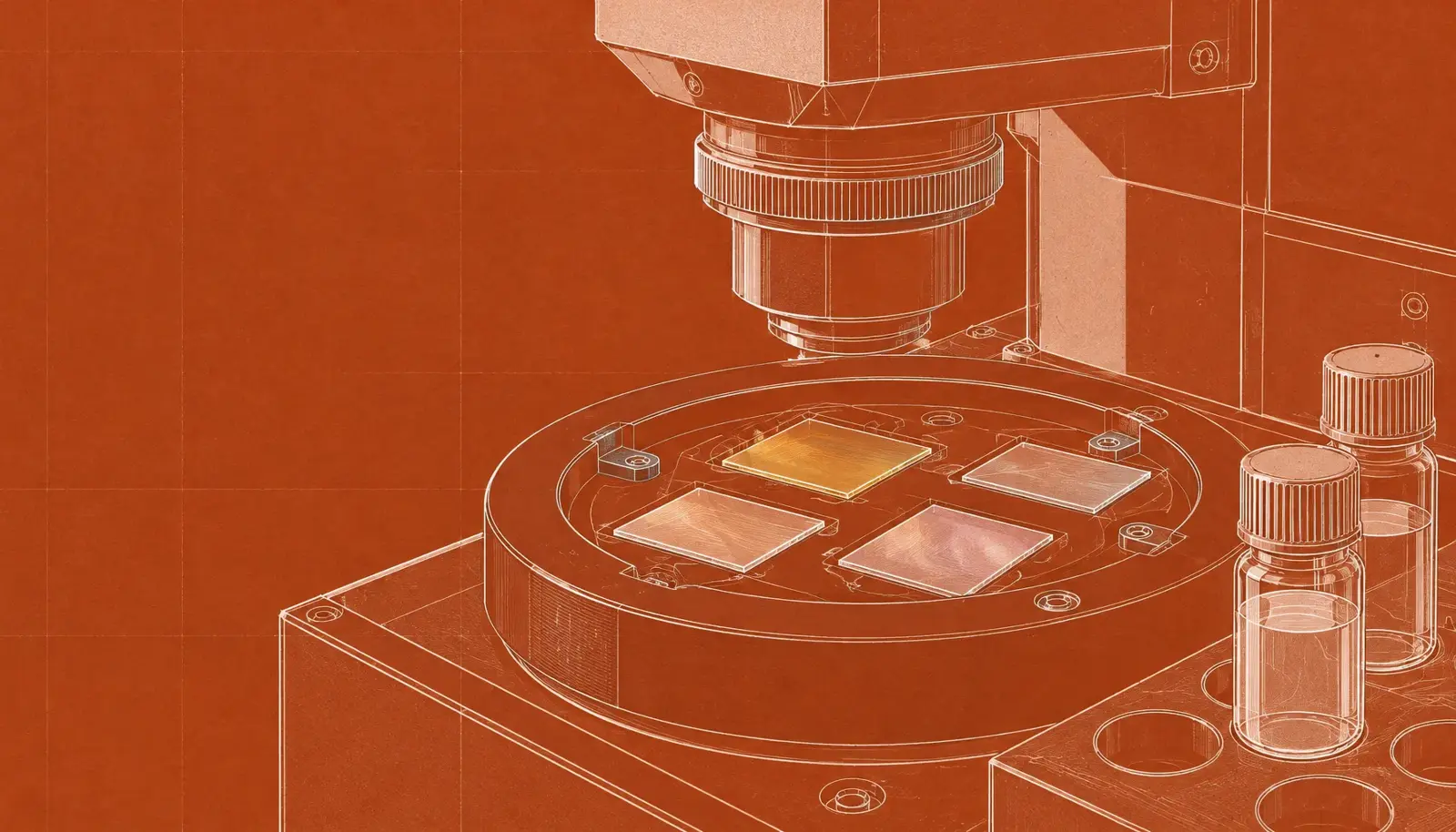
A laboratory platform called AutoBot predicted conditions for making halide perovskites after examining more than 5,000 possible combinations, according to the U.S. Department of Energy. The department said it tested fewer than 1% of those combinations experimentally to make its predictions.
The Department of Energy highlighted the work on November 10. The underlying study was published in Advanced Energy Materials in 2025; Berkeley Lab described the demonstration in a September 2025 announcement.
Choosing the next experiment
AutoBot combines robotic equipment with machine learning to make and assess materials. The platform refines subsequent experiments using the results of earlier ones, according to the Molecular Foundry.
In the perovskite experiment, the system made thin films from chemical precursor solutions while varying annealing temperature, annealing time, antisolvent drop time and relative humidity during film deposition. According to Berkeley Lab, AutoBot characterized the samples with three techniques: UV-Vis spectroscopy, photoluminescence spectroscopy and photoluminescence imaging.
A data workflow combined the measurements into a score for film quality; Berkeley Lab says collaborators at the University of Washington designed an approach to convert the photoluminescence images into a single number based on how the light intensity varied across the images. The algorithms used those scores to model the relationship between the preparation conditions and the resulting films, then chose the next experiments to obtain information.
The Molecular Foundry said the platform used Bayesian optimization to select informative experiments. The team reported that the learning rate fell to 2% after less than 1% of the possible combinations had been sampled.
Berkeley Lab says it took AutoBot just a few weeks to explore the combinations of fabrication parameters, a process that would have taken up to a year with the traditional trial-and-error approach in which researchers manually test one set of parameters at a time.
Humidity stood out
The department said the system identified humidity during production as the factor with the greatest effect on material quality, and follow-up experiments confirmed the prediction. Metal halide perovskites are being studied for uses including solar cells and detectors.
Berkeley Lab reported that high-quality films can be synthesized at relative humidity levels between 5 and 25% by carefully tuning the other three synthesis parameters, and that humidity above 25% destabilized the material during deposition, resulting in poor film quality. The team explained and validated this finding by manually performing photoluminescence spectroscopy during film synthesis.
The Molecular Foundry said subsequent measurements showed that relative humidity reduced the energy barrier to forming the alpha-perovskite phase in the presence of MACl.
Platform and funding
According to Berkeley Lab, a team it led built and demonstrated the platform. Scientists at the Molecular Foundry conceived the idea for AutoBot, expanded on a commercial robotics platform, and implemented solutions for data processing, analysis and machine learning infrastructure. The Foundry is a Department of Energy Office of Science user facility at Berkeley Lab. The multidisciplinary team included researchers from the University of Washington, the University of Nevada, the University of California, Davis, the University of California, Berkeley, and Friedrich-Alexander-Universität Erlangen-Nürnberg.
Funding came from the Department of Energy’s Office of Science, the National Science Foundation, the University of Washington, the Bavaria California Technology Center and the United States-India Educational Foundation.
Sources
- Original source · Government or agency page U.S. Department of Energy energy.gov
Other pages read
- Lawrence Berkeley National Laboratory newscenter.lbl.gov
- The Molecular Foundry foundry.lbl.gov
- Advanced Energy Materials advanced.onlinelibrary.wiley.com
- AZoM (copy of the Berkeley Lab release) azom.com
Related stories
- DOE Selects Four Lab Projects to Build Robotics Testbeds
- ETAMU study tests motion-based AI for drone GPS spoofing
- Researchers propose ASPIRE agent for system identification
- Berkeley and NVIDIA pair robot coding agents with a new benchmark
- DOBB preprint reports lower collision failures in navigation tests