The Floor
HII and Thales Run REMUS 620 Through Mine-Countermeasure Chain
HII and Thales say their demonstration linked REMUS 620 search, operator assessment of sonar contacts, and ANGLER mine reacquisition and identification. The exercise used Expeditionary PathMaster to coordinate the systems in a unified mission environment.
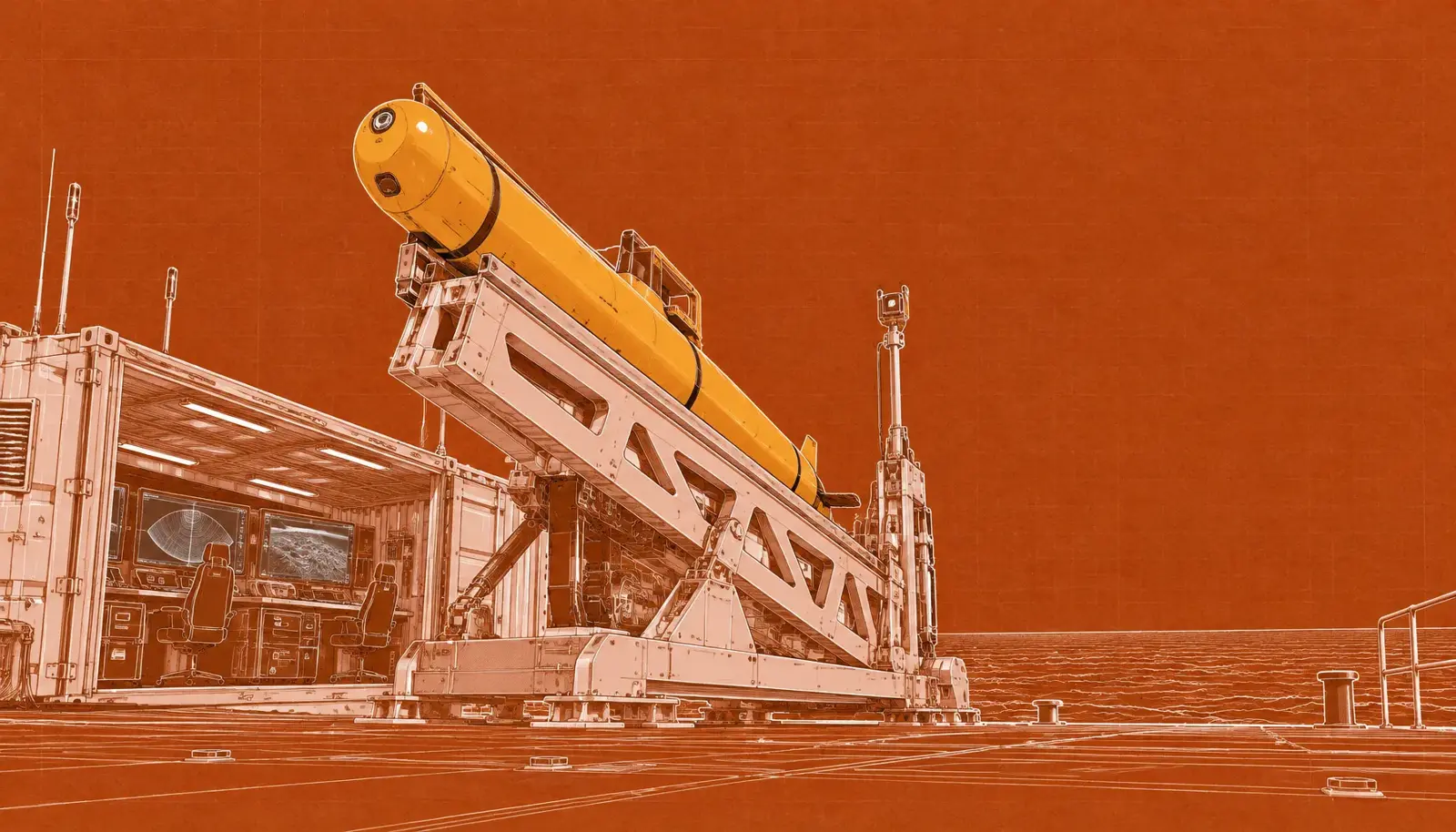
HII and Thales describe their demonstration as an autonomous mine-countermeasure chain, but the account gives operators a defined role: they classify and localize sonar contacts before an underwater vehicle handles reacquisition and visual identification. The companies say the exercise connected detection, analysis and the means to neutralize mine-like objects through Thales’ Expeditionary PathMaster architecture.
Source hii.com
REMUS 620 searches; operators assess contacts
HII’s REMUS 620 unmanned underwater vehicle searched with Thales’ SAMDIS 600 multi-aspect sonar, under HII command-and-control software interfaced with Thales’ Expeditionary Portable Operation Center, or ePOC. The demonstration used Thales’ mission-management system and sonar-analysis software alongside HII’s Odyssey mission-management solution and Thales Advanced Acoustic Concepts’ ANGLER mine-neutralization capability.
In the “Find” phase, the REMUS 620 autonomously searched the undersea environment for potential mine threats. In the “Fix” phase, Thales software combined high-resolution, multi-aspect sonar imagery with AI-enabled Automatic Target Recognition. Operators used that analysis to classify and localize mine-like objects and build a tactical picture for decision-making.
ANGLER completes the described “Finish” phase
For “Finish,” Thales AAC’s ANGLER underwater effector and a remotely operated vehicle reacquired the mine-like objects and visually identified the threat. The equipment provided the means to engage and neutralize the identified mine; reacquisition and identification are described as actions completed during the demonstration.
The ePOC coordinated the mission assets and provided operators with a unified operational picture and command and control throughout the workflow, according to HII. The demonstration also included automated launch and recovery of the REMUS 620, fitted with the SAMDIS 600 sonar, using HII’s Sea Launcher system.
PathMaster linked equipment from multiple providers
HII and Thales presented Expeditionary PathMaster as an open, modular architecture for integrating autonomous platforms, sensors, mission-management systems and effectors from different providers. The exercise connected HII’s underwater systems and ANGLER within what the companies describe as a common, NATO-compliant mission environment for allied navies.
“Bringing “Find, Fix and Finish” together demonstrates what is possible when proven unmanned platforms, advanced sensors, autonomy and effectors are designed to operate as an integrated system,” said Duane Fotheringham, president of HII’s Unmanned Systems group.
He said the demonstration moved the companies’ work beyond sensor integration to a complete mine-countermeasure mission capability.
The demonstration builds on a 2025 sonar exercise
The companies’ previous integration and field exercise paired the SAMDIS 600 sonar with the REMUS 620 in 2025. HII says the latest demonstration expanded that work to include mission management, AI-assisted sonar analysis and mine neutralization within a unified system.
Sébastien Guérémy, vice president of Underwater Systems at Thales, said the demonstration showed the company’s ability to integrate autonomous platforms, sensors, mission management and neutralization systems in one operational framework. HII and Thales presented the result as a connected mission chain spanning the REMUS 620’s search, operator assessment of sonar contacts and ANGLER’s reacquisition and visual identification.
Sources
- Original source HII Newsroom hii.com