The Floor
Humanoid Makers Must Pass a Manufacturing Test, Jabil Executive Tells The Robot Report
Jabil executive Thomas Brown told The Robot Report that humanoid makers face a shift from hand-built, low-volume robots to production in the tens of thousands. He identified manufacturing cost, edge computing, task validation and safety certification as hurdles to wider factory use.
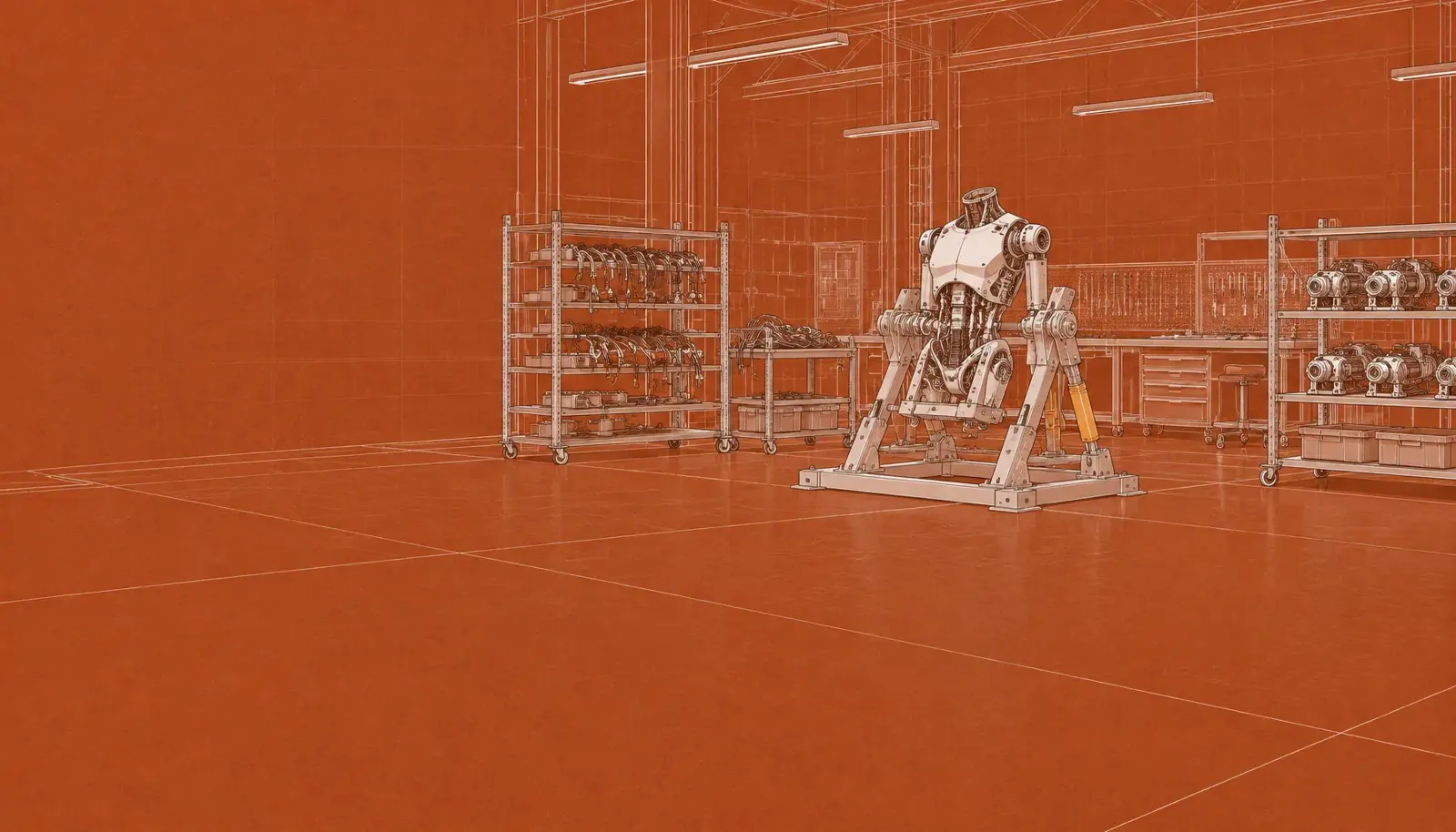
On October 8, Jabil senior director Thomas Brown described humanoid makers’ next hurdle as a move from hand-assembled batches to production measured in tens of thousands. The transition, he told The Robot Report, demands lower costs, designs suited to manufacturing and better quality—not just robots capable of impressive demonstrations.
“In terms of managing expectations, a lot of customers have gotten humanoids out in low volumes, but we are entering a phase of tens of thousands, where it’s no longer something that’s assembled by hand on site.”
Thomas Brown, senior director for engineering and technology, including digital commerce and robotics, at Jabil
From hand assembly to repeatable production
Brown’s comments frame a manufacturing challenge rather than a production forecast for any one robot maker. He said customers need to validate use cases while bringing down the cost of each machine; expensive units limit how many a company can deploy to gather training data. Jabil works with robotics developers on design and manufacturing, but Brown did not name the other humanoid companies it supports.
The Robot Report listed Tesla, 1X Technologies, XPeng and UBTECH among companies preparing to increase humanoid production. Jabil has a named collaboration with Apptronik, whose Apollo robot it has worked to bring into manufacturing environments. In a 2025 announcement, the companies said newly made Apollo units would be tested in Jabil facilities on tasks including inspection, sorting, kitting, lineside delivery, fixture placement and subassembly.
Edge computing adds a cost constraint
Brown said current computing can support many of the capabilities shown in robot demonstrations, but developers need more capacity at the edge. He identified NVIDIA’s Jetson series as a popular platform among Jabil’s robotics customers, while warning that the price of compute and memory remains a problem when scaling production. Foundation-model developers, he said, are building systems that exceed what current edge hardware can handle.
The constraint connects robot capability to the bill of materials: higher-end computing can expand what a robot does, but the hardware cost has to fit the job and the planned production volume. Brown also pointed to wiring harnesses as a design challenge, saying humanoids need automotive-style durability in a compact form more like high-grade consumer electronics. He described rapid iteration with partners and a range of swappable power supplies as part of the development work.
A humanoid is not the answer to every factory task
Humanoids could make sense where a factory needs one platform to handle varied work, unlike a production line built around a single task, Brown argued. But he did not present a bipedal form as the default choice. Wheeled bases, mobile arms and simpler configurations can be easier to solve and more cost-appropriate for particular jobs, he said.
Speed is one reason to keep other automation in the mix. Brown cited a traditional machine tender moving at 1.5 meters per second as already fast, and said a humanoid moving at that pace would be exceptionally quick, particularly while carrying a load. The right choice depends on the facility and its existing line; conventional high-speed automation will continue to have a substantial role, Brown said.
Safety standards have to catch up with deployment
Factory use also requires answers about how humanoids behave when something goes wrong. Developers and operators still need to understand failure modes, determine how to certify robots in new environments and assess what a model will do under specific conditions, Brown said. Existing safety practices for robotic arms—including certifications, separation distances and protective cages—do not by themselves settle those questions for humanoids.
Companies are tracking legislation and developing safety standards, Brown said, and existing rules will need to cover commercial and consumer settings. Before humanoid fleets can be treated like established factory automation, manufacturers must show that the robots can be produced consistently, perform defined jobs at an acceptable cost and meet safety requirements in the environments where they will work.
Sources
- Original source The Robot Report therobotreport.com
Other pages read
- Jabil and Apptronik s27.q4cdn.com
Related stories
- Panasonic Targets Humanoid Robot Production by 2029; Results Remain Undisclosed
- AiMOGA Opens Mobo Preorders for Its 0.9-Meter Home Humanoid
- Noetix Humanoid Averages 7.14 m/s in a Timed 100-Meter Sprint
- Astribot Prices Its T1 Humanoid at $18,000 in North America
- SUSTech Team Builds Humanoid Skin With More Than 10,000 Sensors