The Floor
KAIST Puts Physical AI Platforms Ahead of Humanoid Form
KAIST held Physical AI KOREA 2026 on October 13, presenting a platform-first approach to physical AI and demonstrating a wearable robot. The institute’s strategy links robotics research with industry, education and startup activity.
“The key competition in physical AI is not about how closely robots resemble humans, but about how widely we can deploy AI that understands and moves within the physical world across diverse environments,”
Choongsik Bae, KAIST president, said.
KAIST held Physical AI KOREA 2026 at its Daejeon campus on October 13. The event presented platform technologies and strategies for research, education and entrepreneurship, with applications spanning manufacturing, healthcare, defense, logistics and everyday life.
From a robot’s body to shared capabilities
KAIST’s proposal shifts attention from choosing a single robot form to developing technologies that can serve different machines and settings. Humanoids remain one possible embodiment, but the institute says physical AI should not be confined to them or to selected factories.
The framework groups those capabilities into three areas. Perceptual intelligence lets a machine sense the physical world; motor intelligence turns that information into movements suited to the situation; collective intelligence lets multiple robots and systems share information and act together.
That framing puts sensors, actuators and data alongside AI models. KAIST says its research strengths in robotics, artificial intelligence, sensors, actuators and data can be connected into a common technical base, rather than concentrated on perfecting one specific robot.
A wearable robot brings the argument to health
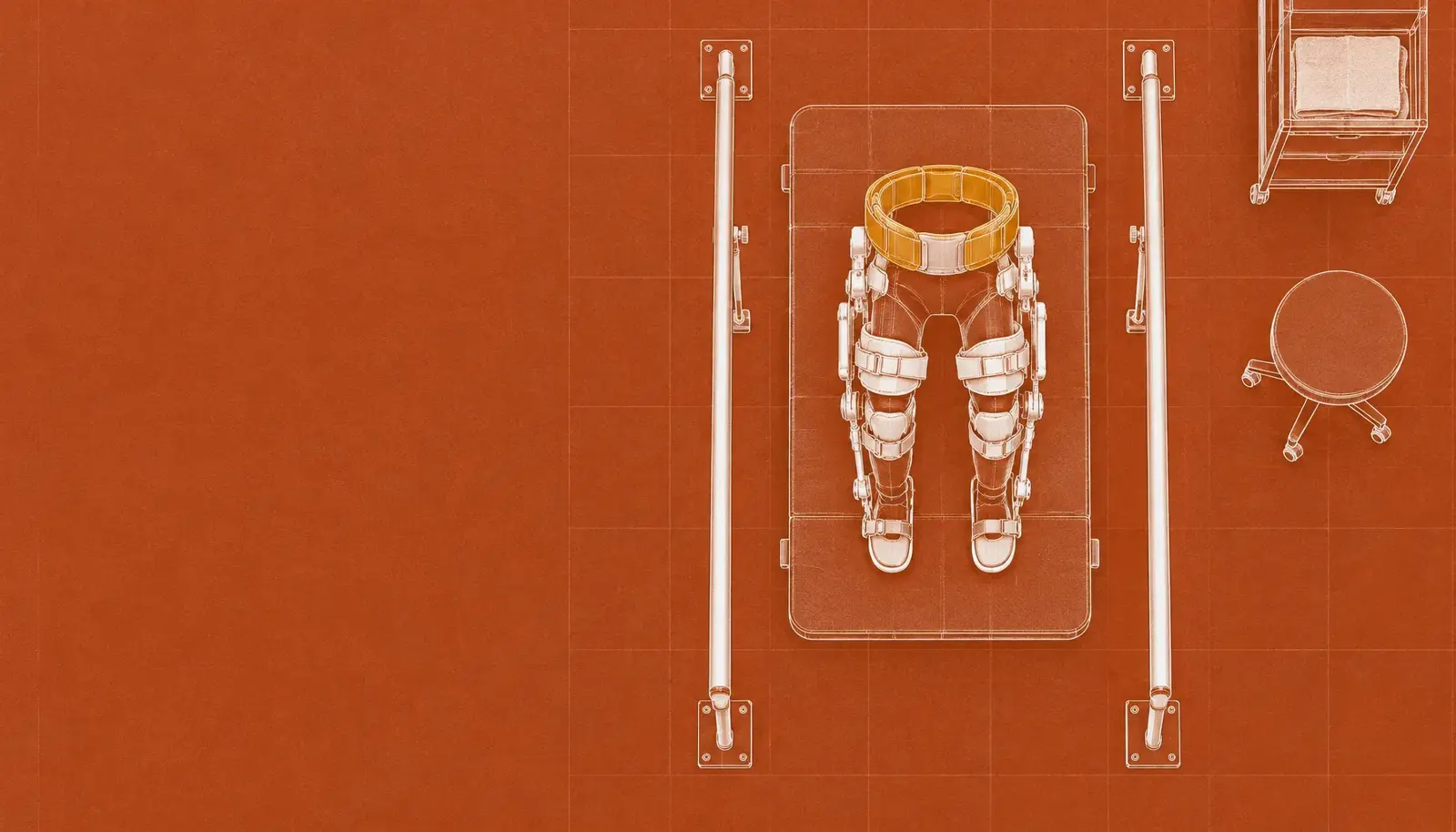
At the event, Bae wore a device developed by Professor Kyoungchul Kong’s research team and demonstrated how movement data collected by the robot could be analyzed. KAIST describes the device as technology primarily studied for rehabilitation and walking assistance for people with disabilities.
The institute’s stated aim reaches beyond helping a wearer walk. With physical-AI capabilities, KAIST says, a wearable robot could also monitor movement and help interpret a person’s condition. The demonstration illustrated how the same sensing and movement technologies could apply beyond factory automation.
KAIST also identifies the Human Physical AI Research Center, whose co-directors are professors Jung Kim and Kyoungchul Kong, as part of its work on understanding human movement. The center is pursuing related research with the NVIDIA AI Technology Center, according to the institute.
Research-to-industry links are part of the plan
At the October 13 event, KAIST presented platform technologies and demonstrations featuring humanoid robots and a robot pilot. Speakers discussed the challenges of industrializing physical AI and KAIST’s role in that effort. The program also included a session on building a Korean physical-AI industrial ecosystem.
The institute says it wants to connect foundational research with product development at faculty-founded startups, while supporting education, laboratory-based startups and retraining for people already working in industry. It plans to continue hosting Physical AI KOREA as a venue for researchers and companies to discuss technical progress and unresolved challenges.
The test is whether platforms travel
KAIST’s proposal makes deployment across different environments the measure of progress, not resemblance to a person. That places a demanding test on its platform-first approach: shared sensing, control and coordination technologies must work across machines with different bodies and tasks.
The October 13 gathering presented a strategy and demonstrations, not evidence that those platforms are already deployed across the named sectors. KAIST’s stated commitment is to link its research, training and startup activity, and to keep convening the event to report progress and remaining challenges.
Sources
- Original source KAIST News Center kaist.ac.kr