The Floor
KRAFTON Presents Ludi 0.2 for Socially Aware Robots
KRAFTON’s Ludo Robotics presented Ludi 0.2 at UC Berkeley’s Bay Area Robotics Symposium on October 30, 2026. The update targets gesture interpretation, memory, human-intent recognition and coordination between robot actions.
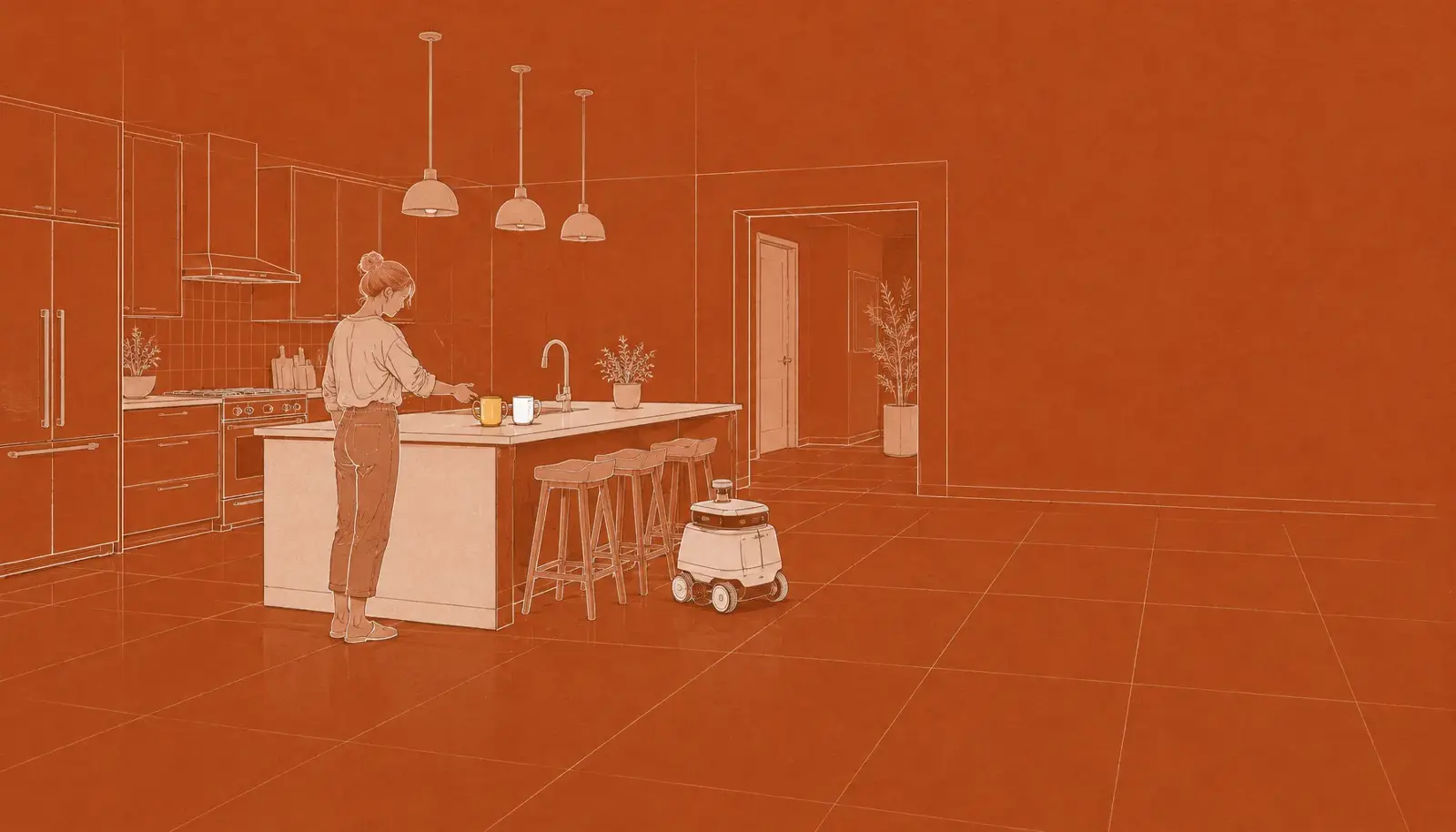
“Robots are becoming increasingly capable of performing physical tasks, but understanding and responding to people remains a major challenge,”
Kangwook Lee, Chief AI Officer of KRAFTON and CTO of Ludo Robotics
KRAFTON’s Ludo Robotics presented Ludi 0.2 on October 30 at the Bay Area Robotics Symposium at UC Berkeley. The update is designed to help robots interpret human intent and feedback, keep track of changing tasks, recognize gestures and coordinate movement with conversation and reasoning. The company describes those capabilities as advances for supported environments, not as a commercially available robot product.
Ludi 0.2 targets gestures, memory and movement
Ludo’s announcement groups the update’s aims into five areas: social intelligence, memory and reasoning, coordination among navigation and manipulation tools, gesture interpretation, and physical movement. The system should better respond to human cues and adapt when a task changes, while moving more smoothly in environments it supports, the company says. It does not provide Ludi 0.2 benchmark scores, quantified gains, or hardware specifications in the announcement.
The release places the work within KRAFTON’s effort to carry interactive AI from games into physical settings. The company behind PUBG: BATTLEGROUNDS says experience with virtual characters that respond to players informs Ludo’s research into robots that communicate and act alongside people. That connection is the company’s rationale for the project, not evidence that game-trained systems already transfer reliably to robots.
The Ludi 0.1 paper shows the system’s starting point
Ludi 0.1, introduced in August, combined a vision-language model for scene reasoning and dialogue with separate navigation and manipulation capabilities. Its technical report describes an agent that can speak with a user, ask clarifying questions, navigate indoors and invoke specialized manipulation policies. The implementation ran on a Unitree G1 humanoid connected to an onsite GPU workstation, the paper says; those details describe version 0.1, not hardware disclosed for Ludi 0.2.
The report’s example illustrates the intended interaction: after a person changes a request from Coke to Pepsi while the robot is beginning to reach, Ludi revises its choice and continues the task. The authors also describe limits in the modular design, including potential context loss, latency and brittle handoffs between components. Ludi 1.0 is the planned next step: a model intended to integrate perception, dialogue and physical action more deeply.
Published performance evidence remains the test
A Fast Company interview published October 30 adds a caveat to the announcement: KRAFTON CEO CH Kim described Ludi as a research demonstration that is not yet reliable enough for everyday use. Lee told the publication, “It’s especially important to understand whether the robot behaves appropriately when people are nearby and how its physical movements affect those interactions.”
Ludo had not published Ludi 0.2’s Interaction Core28 results or enough details about its new evaluations for independent researchers to reproduce them, Fast Company reported. Ludo is developing benchmarks for social situations, including different preferences and relationships, as well as gesture-driven manipulation. Until results for the new version are available, Ludi 0.2’s public case rests on a list of intended capability improvements rather than reported comparative measurements.
Ludi 1.0 is meant to reduce the handoffs
Ludo’s roadmap points toward Ludi 1.0, a foundation model intended to connect perception, dialogue and physical action in one system. The earlier architecture hands work between a reasoning model and specialized tools; the research paper identifies that structure as a source of delays and fragmented behavior. The company is targeting 2027 for the next model, Fast Company reports, while the KRAFTON announcement describes it as in development.
That makes Ludi 0.2 an incremental research release rather than a demonstration of a finished social robot. Its stated advances concern how the system reads people and coordinates existing abilities; the company has not yet supplied public performance results for the update. The next concrete measure is whether Ludo publishes reproducible Ludi 0.2 evaluations alongside its stated work on Ludi 1.0.
Sources
- Original source · Press release PR Newswire prnewswire.com
Other pages read
- arXiv arxiv.org
- Fast Company fastcompany.com
Related stories
- JBNU Researchers Test Gesture-Controlled Drone With Tactile-Only Feedback
- Preprint links LLM hidden states to facial-robot motion
- Preprint reports fewer simulated contacts using robot interrupts
- Researchers Present LumiTac, a Six-Axis Sensor With a 12 mm-Diameter Sensing Head
- Unitree Go2 Study Finds Assistive Robot Explanations Need Restraint