The Floor
LaST1.0 preprint reports stronger manipulation results in simulation and hardware tests
A November 18 arXiv preprint presents LaST1.0, a robot-manipulation model that predicts compact geometric representations of future wrist-camera views alongside actions. Its authors report 92.0% average success on RLBench and 54.0% average full-task success across five real-world tasks.
A different target for future prediction
A preprint dated November 18, 2026, presents LaST1.0, a model for robotic manipulation that predicts future geometry-related signals alongside actions. The authors frame the model as a way to make future prediction focus on the parts of a scene relevant to robot-object interaction.
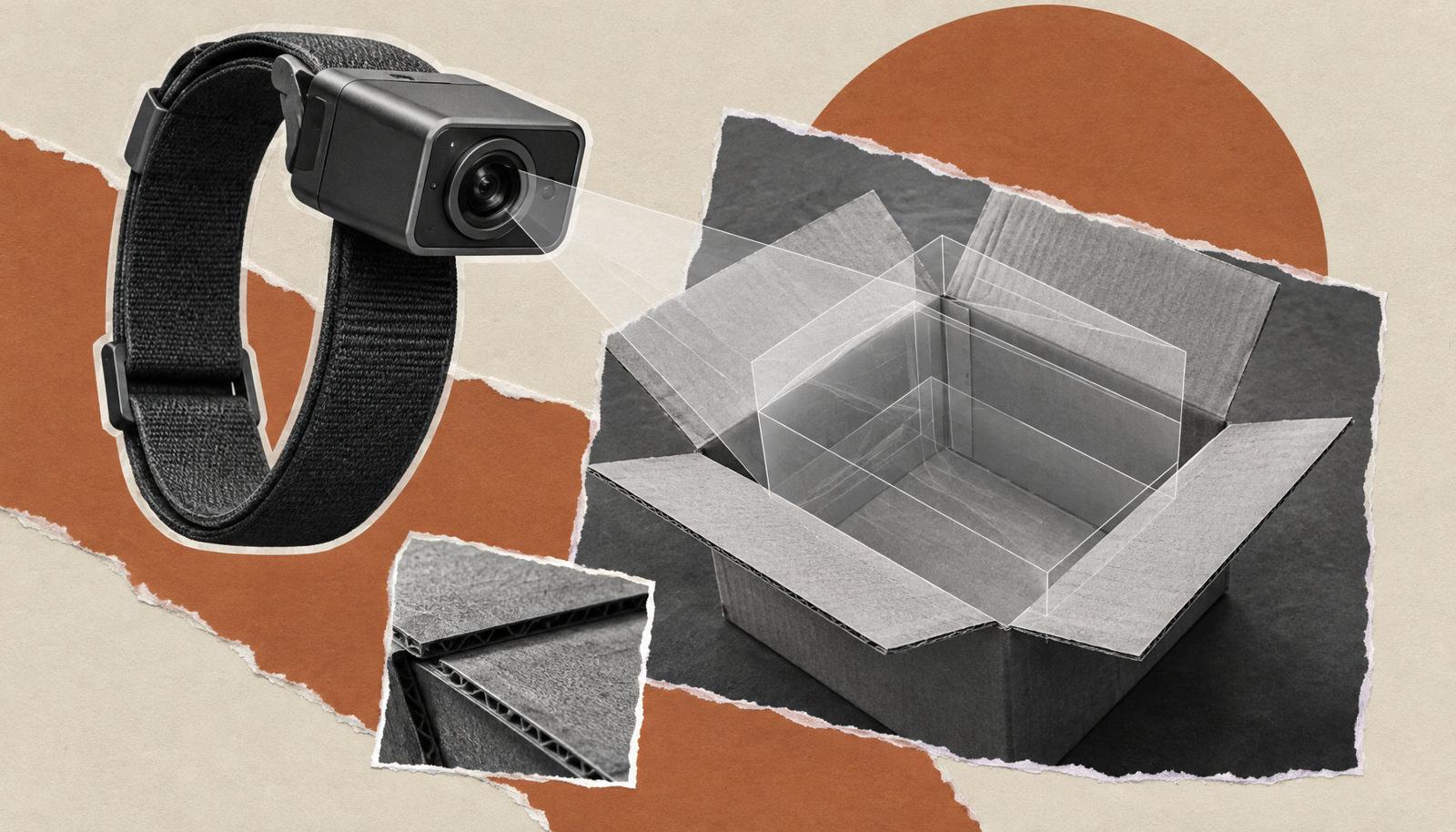
Rather than reconstructing a complete future video, LaST1.0 predicts compact geometric targets derived from future wrist-camera views. The paper says this approach concentrates supervision on the changing relationship between the robot and the objects it manipulates, rather than on details such as background appearance.
Training the model to act
At training time, future wrist-view images provide targets for an auxiliary latent-prediction pathway. At inference, the paper says, that pathway is omitted; the model generates actions from the current inputs without requiring the future-view targets.
The architecture uses a lightweight patch embedder instead of a vision encoder, according to the paper, and introduces LaST-Attention. Its attention mechanism represents sequence, image height, image width and time as separate dimensions for interactions across modalities.
Results in simulation
The authors evaluated the model on RLBench, LIBERO and LIBERO-Plus, comparing it with vision-language-action and world-action models. For RLBench, the authors selected 10 manipulation tasks in CoppeliaSim using a Franka Panda arm; evaluation used 50 independent rollouts per task.
On RLBench, the paper reports a 92.0% average success rate, compared with 81.8% for LaST0, the strongest baseline in that comparison. For LIBERO, the authors report a 99.0% average across its four suites; on LIBERO-Plus, they report an 86.3% average after transferring the LIBERO-trained weights without further fine-tuning.
Tests with physical robots
The real-world evaluation covered five multi-stage tasks on dual-arm Franka and Tianji setups, including packing a parcel box, assembling a toy truck and stacking cups. For evaluation, each policy was tested on 20 real-world rollouts per task, with different initial object poses and spatial arrangements.
The authors report a 67.1% average success rate across task stages and a 54.0% average for completing the full tasks. In comparison, the full-task average was 36.0% for π0.5, 35.0% for LaST0 and 30.0% for Cosmos Policy.
On the four-stage Assemble Truck Toy task, LaST1.0 completed the full task in 30.0% of rollouts, compared with at most 5.0% for the baselines, the paper reports. On the Stack Cups task with dexterous hands, it matched the strongest baseline with a 50.0% full-task success rate.
Generalization checks
For an additional generalization test, the researchers evaluated the Put Object in Bag task with a novel object, a busier background and a target position outside the training distribution. They used the original model checkpoint without extra training or fine-tuning and ran 20 rollouts in each setting.
The authors report success rates of 55.0% with the novel object, 70.0% with the changed background and 50.0% with the changed position. Across those three settings, LaST1.0 had an average success rate of 58.3%, according to the paper.
Sources
- Original source · Preprint LaST1.0: A Unified Latent World-Action Model with Control-Centric SpatioTemporal Reasoning arXiv:2611.23974
Related stories
- CoT-WAM links vision-language planning to robot actions
- LoCo-WAM Uses Test-Time Training to Extend Robot Model History
- RoboPRO preprint tests manipulation policies in simulated clutter
- CoRA-VTLA preprint adds tactile memory to robot manipulation
- Preprint finds 61 checker defects in robot simulation benchmarks