The Floor
Leonardo Selects Shield AI’s Hivemind for Proteus Autonomy
Leonardo will use Shield AI’s Hivemind software development kit to build mission autonomy for its Proteus uncrewed rotorcraft. The work targets anti-submarine warfare, reconnaissance and contested logistics, building on Proteus’s maiden flight with Leonardo-designed autonomy in early 2026.
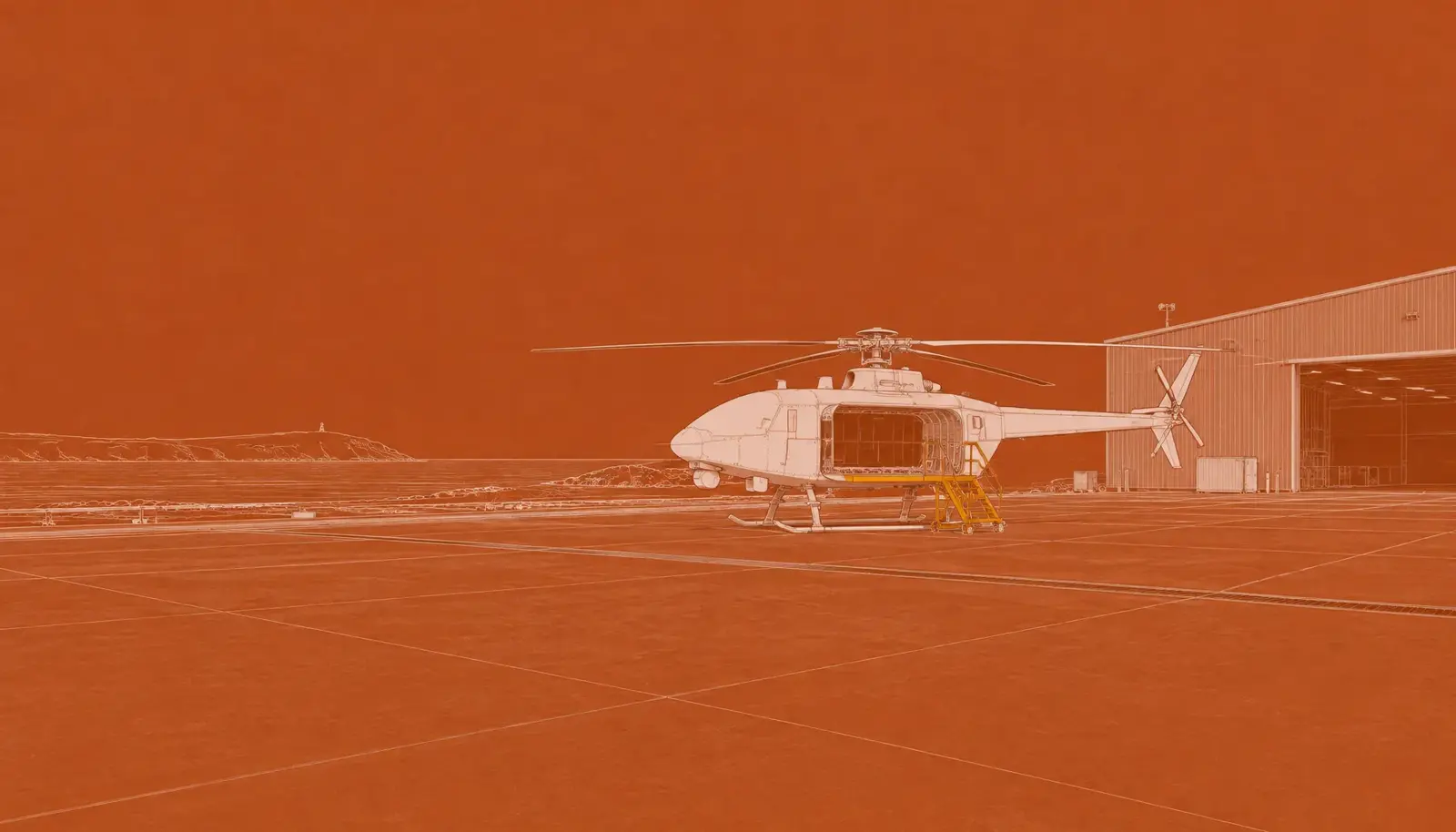
Proteus is designed to carry about one tonne of mission equipment—or two standard NATO pallets—and Leonardo has selected Shield AI’s Hivemind software to develop autonomy for the uncrewed rotorcraft. The agreement, announced in a release datelined London on October 29, gives Leonardo engineers access to Hivemind’s software development kit (SDK) to build mission-specific capabilities.
The work is aimed at rotary-wing operations including anti-submarine warfare, intelligence, surveillance and reconnaissance (ISR), and logistics in contested environments. Shield’s newsroom lists the release on October 28, while the announcement itself carries an October 29 dateline.
Leonardo engineers will build the mission software
The agreement is structured around Leonardo developing its own autonomy with the Hivemind SDK, rather than Shield announcing a completed integration or a Proteus deployment using the software. The companies say they will work together on integrating Hivemind so Leonardo engineers can develop new capabilities for the aircraft and other rotary-wing operations.
“Leonardo’s engineers can therefore tailor Hivemind software to their mission sets, and the work stays with them,” said Tom Schaefer, vice president of Hivemind engineering at Shield. The company says its SDK lets partners develop, integrate, test, deploy and update their own autonomous pilots, while retaining what they build.
Leonardo also sees the possibility of applying the software beyond Proteus. Adam Wardrope, vice president market development helicopters UK at Leonardo, said the company could potentially extend the work to other programmes in its rotary-wing portfolio. The announcement does not name any additional aircraft or commit to a wider rollout.
Proteus had already flown with Leonardo autonomy
Leonardo developed Proteus with the Royal Navy and UK Defence Innovation under the Rotary Wing Uncrewed Air System CCD Phase 3B technology-demonstrator programme. The aircraft is intended to inform the Royal Navy’s Maritime Aviation Transformation strategy, which sets out the service’s aviation evolution through 2040.
Shield’s announcement says a real Proteus aircraft made its maiden flight in early 2026 with Leonardo-designed autonomy embedded, following demonstrations in synthetic operational scenarios. Hivemind is intended to support further development of those capabilities. The release does not say that Hivemind was aboard for the maiden flight or that the aircraft has yet flown with Shield’s software.
A one-tonne payload bay leaves room for varied missions
The modular payload bay is designed to accommodate about one tonne of equipment or two standard NATO 463L pallets. Leonardo describes potential uses including anti-submarine warfare, airborne early warning and intra-theatre lift; the Shield agreement specifically identifies anti-submarine warfare, ISR and contested logistics as autonomy-development areas.
The pairing gives Leonardo a software toolkit for developing mission autonomy on a demonstrator already designed around multiple payloads and roles. But the announcement provides no contract value, development schedule, integration milestones or first mission date. The concrete next step is the joint work to integrate the SDK and enable Leonardo engineers to develop the capabilities themselves.
Sources
- Original source Shield AI shield.ai