The Floor
Library of Hands more than doubles simulated success, preprint reports
A training-free method raised success across three simulated tasks from 28.6% to 62.3%, researchers report. The method adjusts the mapping between commands and actions while keeping the underlying world model unchanged.
A method that adjusts how robot commands are applied raised success from 28.6% to 62.3% across three simulated tasks without retraining the underlying world model, researchers report in a preprint. Called Library of Hands, the method stores mappings it has identified so it can recognize a returning setup rather than identify it again.
The work addresses cases where a planner’s predictions remain useful but commands no longer produce the movements it expects. In one example, a frozen planner using the LeWM world model succeeded in 77.5% of episodes under its original action convention but 7.8% when its commands were rotated by 90 degrees, the authors report.
Reading the action
A world model predicts how a scene will change after an action; a planner uses those predictions to search for actions that reach a goal. The researchers call the mapping from commands to applied actions a “hand”: it is an interface between planner and motors, not a physical gripper.
The proposed method keeps the world model’s weights unchanged and uses the model to estimate which action best explains the change between successive camera images. It compares that estimate with the command, weighs readings by their reliability and fits a mapping that can account for changes such as direction, scale or delay.
A library retains identified mappings and compares them with new observations as the robot proceeds. The method uses the world model’s existing inputs rather than an additional sensor, according to the preprint.
Tests with changing setups
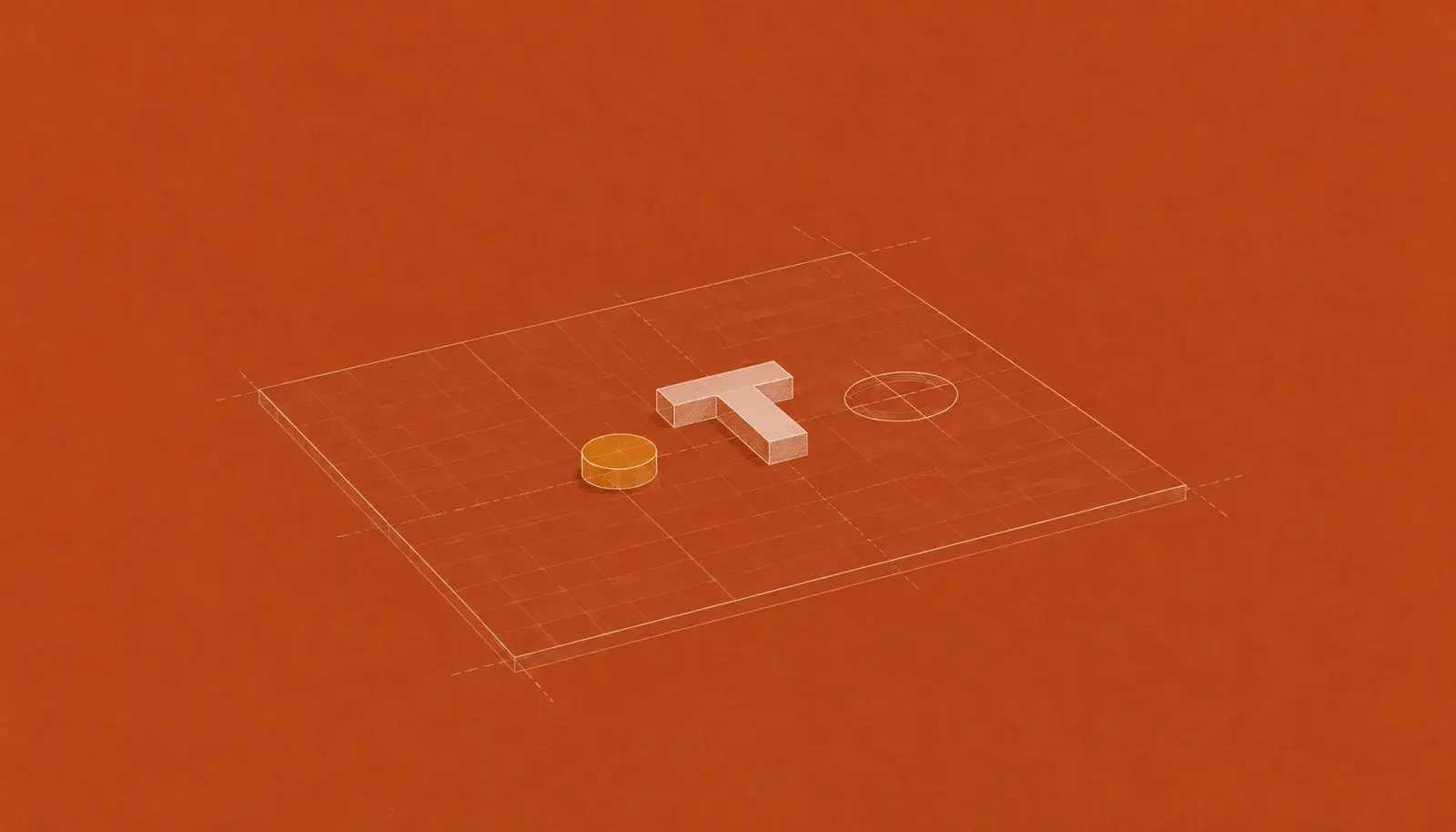
The researchers tested the approach in closed loop on PushT, where a pusher moves a T-shaped block; Reacher, where a planar arm moves to a target configuration; and Two-Room, where a point agent navigates a divided plane. The tests used schedules in which action mappings returned in a fixed order, returned at random or changed to a new turn in every episode.
In the main locked test, which used 20 new seeds, the reported 28.6% and 62.3% success rates cover all episodes across those changing-hand schedules. When the hand did not change, the method’s success was 0.6 percentage points below the frozen planner’s result, a statistically significant loss, the paper says.
The team also ran the method with DINO-WM and JEPA-WM on the simulated tasks. In separate tests using models pretrained on real robot data, the researchers evaluated an object-placement task in the simulated RoboCasa kitchen and reported that the method met their criteria on two of three models.
For DINO-WM in that kitchen test, success after a known hand returned rose from 7.8% with the frozen planner to 26.6% with the method. On JEPA-WM, the gain after returns was smaller and success with no change fell by 6.2 percentage points, according to the researchers.
Limits of the mapping
The approach assumes that the frozen predictor remains accurate after a setup changes and that the main mismatch can be expressed as a transformation of actions. A moved camera meets that assumption only if the model still predicts well from the new view.
The paper also reports weaker results when the hand changed during an episode and a loss when the simulated world changed instead of the hand. Each episode’s first action block is planned using the previous hand, before the method can read the new one.
The authors list a test on a real robot as future work. They also identify hands that change with the state as a kind of mapping the current fixed classes cannot express.
Sources
- Original source · Preprint Library of Hands: Fix the Hands, Not the World Model arXiv:2611.12678
Related stories
- Preprint reports obstacle signals fading in imagined driving rollouts
- Paper reports 3.8 ms refinement for robot policies in simulation
- Oxford researchers report agent-designed soft robots in preprint
- NTT says physics-based model improved robot shelf-loading test
- Researchers derive force-closure test for cooperative pushing