The Floor
Ma’anshan Sets Humanoid Robot Trials in Factories, Hotels and Communities
Ma’anshan plans humanoid robot tests in industrial, logistics, hotel, supermarket and community settings from November 16, followed by a central competition in December. The 13 events will cover logistics, manufacturing, services, safety, and sports and culture.
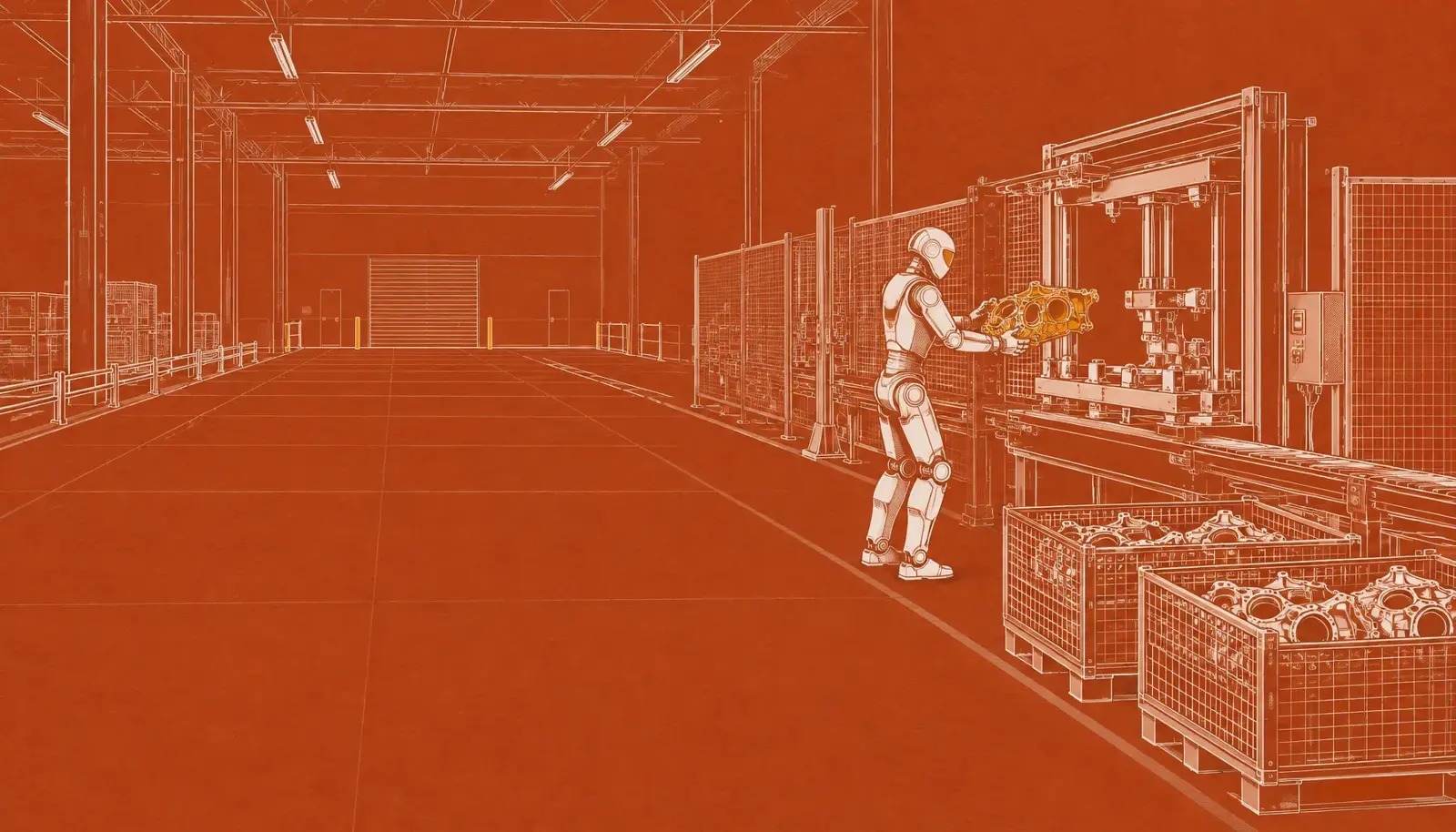
Ma’anshan plans to put humanoid robots through tasks in factories, logistics facilities, hotels, supermarkets and communities, with field tests scheduled to begin November 16. The city government, the Chinese Institute of Electronics and the World Robot Cooperation Organization announced the two-stage challenge in Beijing on November 2, setting out 13 events across five application areas.
Factories, hotels and community routes
The first stage runs from November 16 through December 3, with selected events taking place in working environments around Ma’anshan, in Anhui province. A central competition follows from December 4 to 6 at the Ma’anshan Sports and Exhibition Center. The test events will take place in local industrial and logistics companies, hotels, supermarkets and communities, using real working environments.
The 13 events span logistics, manufacturing, services, safety, and sports and culture. Logistics challenges include package identification and picking, sorting and delivery, and autonomous navigation. Manufacturing events include material handling and loading and unloading, precision assembly, tug-of-war and load-carrying. Service events focus on hotel cleaning, folding linens and restocking supermarket shelves, while an emergency-rescue event includes crossing a broken bridge, navigating ruins, inspecting utility tunnels and responding to water-related hazards.
The program also includes human-robot badminton and table tennis, a combat-sport event and a poetry challenge. The challenge is intended to test robot capabilities in real production and living environments, accumulate high-quality real-robot data and experience in industrial deployment, and connect innovations with application needs, according to the announcement. Eligible teams from companies, universities and research institutes may enter independently or jointly.
Liang frames the shift as work, not spectacle
Liang Liang, deputy secretary-general of the Chinese Institute of Electronics, described the competition as a response to a change in what the sector needs to demonstrate. The institute’s notice gives his remarks in Chinese:
“行业关注的重点已从‘舞台上跳起来、赛场上跑起来’转向‘工厂里干起来、超市里用起来’。” — Liang Liang, deputy secretary-general of the Chinese Institute of Electronics
The events are designed to assess capabilities such as perception, navigation, manipulation and sustained task execution in settings that include production lines, hotel rooms and community spaces. The announcement describes precision assembly as involving millimeter-level insertion and flexible force control, while hotel and supermarket tasks involve handling flexible items and placing goods. The field tests are scheduled to begin November 16.
Ma’anshan pitches local sites and infrastructure
Ma’anshan officials presented the challenge as part of a broader effort to bring robotics companies and applications to the city. Vice Mayor Yi Maolin said the city has more than 100 companies in its artificial-intelligence and robotics supply chain and has identified more than 190 robot application scenarios with potential for wider use. The city has established an embodied-robot innovation center and has developed capacity to supply 500,000 hours of high-quality real-robot data annually, he said. The city’s online computing capacity exceeds 1,600P, according to Yi.
Manufacturing conditions are another part of the pitch. Teng Qing, head of the city’s industry and information technology bureau, said the digital-transformation rate among industrial enterprises above the designated size in Ma’anshan is 99%, while 75% of key production processes have computer numerical control. Production lines in steel and equipment manufacturing have digital interfaces that could support testing and algorithm iteration, he said.
Registration is open through November 27, according to the announcement. The December challenge will coincide with an industrial-AI event in Ma’anshan and a meeting between companies and the Ministry of Industry and Information Technology’s humanoid robot and embodied-intelligence standards committee. The test events are scheduled to take place at local sites from November 16 through December 3.
Sources
- Original source Chinese Institute of Electronics cie.org.cn
Related stories
- EMS-Nav uses functional regions to guide multi-scale robot navigation
- Primotion Unveils Paimon-0 and Targets Chip Deliveries in 2028
- Unitree Revenue Climbs 70% as AI Spending Squeezes Profit
- NIOSH seeks input on humanoid robot workplace safety
- A Humanoid Planner Generates Feasible Movements Without Predefined Contact Sequences