The Floor
MIT researchers create a new system to identify and correct unreliable object descriptions stored in a robot’s memory
MIT researchers created UQ-DAAAM, a system that identifies and corrects unreliable object descriptions stored in robot memory. The refinement step is able to resolve ambiguities for about 92 percent of the objects in the robot’s environment while only requiring two additional captions per object.
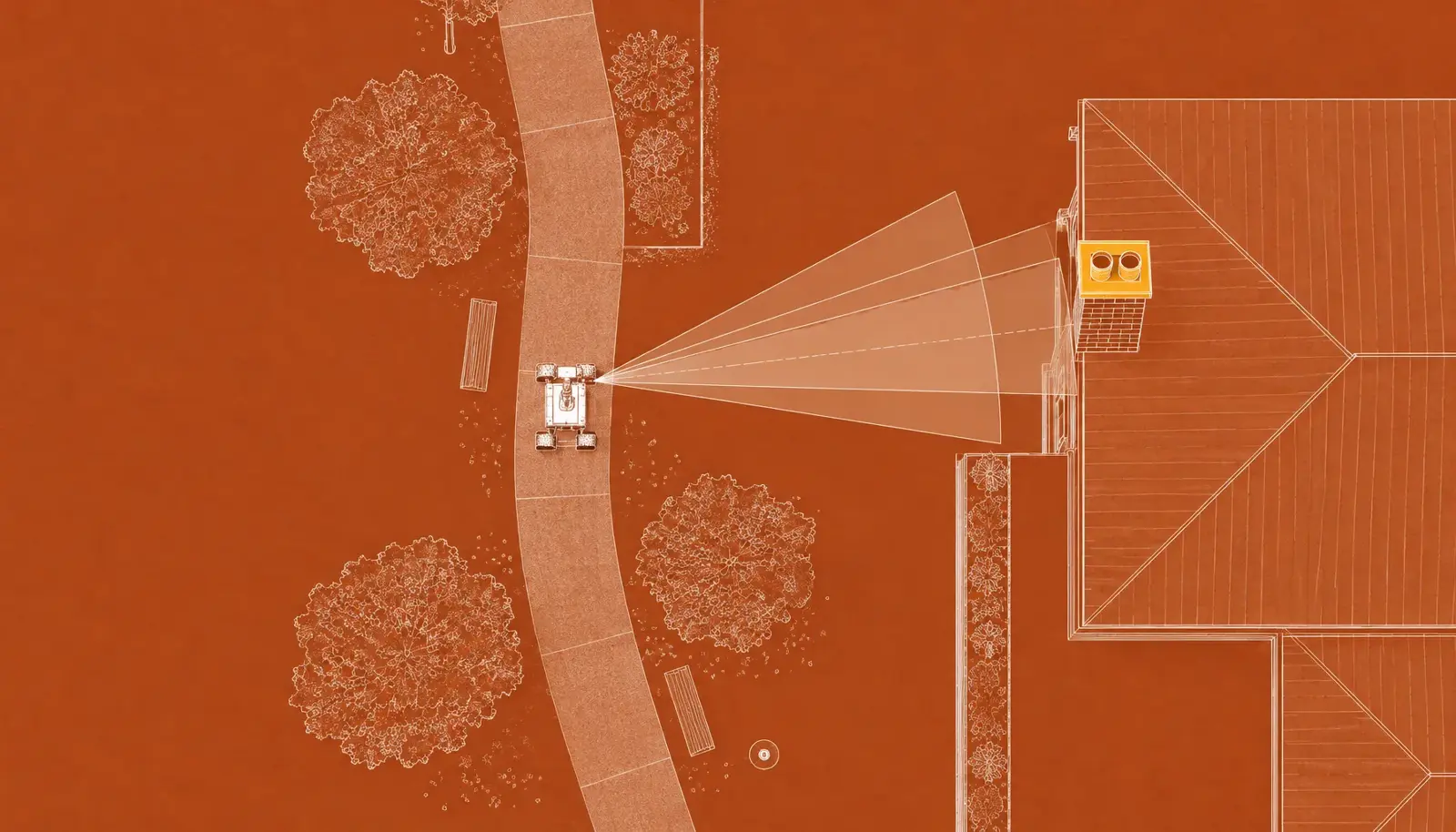
A robot may not know where to find a defibrillator if it has incorrectly labeled the device as a fire extinguisher in its stored memory. MIT researchers’ UQ-DAAAM system identifies entries in a robot’s memory that might be wrong and corrects the descriptions of mislabeled objects using additional viewpoints. DAAAM might describe objects incorrectly when a robot sees them only partially or from far away, or when its camera captures blurry or poorly lit images.
Source news.mit.edu
UQ-DAAAM uses additional viewpoints to identify and correct unreliable descriptions
UQ-DAAAM builds on the researchers’ prior work, DAAAM, a system that uses a vision-language model to richly describe objects in scenes a robot captures with its onboard cameras. DAAAM stores those captions in a 3D map-based representation of the robot’s environment, which it can call upon later to answer questions. But an incorrect memory can persist as the robot proceeds through its environment.
As the robot travels, it constantly collects and stores images of the world around it, many of which show the same objects captured from different angles. UQ-DAAAM first measures the vision-language model’s confidence in the words it generated to describe a potentially mislabeled object, then measures consistency by comparing the description to captions of images that describe the same object from different vantage points. The system combines those two sources of uncertainty into a single number that captures how certain the VLM is in its overall understanding of the object.
When uncertainty exceeds a certain threshold, the system selects additional images that will reduce the robot’s uncertainty about the object and uses their captions to refine the stored description. In one example, the system initially states it can’t give an accurate description, then identifies a rooftop object incorrectly as a squirrel before refining it to “a dark gray, cylindrical chimney with a slightly tapered top and a smooth surface.” The researchers mathematically proved that their heuristic can identify the best frames to select without rerunning the VLM.
The refinement step is able to resolve ambiguities for about 92 percent of the objects in the robot’s environment while only requiring two additional captions per object
The refinement step uses an LLM to combine captions into one object description. It gives more weight to new captions and to descriptions with less ambiguity. The refinement step is able to resolve ambiguities for about 92 percent of the objects in the robot’s environment while only requiring two additional captions per object.
Compared with the state of the art, UQ-DAAAM increased the accuracy of object descriptions by 5 percent. It also provided more accurate answers than baseline methods to questions about the objects it observed, where it saw them, and when it last encountered them. The researchers employed a special technique to streamline this process so a mobile robot can continually update uncertain memory entries in real time.
“We fuse both sources of uncertainty into a single number that captures how certain the VLM is in its overall understanding of the object,” explains Luca Carlone, the paper’s senior author. Carlone is an associate professor in MIT’s Department of Aeronautics and Astronautics (AeroAstro) and a principal investigator in the Laboratory for Information and Decision Systems.
Next, the researchers want to use UQ-DAAAM to guide different types of robots
The research will be presented at the Conference on Neural Information Processing Systems. The paper is titled “Remember with Confidence: Uncertainty Quantification for Spatio-temporal Memory with Probabilistic Guarantees.” Its co-lead authors are MIT graduate students Harry Zhang and Nicolas Gorlo.
The researchers want to use UQ-DAAAM to guide different types of robots, like mobile robotic manipulators, and apply their uncertainty quantification techniques to other domains. They are also studying the use of UQ-DAAAM to identify areas of high uncertainty that a robot could revisit to improve its understanding of the environment, as well as exploring uncertainty quantification in systems that predict the future state of a robot’s environment. The research is supported in part by the U.S. Army Research Laboratory and the U.S. Office of Naval Research; Carlone is currently on sabbatical as an Amazon Scholar, and the work was performed at MIT and is not associated with Amazon.
Sources
- Original source · Press release MIT News news.mit.edu
Related stories
- Robot memory model cuts planning latency in tests, researchers say
- MIT microrobot flies with onboard sensors and computation
- LoCo-WAM Uses Test-Time Training to Extend Robot Model History
- Researchers propose vision method to estimate terrain before contact
- Preprint tests robot navigation with uncalibrated external cameras