The Floor
Musk Says Optimus Hands Will Slow Tesla’s Production Ramp
Elon Musk said Optimus production will start slowly because Tesla must solve difficult hand-engineering problems and build a supply chain for robot components. At an October 10 X Takeover event, he cited durable touch sensors, fingertip grip and a shortage of motor magnets as obstacles.
“The initial part of that S curve of production ramp is going to be very slow at the beginning.”
Elon Musk, speaking at X Takeover
Elon Musk says Tesla’s Optimus production ramp will begin slowly because the robot’s hands remain difficult to engineer and the parts needed to build them at scale lack an established supply chain. Speaking at the X Takeover event at Giga Texas on October 10, he said Tesla still expects “very high volume production,” but offered no unit target or timetable in his answer about the robot’s hands.
Optimus must grip and feel without wearing out
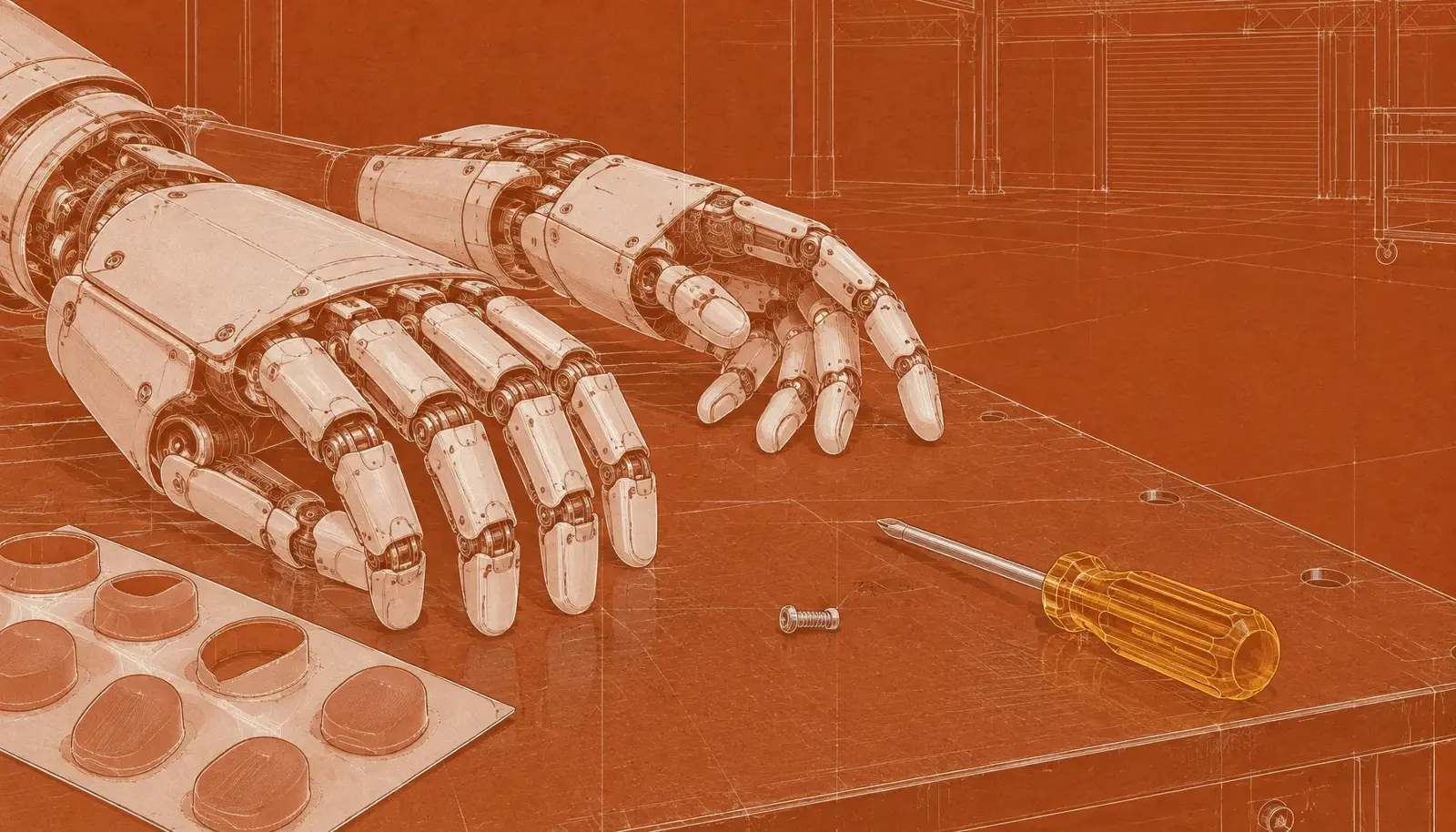
Musk described dexterous hands as a cluster of linked engineering problems, not a single design hurdle. A robot needs to manipulate small objects while applying force, he said, pointing to the challenge of picking up a screw and driving it without letting it slip or damage the hand.
The tactile sensors add another constraint. Musk said they must sit where they can register contact without being damaged, and must withstand repeated bending rather than failing after a few thousand cycles. Human fingers repair themselves and tolerate wear; a robot’s sensors and outer covering do not.
He also cited the material covering the fingers. Rubber over the internal plastic and metal must grip an object without rotating against the underlying mechanism, Musk said, while remaining replaceable as it wears. Those competing requirements make the hand a manufacturing problem as well as a manipulation problem.
Magnets left Tesla with “robots with no arms”
Musk tied the slow start to sourcing as well as design. Unlike cars, he said, robots do not have an existing supply chain for the components that matter to Tesla. Building the Optimus program therefore means developing both the robot and a way to obtain its parts in sufficient volume.
He said China’s restrictions on exports of magnets used in electric motors set the Optimus program back by two or three months the previous year. Tesla had robots “with no arms,” he said, and needs to be able to make the parts domestically in case another supply interruption cuts off imports.
The account was Musk’s description of the program; he did not identify the specific magnets, suppliers or affected production quantities. His remarks frame supply security as a condition of scaling Optimus, not as a separate issue that Tesla can solve after the robot’s design is settled.
The production curve depends on more than the hand
Musk connected the hand’s hardware to the robot’s control system. Optimus must coordinate vision and touch while managing its many degrees of freedom, he said, and handle situations it has not encountered before. In his account, a convincing routine is not the same as a robot that can adapt to unfamiliar work.
He described production as an S-curve whose initial rise would be shallow, with engineering and supply-chain work both limiting the pace. That distinction matters: even if Tesla resolves a hand component, output still depends on making the rest of the robot and its parts reliably at scale.
Musk gave no production rate, yield figure or schedule for the ramp during the discussion. His concrete examples were a sensor that must survive repeated use, rubber fingers that must grip without slipping on their own structure, and a past magnet shortage that left Optimus prototypes without arms.
Sources
- Original source Tesla Owners Silicon Valley on YouTube youtube.com
Other pages read
- X Takeover xtakeover.com
Related stories
- Tesla Begins Optimus Production on Fremont’s High-Volume Line
- Boston Dynamics Gives Atlas Four-Finger Hands With 13 DoF
- NHTSA Reviews Tesla Robotaxi School-Zone Speeding Petition
- A Robot Turns 15 Minutes of Play Into Dexterous Hand Control
- Panasonic Targets Humanoid Robot Production by 2029; Results Remain Undisclosed