The Floor
Boston Dynamics Gives Atlas Four-Finger Hands With 13 DoF
Boston Dynamics has introduced a four-finger, 13-degree-of-freedom hand for its Atlas humanoid. The design leaves out a pinky and emphasizes tool use, simulation and manufacturing.
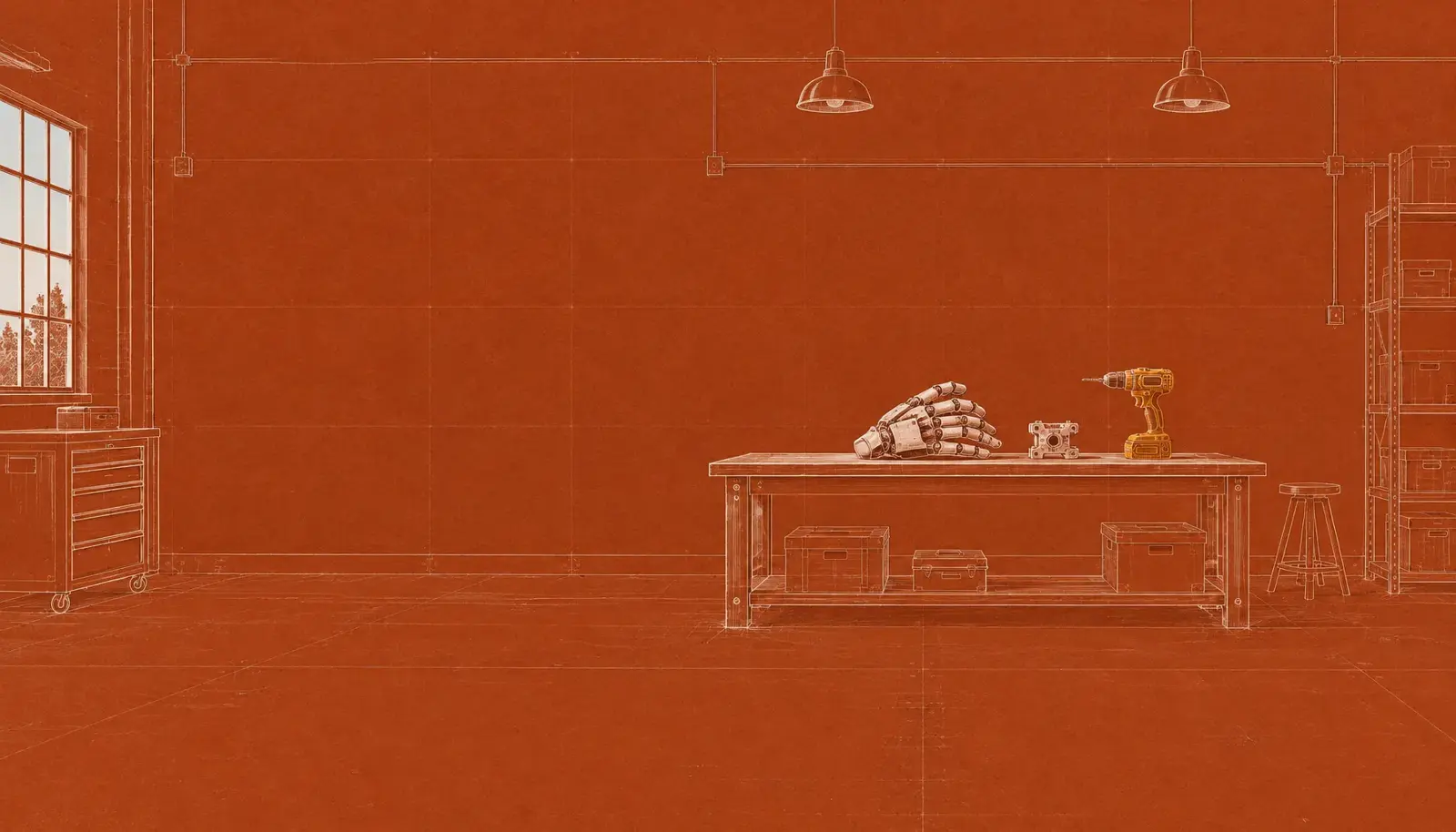
“At the end of the experiment we had agreement: no pinky.”
Boston Dynamics
Why Atlas has no pinky
Boston Dynamics introduced a redesigned hand for Atlas on October 1, 2026, choosing four fingers over a closer copy of the human hand. The company’s stated aim is a tool-capable manipulator that can be simulated, manufactured and repaired for work in industrial and logistics settings. Its design gives up a fifth finger to limit mechanical complexity.
An extra finger would add three degrees of freedom, along with more actuators, size, power use and possible failure points, the company says. To test whether the pinky mattered in everyday tasks, its chief technology officer, Zack, asked team members to tape their pinky fingers to their ring fingers for a day, the company says. The team decided the added dexterity did not justify the added hardware.
13 degrees of freedom, four fingers
The new hand has 13 degrees of freedom, up from seven in Atlas’ previous hand, and includes a four-degree-of-freedom opposable thumb. Each of the other fingers has three degrees of freedom and can splay. The design supports pinch and tripodal grasps, in-hand object reorientation and recovery when a grasp slips, the company says.
The company also lists tool use as a target: Atlas should be able to hold tools such as drills, grinders and nail guns while pressing their triggers. Direct actuation at the joints and enclosed actuators are intended to avoid fragile cables crossing the joints. Pressure sensors cover the fingertips and palm, while the hand’s backdrivable joints let it register forces and move when it takes an impact.
Simulation is part of the hand design
Boston Dynamics is designing the hand not only for physical tasks but for reinforcement learning in simulation. The company argues that human demonstrations can teach context, while simulation-based training is needed to develop fast, force-regulated manipulation. Its design choices—including the actuators and transmission—are intended to make the hand’s motion and contact behavior easier to model.
The company has initial results showing sim-to-real transfer on dynamic tasks, it says: policies trained in simulation ran on physical hardware using actuator proprioception for feedback. The blog does not provide a benchmark, success rate or a detailed breakdown of those tasks. That makes the transfer claim an early result, not a quantified measure of performance across factory work.
Tool use is the test Boston Dynamics names
Boston Dynamics frames dexterity as a way to handle work that specialized automation often approaches with dedicated grippers, fixtures and carefully presented parts. It points to tasks such as using tools, handling flexible cables and picking parts from bins. A human-sized hand, the company says, also keeps the gap between human demonstrations and robot manipulation small.
The choice is a trade rather than a claim that four fingers suit every job. Boston Dynamics acknowledges that different tasks can favor softer or harder fingers, or smaller or larger fingertips, and says no single hand design is ideal for all of them. For Atlas, the announced specification is concrete: four fingers, a four-degree-of-freedom thumb, three degrees of freedom in each remaining finger and 13 degrees of freedom in total.
Sources
- Original source · Blog post Boston Dynamics bostondynamics.com
Other pages read
- IEEE Robotics and Automation Society ieee-ras.org