The Floor
Physical Intelligence Opens Pi API Beta for Robot Models
Physical Intelligence announced a beta API on October 13 that lets developers upload robot data, fine-tune models on company-managed infrastructure and run them through hosted inference. Early examples include an autonomous wheel loader and Almond’s Axol dual-arm robot, which produced a deburring model after four days of iteration.
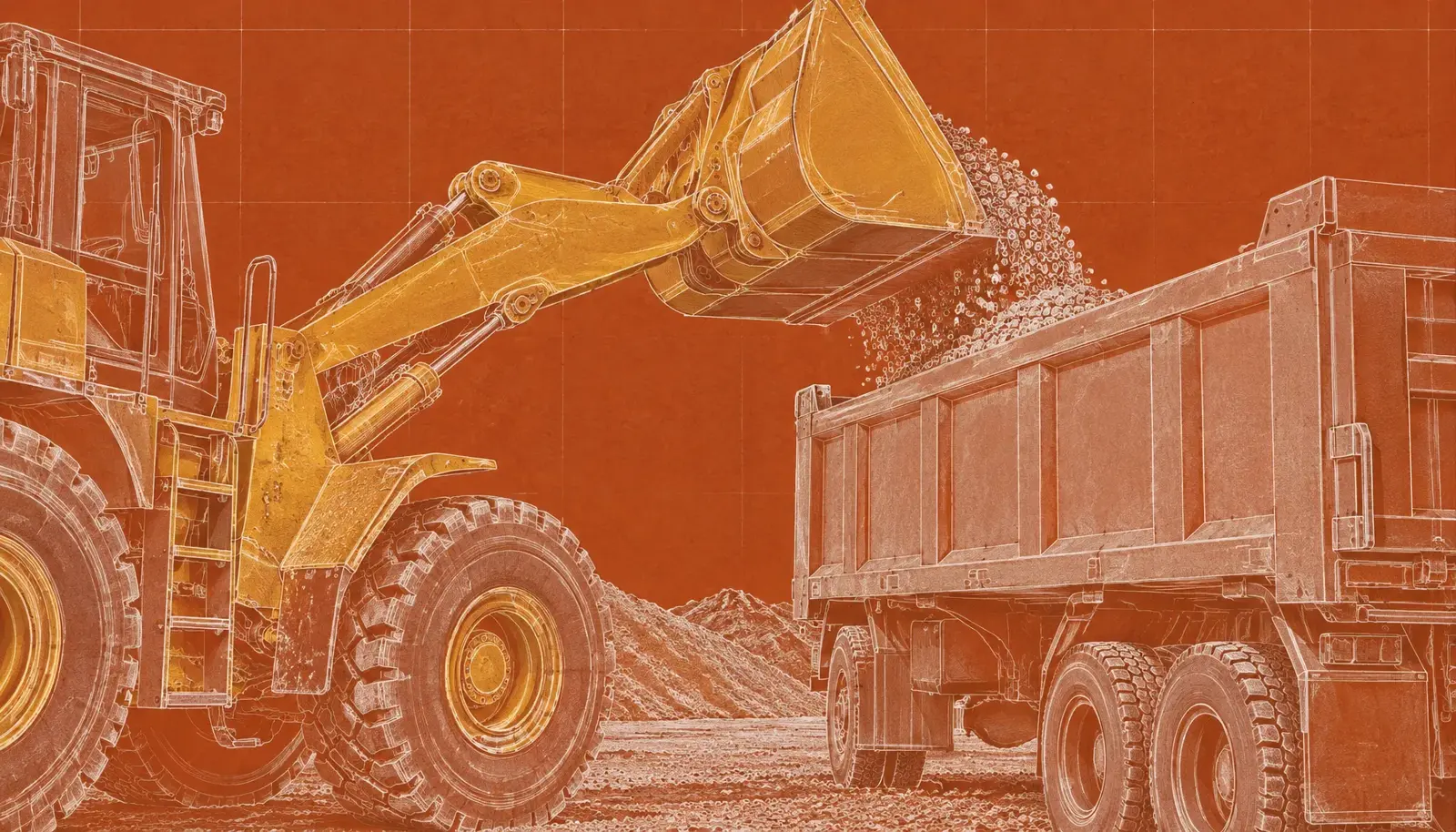
In a Utah deployment featured by Physical Intelligence, an autonomous wheel loader scoops material and loads it into a dump truck without an operator inside the machine. The company’s October 13 announcement labels the footage as playing at twice normal speed and describes the work as a real commercial deployment. The example is one of several demonstrations accompanying the launch of the Pi API beta, which gives selected developers a managed route to fine-tune the company’s robot models and run them through hosted inference.
Pi manages fine-tuning and hosted inference
The service is designed to take over parts of the machine-learning setup that robot teams would otherwise need to provide themselves. Developers upload robot data, start fine-tuning on compute and infrastructure managed by Physical Intelligence, then access the resulting model through a hosted gateway to run inference. In the company’s presentation, the sequence is a repeatable development loop: gather demonstrations, train, test on the robot and use failures to decide what data to collect next.
“You upload data, launch fine-tuning on compute and infrastructure we manage, and access fine-tuned models via a hosted gateway to run inference.”
Physical Intelligence, in its announcement
Physical Intelligence cites π₀ and π₀.₅ as examples of its general-purpose robotic foundation models, but does not identify the specific model version available through the API. The current API model offers more data-efficient fine-tuning and improved capability for its partners, the company says, and the company plans to keep updating the models behind the service. Those descriptions are the company’s assessment; the post does not provide benchmark figures or a comparison protocol.
A four-day iteration at Almond
Among the early examples, Almond’s Axol dual-arm robot deburrs spacers used in its own assembly. Almond obtained the model after four days of iteration with the API, Physical Intelligence says. Axol’s stated goal is to build itself, but the demonstration in the announcement is narrower: deburring those assembly spacers.
A small number of businesses received early access to test whether they could improve autonomy independently, the company says. Its post also shows work associated with Argon Robotics, Chef Robotics, Deft, Dream Machines, Formic Robotics, Foundry, Frontier Machines, General Instinct, Intuition.dev, Omakase, robot.com, Ultra and Yondu. The mix of examples is meant to show the service across different machines and tasks, rather than establish a single standard hardware setup.
Cloud dependence surfaces in the demos
Most of the applications shown—from Japan, Switzerland and the United States—ran inference through the API’s cloud-hosted service, Physical Intelligence says. It also acknowledges network-connectivity challenges in some early deployments. That caveat matters for robots working where network access is intermittent or where a task depends on timely model responses; the announcement does not specify latency, fallback behavior or which tasks can continue during a connection loss.
The beta is an invitation to developers to share what they want to build, not a claim that the API already covers every robot or application. Feedback from developers will shape later releases, Physical Intelligence says, and the company frames wider use as a way to learn where its models work and where they fall short. For now, the concrete evidence in the launch is a set of early partner demonstrations, including a wheel loader at work and an Axol robot deburring spacers after four days of model iteration.
Sources
- Original source · Blog post Physical Intelligence pi.website