The Floor
PyRUA-DataFarm policies scored 93 to 84 in the original scene, 87 to 46 under unseen appearance
PyRUA-DataFarm uses a coding agent, simulation and image-conditioned video generation to produce robot-training demonstrations from one calibration episode. In five real-robot tasks, farm-trained policies recorded 93 successes in 100 trials in the original scene and 87 under unseen appearance, compared with 84 and 46 for teleoperation-trained policies.
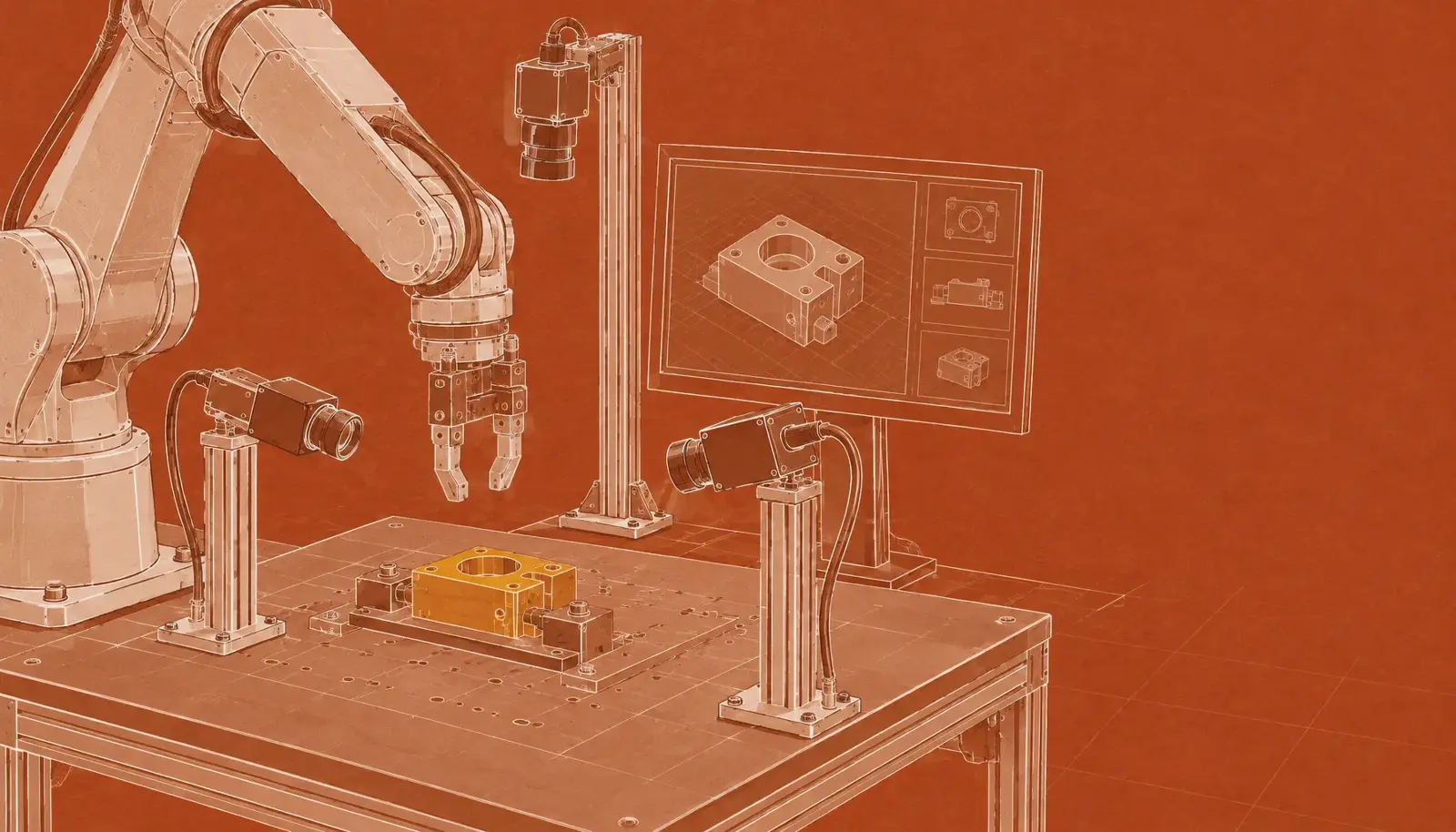
An arXiv preprint describes PyRUA-DataFarm, a system intended to reduce the time and cost of collecting robot-training demonstrations. In five real-robot tasks, policies trained only on data produced by the system recorded 93 successes in 100 trials, compared with 84 for policies trained on the same number of teleoperated episodes. When tested under an unseen tablecloth and coloured light, the farm-trained policies recorded 87 successes, while the teleoperation-trained policies recorded 46.
“Teleoperation remains the default way to collect robot demonstrations, but every episode costs robot and operator time, and every new task starts from scratch,” the authors write. The preprint, submitted to arXiv on Nov. 3, 2026, proposes using a coding agent to take over parts of the data-production process.
From one calibration episode to training data
For a task, the agent receives a data request and one calibration episode recorded by the robot in the target scene. It then builds the task in simulation: reconstructing the scene and cameras, writing an expert controller to perform the task, and creating a judge to determine whether the task succeeds. The simulator runs the controller from different initial states and supplies the actions and states for each trajectory.
A video model conditioned on real images renders the simulated rollouts in the target scene’s appearance. It generates the camera views together, so the resulting views are intended to remain consistent with one another. The output pairs synchronized camera images with the robot’s action labels, allowing a policy to train on the data and then be deployed on the real robot. The paper describes experiments on five bimanual tasks involving rigid, articulated, deformable and display-bearing objects.
Checks and results
The authors describe separate checks for the task controller and the rendered data. The expert is tested on held-out initial states against a judge it cannot inspect. For each rendered episode, machine checks and an independent reviewer compare the video with the simulated state. The renderer is allowed to change appearance, but not the geometry, objects or timing of the simulated motion.
The reported real-robot results compare policies trained only on farm data with policies trained on an equal number of teleoperated episodes. In the original scene, the farm-trained policies achieved 93 successes in 100 trials, against 84 for the teleoperation-trained policies. In a test with an unseen tablecloth and coloured light, the totals were 87 and 46, respectively. The same trajectories rendered with conventional domain randomization produced 26 successes in the original scene and 21 under unseen appearance.
Reported costs
Adapting a task is fully automatic in the reported system and costs an average of $21 in API usage, paid once per task. A render contract adds $5. Producing each further episode costs an average of $0.80 for simulation, rendering and review, without using a robot or operator.
The preprint estimates that one hour of three-view data for a task costs an average of $107, including those costs. It compares that figure with a $117 teleoperation quote in China and $290 in labour alone in North America.
Sources
- Original source · Preprint arXiv arXiv:2611.05320
Related stories
- Hsu and Stone Introduce ELA Preprint for Learning Robot Policies from Video Demonstrations
- Georgia Tech Preprint Tests Seven Robot Policies on a New Generalization Benchmark; Best Averages 52%
- RoboColosseum Tests Robot Policies in 5,699 Comparisons at 124 Sites
- VICTR Preprint Reports 23.8% Success on Unseen Out-of-Domain Real-World Robot Tasks
- LEAP Hand State Policy Reaches 95.2% of Unseen Pose Goals