The Floor
RoboJackVR turns simulated robot tasks into a VR game
RoboJackVR records demonstrations as players operate simulated robots in a virtual reality game. In a simulation study, policies trained on those demonstrations reached 69.6% success on held-out initial states.
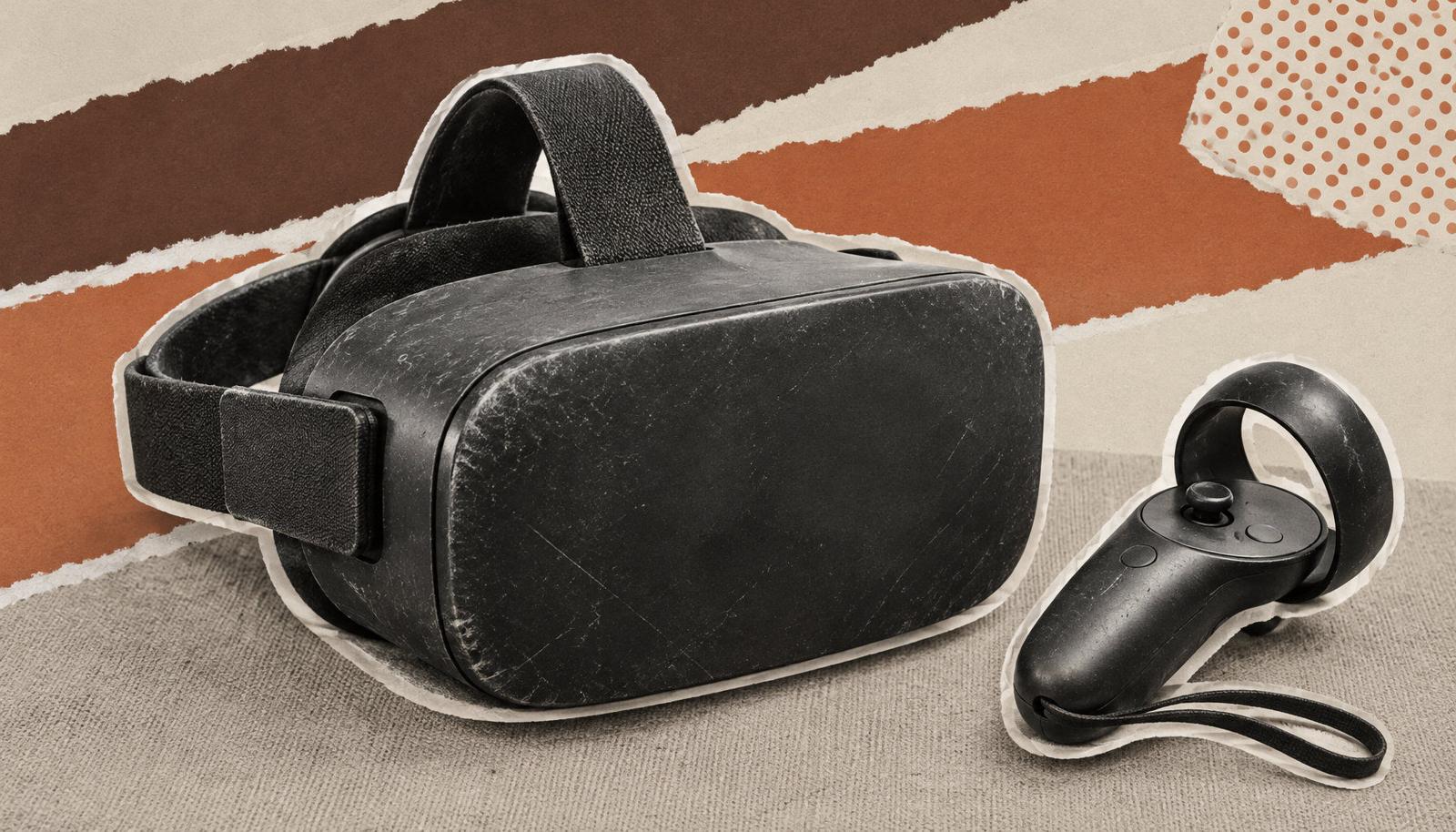
Players operating simulated robots in a virtual reality game have produced demonstrations used to train manipulation policies, with those policies reaching 69.6% success on held-out initial states in a simulation study. The result is reported in a preprint by Ben Ma and Jixuan Cai, who describe the game, RoboJackVR, and its data-collection pipeline.
The standalone game runs robot simulation and records demonstrations on a headset. Players use controllers to perform manipulation tasks that also serve as skills in the game; the resulting records can be processed for policy training.
Robot tasks as game skills
RoboJackVR places task attempts inside an adventure game with battles, progression and later challenges. For example, opening a drawer executes an attack skill: the outcome changes the game state and produces a demonstration record.
Players teleoperate simulated robots to grasp, place, stack or open drawers. Successful attempts trigger configured game effects, while ordinary failures consume an attempt without dealing damage. Players can also choose free collection, with individual or grouped attempts and a return to task selection.
Instructions, controller and gripper cues, object highlights and spatial guidance help players understand each task. Outcome feedback uses visual cues, sounds and haptics. Each prepared attempt is saved as a separate episode ending in success, failure or interruption.
From headset to training data
The system links its game software to libraries for robot control, MuJoCo simulation and task evaluation. Once the app, task resources and user identity are set up, local collection needs no external PC or remote simulation server. Account services and uploads use network connections, while image generation, action conversion and policy training run off the device.
Task contracts specify assets, controls, resets, success conditions and the meaning of recorded observations and controls. Adapters implement the relevant task interfaces, while separate game configurations provide teaching content and skill settings. Unsupported control interfaces, success checks or recording formats require adapter extensions and review.
The authors report that the task catalog has default game configurations for 130 LIBERO tasks and four SO101 tasks. Before release, collection yielded 2,141 unique episodes across 106 LIBERO tasks; the policy-learning evaluation covered the 66 LIBERO-90 tasks for which VR data had been collected.
Simulation results and limits
For the learning study, 21 participants collected 1,310 VR demonstrations across those 66 tasks before public release, the authors report. The researchers converted the records into a standard demonstration format and trained Action Chunking with Transformers policies from random initialization. The comparison data were LIBERO simulation demonstrations, not physical-robot recordings.
Across four training seeds, VR-only policies achieved 69.6% success from held-out initial states, compared with 76.6% for the full standard-data baseline. On official initial states, the corresponding results were 68.2% and 73.5%. The VR-only run used about 20 episodes per task, compared with 40 standard demonstrations per task in the full baseline.
The authors also report that adding VR data to a reduced standard-data set raised held-out success from 58.2% to 66.6%, and success on official initial states from 54.8% to 69.2%. The evaluation used 10 held-out standard-demonstration initial states per task and five official initial states per task.
The study tested one policy architecture in simulation. The authors caution that the VR data differed in both episode count and execution timing from the reduced standard-data set. They also say exact overlap between VR layouts and held-out layouts could not be ruled out, because the VR episodes lacked full simulator states for that comparison.
Sources
- Original source · Preprint RoboJackVR: Turning Robot Tasks into VR Games for Scalable Demonstration Collection arXiv:2611.33731
Related stories
- RoboClock preprint tests robot timing across 60 simulated tasks
- FabricBench tests robot cloth handling across six simulated tasks
- More robot action candidates can worsen outcomes, preprint finds
- SEEK retains robot execution knowledge across attempts, preprint says
- Weight edits improve robot policy in simulation, researchers report