The Floor
Soft hexapod reaches 4.72 m/s using pneumatic control
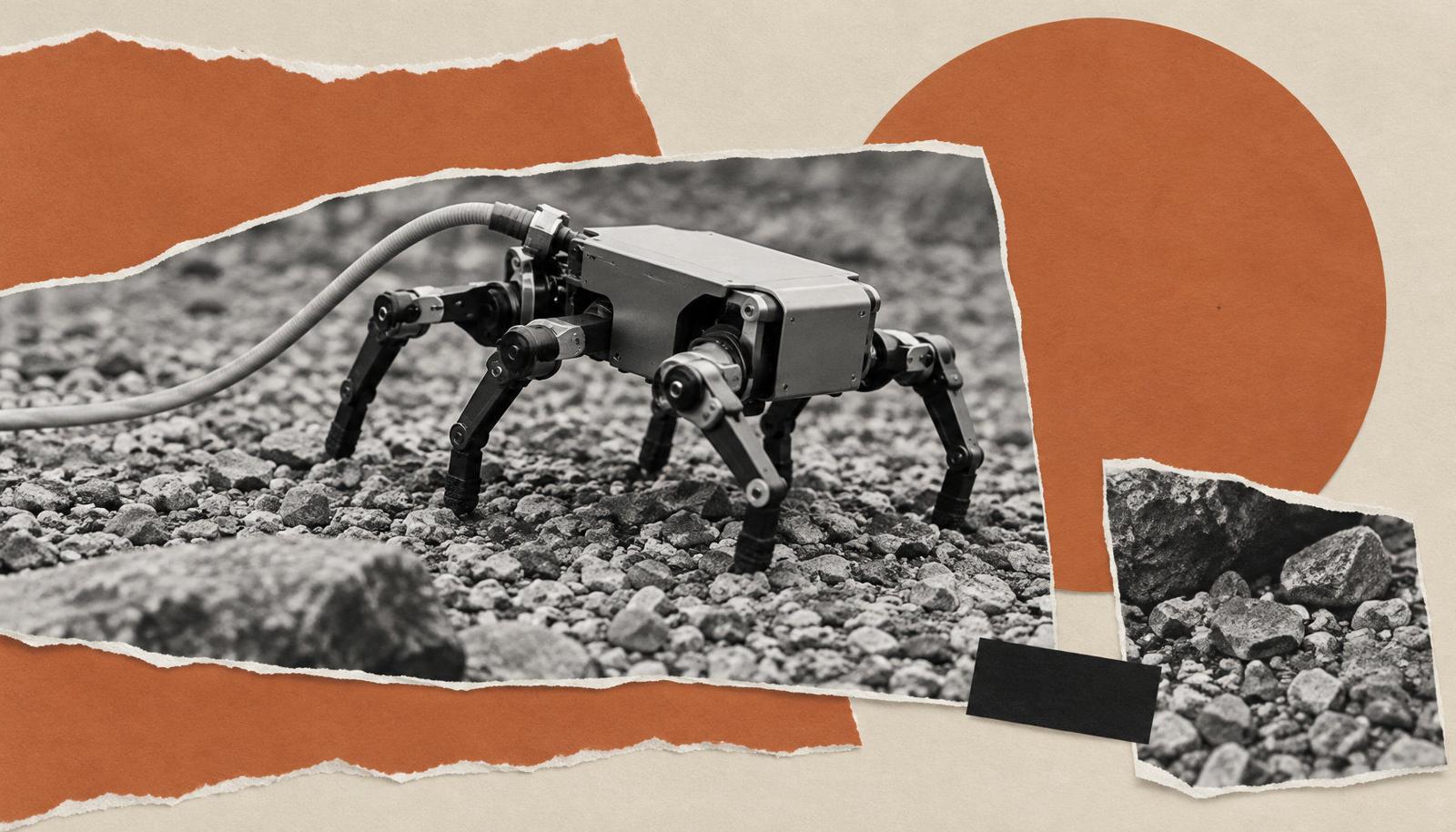
A six-legged soft robot reached a reported maximum speed of 4.72 meters per second without electronics controlling its gait. The Science Robotics study describes a single-material printed machine that runs on compressed air but remains tethered to its air supply.
A fast run on compressed air
A six-legged soft robot reached a reported maximum running speed of 4.72 meters per second, using pneumatic control rather than electronics. The result is reported in the Science Robotics study “Printing Powerful Soft Robots on a Desktop,” by researchers at the University of California San Diego.
The robot’s body and pneumatic control structures were printed together from one material, according to Tech Xplore’s report of the work. Its internal chambers, valves and tubes channel pressurized air to drive the legs. The speed figure is the study’s reported maximum, not a claim that the robot operates untethered: it still needs a compressed-air supply.
Two stages for the airflow
The researchers adapted the compound steam engine’s multi-chamber expansion principle for the robot’s pneumatic system. Air first passes through smaller, higher-pressure chambers that operate the valves, then through larger, lower-pressure chambers that move the legs. The study’s data record describes the mechanism as a double-expansion pneumatic oscillator.
The design builds on an earlier air-powered soft robot developed in 2022 and described in a 2025 Science Robotics article. That earlier robot moved at 4 centimeters per second, according to Tech Xplore. The team reports that the new robot runs more than 100 times faster than that first version.
Tests across land and water
The team tested the robot on concrete, gravel, lawn, mulch and sand, and demonstrated it running down stairs. It can also swim in water and walk underwater, according to Tech Xplore. These are reported tests of the robot’s movement in the stated environments.
For now, the robot must remain connected to a source of compressed air, such as an air compressor. The researchers plan to explore designs using less compressed air, including a portable source, and envision future versions that can steer and manipulate objects. Those are plans, not capabilities established by the reported demonstrations.
Sources
- Original source · Paper Science Robotics dx.doi.org
Other pages read
- Tech Xplore techxplore.com
- Dryad datadryad.org
Related stories
- Oxford researchers report agent-designed soft robots in preprint
- ETH Zurich Co-Designs Living Muscles for Jumping Robots
- ANYmal D study finds better predictions can still yield failed walking policies
- ReLoco preprint joins humanoid walking and fall recovery in one policy
- Noetix Humanoid Averages 7.14 m/s in a Timed 100-Meter Sprint