The Floor
STMicroelectronics outlines unified STM32 platform for industrial, automotive and robotics applications
STMicroelectronics’ unified STM32 microcontroller platform will let developers reuse architectures, software and tools across industrial, automotive and robotics applications. Its new STM32A family extends the platform into automotive and high-safety systems, with broader availability planned in 2027.
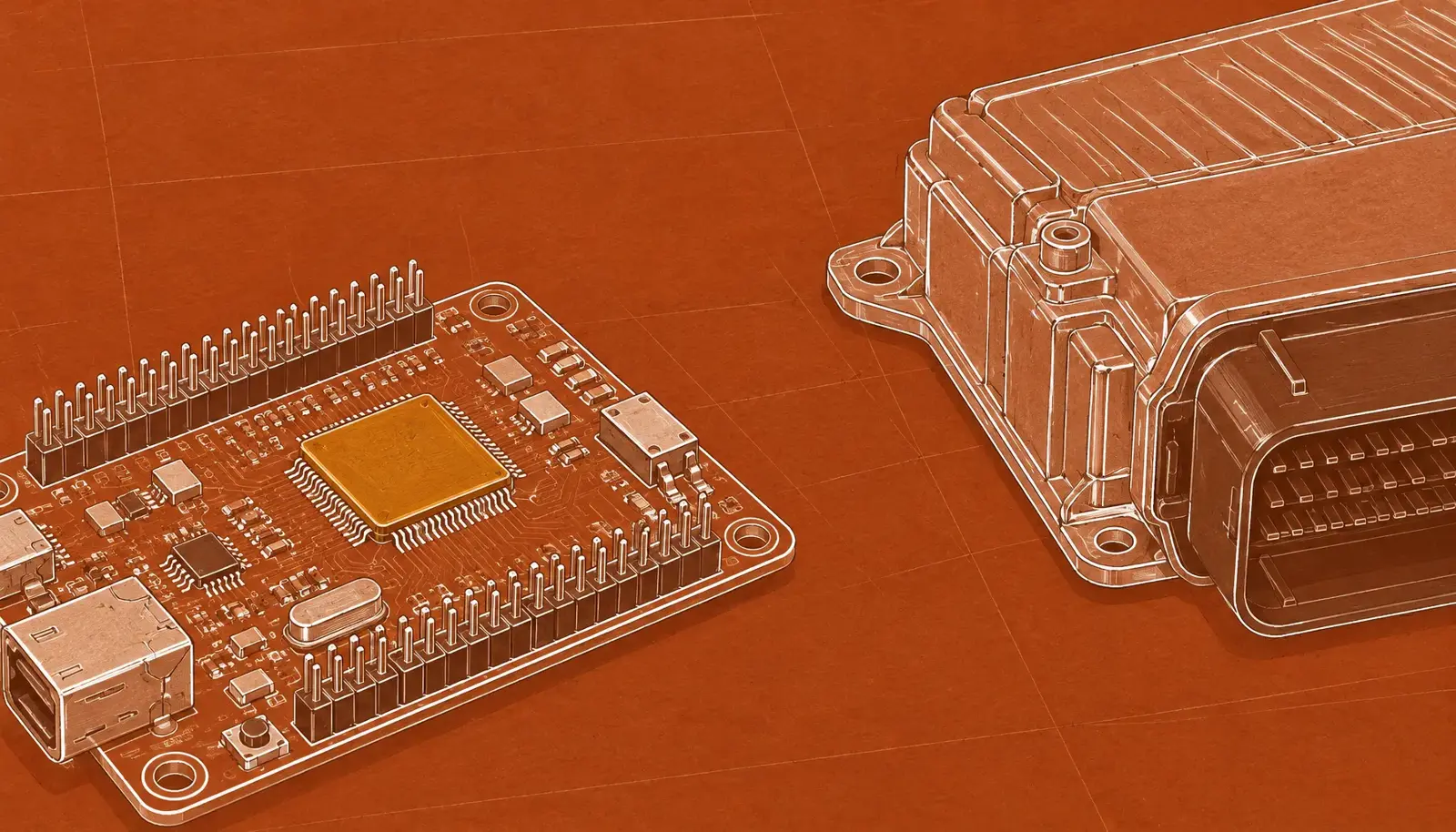
In a Nov. 4 announcement, STMicroelectronics described a unified STM32 microcontroller platform spanning industrial, automotive and robotics applications. The platform will let developers reuse architectures, intellectual property, software and tools across domains while choosing products that meet each application’s specific requirements.
The new STM32A family extends the platform into automotive and safety-critical systems. The broader cross-domain platform builds on more than 20 years of STM32 development and is intended, ST says, to help developers bring embedded systems to market faster through continuity and reuse, including in emerging physical AI systems.
“Embedded innovation should not require developers to start again with every new product. With the unified STM32 platform, we are creating a foundation they can trust across markets and generations. The industry needs less fragmentation and a stronger focus on helping MCU technologies converge around a common foundation, while maximizing software reuse. This is how we intend to make STM32 the reference MCU platform across industries.”
Remi El-Ouazzane, President, Microcontrollers, Digital ICs and RF Products Group, STMicroelectronics
One platform for converging technology needs
As intelligence moves to the edge, industrial and automotive systems increasingly share requirements for real-time control, secure operation, functional safety, connectivity and AI processing. The unified STM32 platform gives development teams a consistent architecture and software foundation. Developers can reuse proven assets while selecting products tailored to the performance, qualification and lifecycle requirements of each application.
Arm Cortex-M cores and shared architectural principles give developers a familiar path between STM32 MCU families, making it easier to carry proven software and intellectual property into new designs. The release also describes STM32Cube and the broader Arm ecosystem as providing a consistent development environment, supported by software resources, technical support and the ST developer community. ST calls STM32Cube the world largest MCU software ecosystem.
The company identifies its 40nm Flash technology and 18nm FD-SOI technology with embedded phase-change memory, augmented by TSMC eNVM technologies, as a scalable manufacturing foundation for future STM32 products.
STM32A extends the platform into high-safety and automotive markets
The first three STM32A microcontrollers are sampling to customers, with broader availability planned in 2027. ST assigns the STM32A4 to entry-level automotive local control nodes and safety systems. The STM32A5 addresses mid-range safety-critical applications in industrial automation, robotics and energy systems, as well as automotive applications.
The STM32A9 targets safety-critical multi-domain control where real-time control, low latency, Ethernet and deterministic communication are essential. The family enables customers to reuse software while meeting the qualification and performance requirements of each application.
Arm and ST describe their Cortex-M collaboration
ST identifies Arm as a longstanding partner and says it is a lead partner in shaping the future of the Arm Cortex-M portfolio. The release describes Cortex-M as the architecture of choice for more than 100 billion devices and says the collaboration is helping developers reuse code across applications, from cars and robots to automated industrial systems.
“The next major frontier for computing is bringing intelligence into the machines that move, manufacture and operate in the physical world.”
Drew Henry, Executive Vice President, Physical AI, Arm
Henry’s statement appears in the release alongside its description of the collaboration. Arm and ST are working together on the Cortex-M portfolio and on the MCU foundation for physical AI, with the aim of supporting intelligence at the edge, where the physical world is sensed and controlled.
Sources
- Original source · Press release STMicroelectronics newsroom.st.com