The Floor
TinyFlow Compiles Optical Flow as a Static INT8 Graph
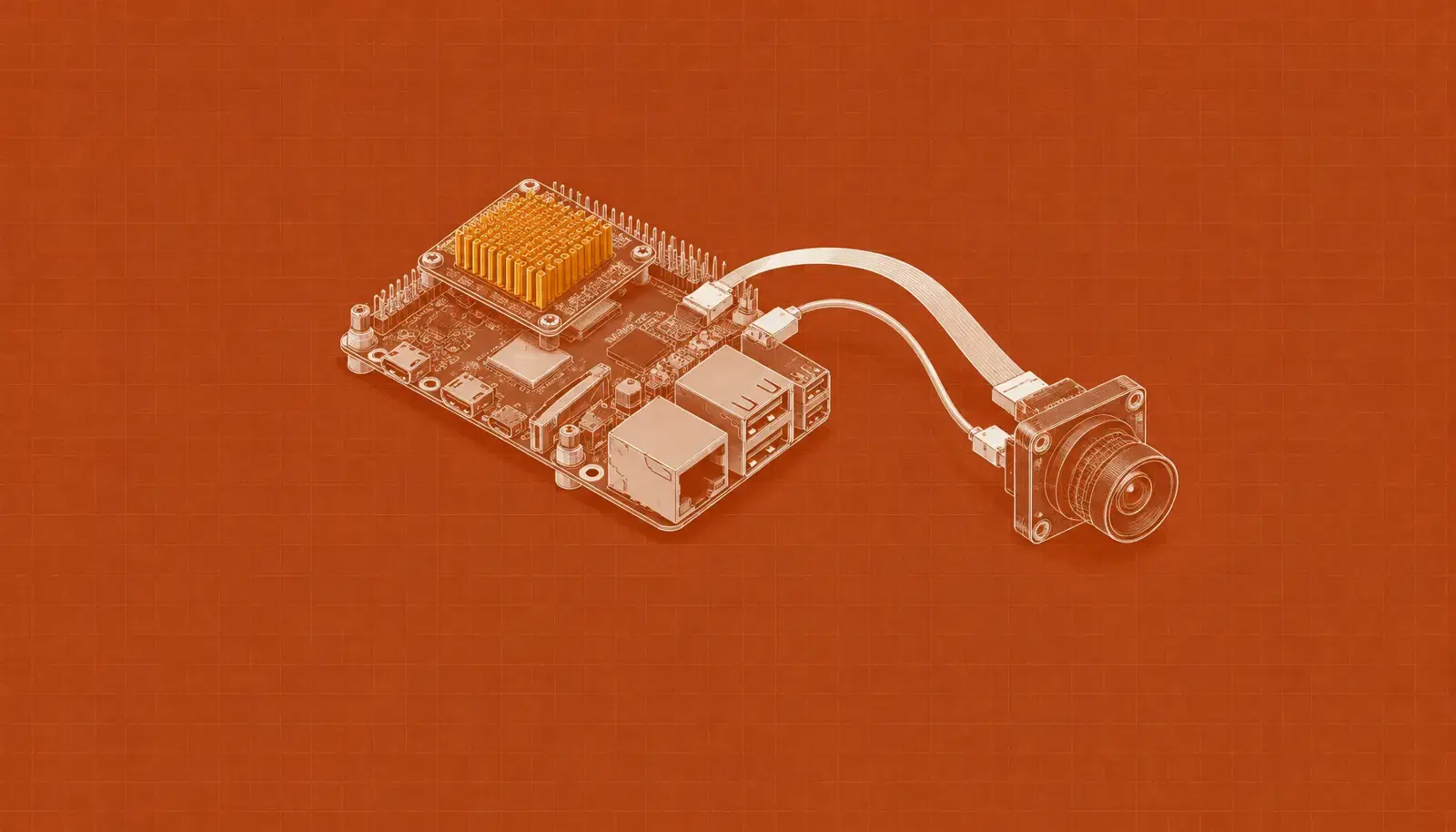
TinyFlow is a 1.26-million-parameter optical-flow model designed to compile as a static INT8 graph by replacing flow-dependent warping with fixed-offset correlations. The paper reports higher accuracy than two edge-focused comparators on several flow benchmarks, alongside slower measured performance on a Raspberry Pi 5 with a Hailo-8 accelerator.
“Its fixed-window correlation carries the data dependence of warping in channel values rather than in memory addresses.”
Xiao’ao Song and Chahat Deep Singh, the paper’s authors
Replacing the warp, not the refinement
Researchers at the University of Colorado Boulder posted TinyFlow on arXiv on October 23, presenting a 1.26-million-parameter optical-flow network built to run on edge accelerators as a static INT8 graph. The paper says it was submitted to IEEE for possible publication and targets a familiar deployment snag: iterative optical-flow models often use a flow-dependent image-sampling operation that edge-device compilers cannot readily map to fixed hardware instructions.
TinyFlow keeps coarse-to-fine iterative refinement but replaces that operation with correlations over fixed offsets between image features. The current flow estimate enters the update network as data, rather than selecting new memory addresses. The authors compute correlations along horizontal and vertical offsets at three scales, then use the resulting evidence to refine motion estimates from coarse to fine.
Fixed offsets make a fixed graph
Many established flow systems repeatedly warp one frame’s features according to the current motion estimate. That can improve matching by recentering the search, but it requires sampling locations that change with the input. TinyFlow’s fixed-window approach avoids that changing access pattern; the offset shifts can be represented with fixed operations, allowing the model to export and compile as one static graph.
Quantization required additional training. The paper reports that converting its initial floating-point model to INT8 after training raised Sintel Clean endpoint error from 6.92 to 8.09 pixels. The team instead used quantization-aware fine-tuning, distillation from a more accurate warp-based teacher, and averaging selected checkpoints. On MPI-Sintel, which the authors say they used only for testing, the final INT8 model scored 6.29 EPE on Clean and 7.13 on Final, versus 6.13 and 6.95 in Float32.
More accuracy, at a steep frame-rate cost
The comparisons show TinyFlow trading throughput for accuracy. On a Raspberry Pi 5 with a Hailo-8 accelerator, the model ran at 10.5 frames per second on a 100-pair Sintel Clean sample. On the same chip and frames, EdgeFlowNet ran at 64 FPS and NanoFlowNet at 190 FPS. TinyFlow’s corresponding EPE was 5.76, compared with 6.38 for EdgeFlowNet and 7.50 for NanoFlowNet.
Across the benchmark table, TinyFlow’s 1.26 million parameters are 54% fewer than EdgeFlowNet’s 2.75 million. In INT8 tests, it also posted lower EPE than EdgeFlowNet on Sintel Clean, Sintel Final and FlyingChairs. NanoFlowNet is smaller at 0.17 million parameters, but the paper evaluates it at its native 112-by-160 resolution; at the 384-by-512 input used for the other models, its Sintel errors rise sharply.
Visual-odometry results are mixed on real flights
The authors also fed INT8 flow estimates into the same five-point RANSAC pose estimator, without depth, across eight synthetic TartanAir routes and three real UZH-FPV drone flights. TinyFlow achieved the lowest trajectory error on seven of the eleven sequences overall, including six of eight synthetic routes. On the real flights, however, EdgeFlowNet had the lower mean position error: 4.25 metres against TinyFlow’s 5.32 metres, largely because it performed better on the two indoor sequences.
The experiments establish an accuracy result, not a blanket speed advantage: iterative refinement delivers stronger benchmark flow and wins more individual trajectory tests, but the measured implementation runs substantially slower than both edge-focused comparators. For teams choosing an onboard estimator, TinyFlow’s concrete trade is 10.5 FPS on the tested Pi 5 and Hailo-8 setup for a 5.76 EPE result on the paper’s 100-pair Sintel sample.
Sources
- Original source · Preprint arXiv arXiv:2610.33338
Related stories
- BMW and Embotech Pass One Million Driverless Factory Moves
- Eteverse Sends a Quadruped Into Seoul’s Collapsed-Building Drill
- iFLYTEK Bundles Robot Board, Dev Kit and Software Into Super Brain Platform 3.0
- Lane-Keeping Displays Miss 53% of Degraded-Perception Seconds
- Sweden Deploys Four Saildrone Voyagers for Baltic Surveillance