The Floor
Researchers release toolkit for injecting vehicle sensor faults
An open-source toolkit adds synthetic faults to camera, LiDAR and radar data using 94 symptom-level routines. A preprint pairs the software with a proposed classification of sensor faults and qualitative examples using the Boreas dataset.
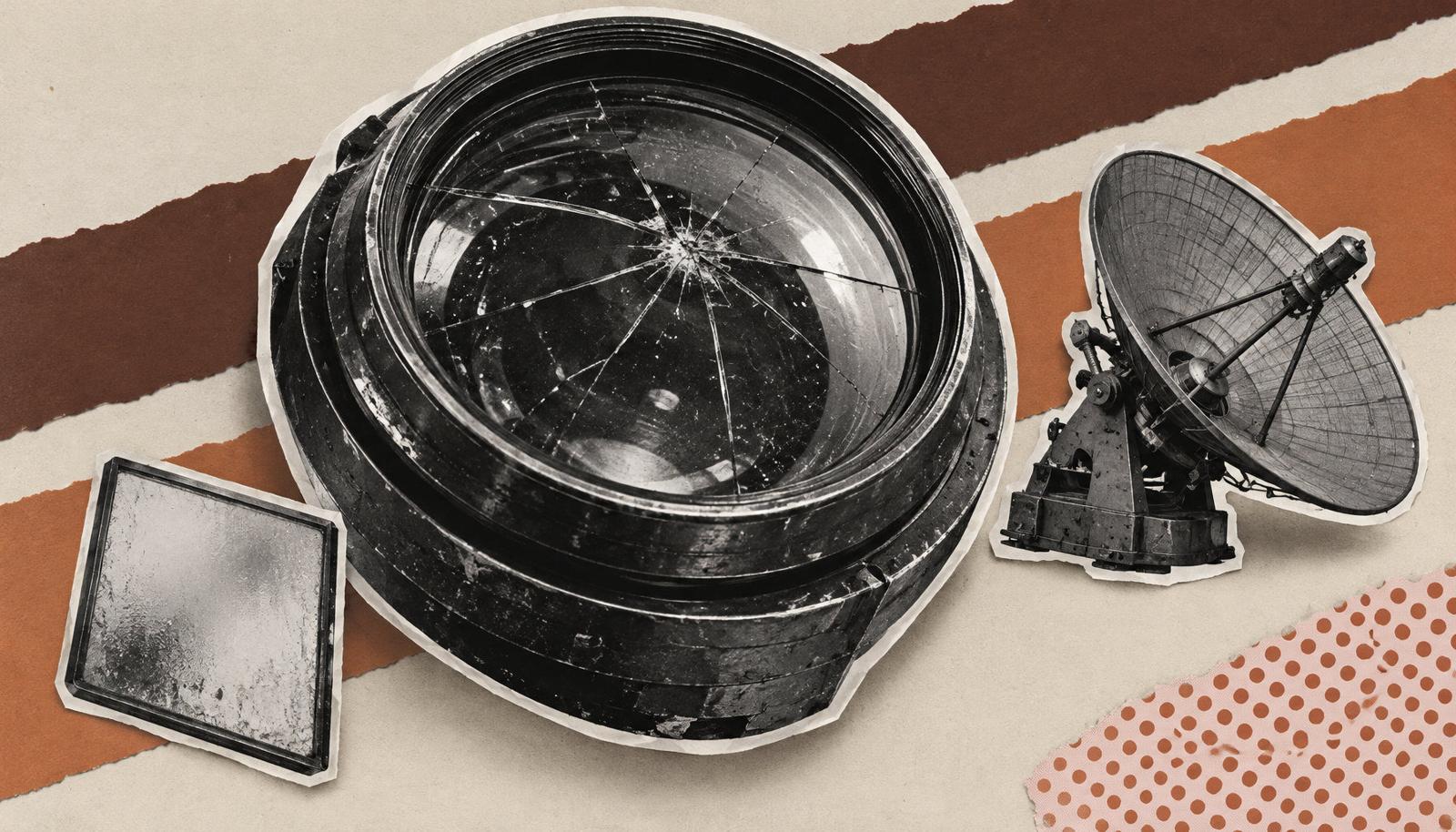
An open-source toolkit can inject synthetic faults into autonomous-vehicle camera, LiDAR and radar data using 94 symptom-level routines: 41 for cameras, 27 for LiDAR and 26 for radar. Researchers describe the software and a proposed classification of sensor faults in a preprint submitted to arXiv on November 23.
Davide Possenti, Daniele Cianca, Stefano Arrigoni and Francesco Braghin, researchers at Politecnico di Milano, paired the toolkit with examples made from the Boreas dataset. The examples illustrate changes to recorded sensor data; they are not tests of faults on a vehicle.
Sorting faults by origin
The authors propose five categories: hardware, environmental, calibration, software and synergistic faults. Each entry connects a physical or logical mechanism with an observable symptom and the affected sensor subsystem.
The synergistic category covers combinations of fault sources. For example, the classification includes a broken camera lens combined with condensation and a LiDAR scanning fault combined with fog. The paper uses the term fault broadly enough to include external conditions that corrupt sensor output, even when they are not sensor faults in the strict ISO sense.
The researchers relate the categories to safety analyses under ISO 26262 and ISO 21448. They say existing studies and tools generally focus on individual sensing modalities, pairs of sensors or the driving stack as a whole, rather than providing an origin-driven classification and injection toolkit across all three modalities.
Scheduling and labeling
The toolkit handles camera, LiDAR and radar streams independently, working on Boreas images, binary point clouds and polar radar images. The paper says another dataset can be supported with a loader for its format.
Faults with graded effects have mild, moderate, severe and extreme settings. Binary faults, such as a silent driver failure, do not have a severity scale. Some presets use physical relationships, while the remaining presets are heuristic, according to the paper.
The software schedules faults in bursts of consecutive frames and can progressively increase severity for certain gradual degradations. Each frame receives at most one fault, and users can retain clean frames before and after a burst.
Each run produces a corrupted stream and a frame-level manifest recording the fault category, affected subsystem, severity and other details, including the random seeds used. A master seed controls random choices, allowing a run to be reproduced, the researchers say.
Examples and limits
For their illustrations, the authors applied one severe fault from each category to a single frame for each sensor modality. Camera examples include a broken lens, a contaminated window and a truncated frame. The LiDAR examples include mounting misalignment and a scanning fault combined with fog, while the radar examples include boresight misalignment and contamination of the radome.
For selected LiDAR and radar illustrations whose appearance depended on the random pattern, the researchers selected seeds from 100 candidates to emphasize the visible effects. They say those selections were made for illustration and recorded in the toolkit's figure manifest.
The authors caution that the routines reproduce observable symptoms rather than physically simulate the underlying wave propagation. The severity presets have not been calibrated against physical measurements of hardware-degraded sensors, and the paper leaves empirical calibration and quantitative comparison with real adverse-weather recordings to future work.
Sources
- Original source · Preprint Exteroceptive Sensor Faults in Autonomous Vehicles: A Cross-Modal Taxonomy and Fault Injection Toolkit arXiv:2611.31667
Related stories
- Study Traces LLM Robot Failure Gap to JSON Interface
- Researchers test LiDAR reconstruction method built from planar patches
- Researchers test contact-adaptive hand in teleoperated tasks
- Pony.ai reports 75.2% revenue growth and a 2,768-vehicle fleet
- Researchers propose vision method to estimate terrain before contact