The Floor
Yaskawa and Toyota Put AI Welding Into GR Kart Production
Yaskawa and Toyota’s GAZOO Racing began using MOTOMAN NEXT to weld GR KART frames at a workshop in Gamagori, Japan, in September 2026. The robot adapts to frame conditions, checks welds and makes corrections, building on a process that cut roll-cage production from weeks to three days.
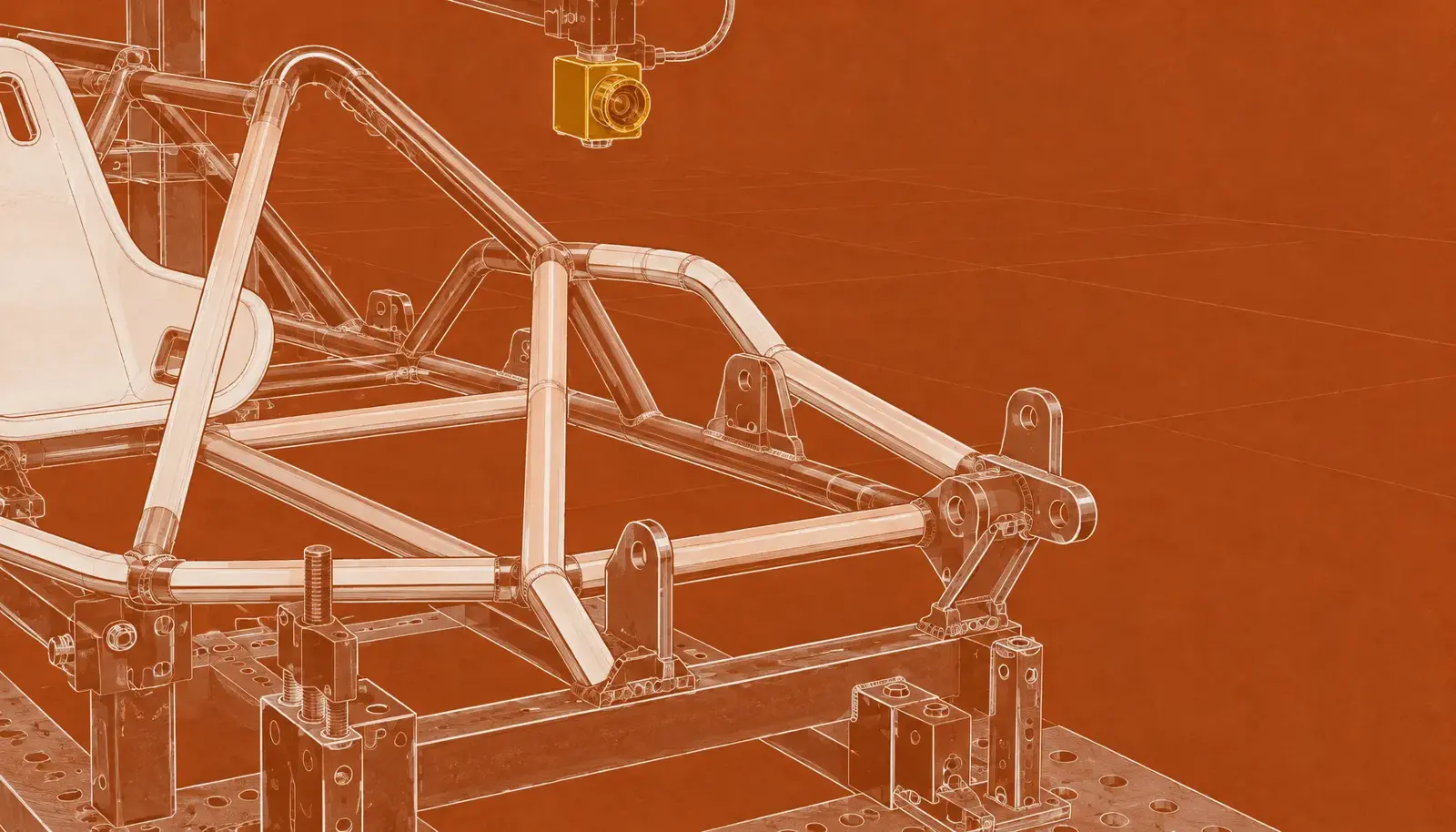
Yaskawa and Toyota’s GAZOO Racing began putting an AI-equipped welding robot to work on GR KART frames in September 2026, moving the system from evaluation into production at the Gamagori GR KART Workshop in Aichi Prefecture. The companies announced the deployment on October 28. The robot handles more than the welding pass: it assesses frame conditions, inspects welds and makes corrections.
MOTOMAN NEXT adjusts to the frame
The system uses Yaskawa’s MOTOMAN NEXT, an industrial robot equipped with a GPU and AI capabilities. It determines actions based on pipe-frame assembly conditions, including gaps at joints, and on the results of post-weld checks. The robot also analyzes inspection images, welding sounds and process data.
The system also recognizes conditions such as pipe gaps and temperature while welding, according to GAZOO Racing’s announcement. Afterward, it checks weld quality and makes corrections autonomously. The two companies present the sequence—from recognizing conditions through inspection and correction—as a production process, rather than a demonstration limited to a test cell.
A motorsports welding method becomes the foundation
The project builds on SFA, or Sequence Freezing Arc Welding, a process Yaskawa and GAZOO Racing developed in 2024 for motorsports applications. SFA reduced roll-cage production time from two to three weeks to three days, according to Yaskawa. The process also improved weld quality and strength while helping reduce weight, the company says; GAZOO Racing says it has been used on vehicles competing in the Super Taikyu Series.
Those results supplied welding know-how for a different task: automating work on the pipe frames used in GR KARTs. The newer system combines Yaskawa’s robotics, motion-control and AI technologies with GAZOO Racing’s manufacturing expertise. The goal is to address pipe-frame welding steps that the company says had been difficult to automate.
Production claims come without a performance breakdown
Applying the technology in GR KART frame production has reduced costs, GAZOO Racing says. The system improves productivity and quality consistency and can take on work that previously relied on skilled welders, according to Yaskawa. Neither announcement provides a quantified cost reduction, defect rate, production-volume figure or comparison of cycle times for the new GR KART process.
The distinction matters: the three-day figure belongs to the earlier roll-cage process, not to GR KART production using MOTOMAN NEXT. The companies have disclosed a customer-site deployment and described its inspection-and-correction functions, but have not published enough operating data to measure the newer system’s output against manual welding or the earlier SFA method.
Gamagori is the first named production site
GAZOO Racing describes the installation as part of its effort to carry manufacturing lessons from motorsports into production. The companies plan to refine the technology through repeated practical use, the announcement says. Yaskawa intends to apply the technology developed at Gamagori to other manufacturing sites and to pursue automation beyond welding.
For now, the concrete deployment is at the Gamagori GR KART Workshop: MOTOMAN NEXT welds kart frames, responds to frame conditions, then checks and corrects its work. The public announcements leave the system’s production rate and measured quality results undisclosed.
Sources
- Original source Yaskawa Global Site yaskawa-global.com
Other pages read
- GAZOO Racing toyotagazooracing.com