The Floor
Zero-HLM Simulation Training Beats Real Data in G1 Trials
In tests on three Unitree G1 tasks, policies trained on simulated demonstrations outperformed a real-data baseline, with success varying across tasks and configurations. The paper reports that simulation-only training achieved a 20-percentage-point gain under matched configurations.
Simulation-trained policies outperformed policies trained on real-robot demonstrations in the authors’ Unitree G1 tests, though the comparison rests on a small number of physical trials. In a paper posted to arXiv on October 26, Dianyi Yang and co-authors report a 66.7% average full-task success rate for their Zero-HLM simulation-trained policy, against 46.7% for a real-data baseline. Each of the three tasks had 20 real-world evaluation trials per training setup.
Three tasks put walking and handling together
Zero-HLM targets tasks that require a humanoid to move through a room and manipulate objects along the way. The G1 walks to pick up a banana and place it in a basket; squats to pick up a hat and put it on a cabinet; and carries a fruit basket while using its foot to close a cabinet door before setting the basket on a stool. Each sequence links distinct skills, so full-task success requires completing the chain rather than passing one isolated movement test.
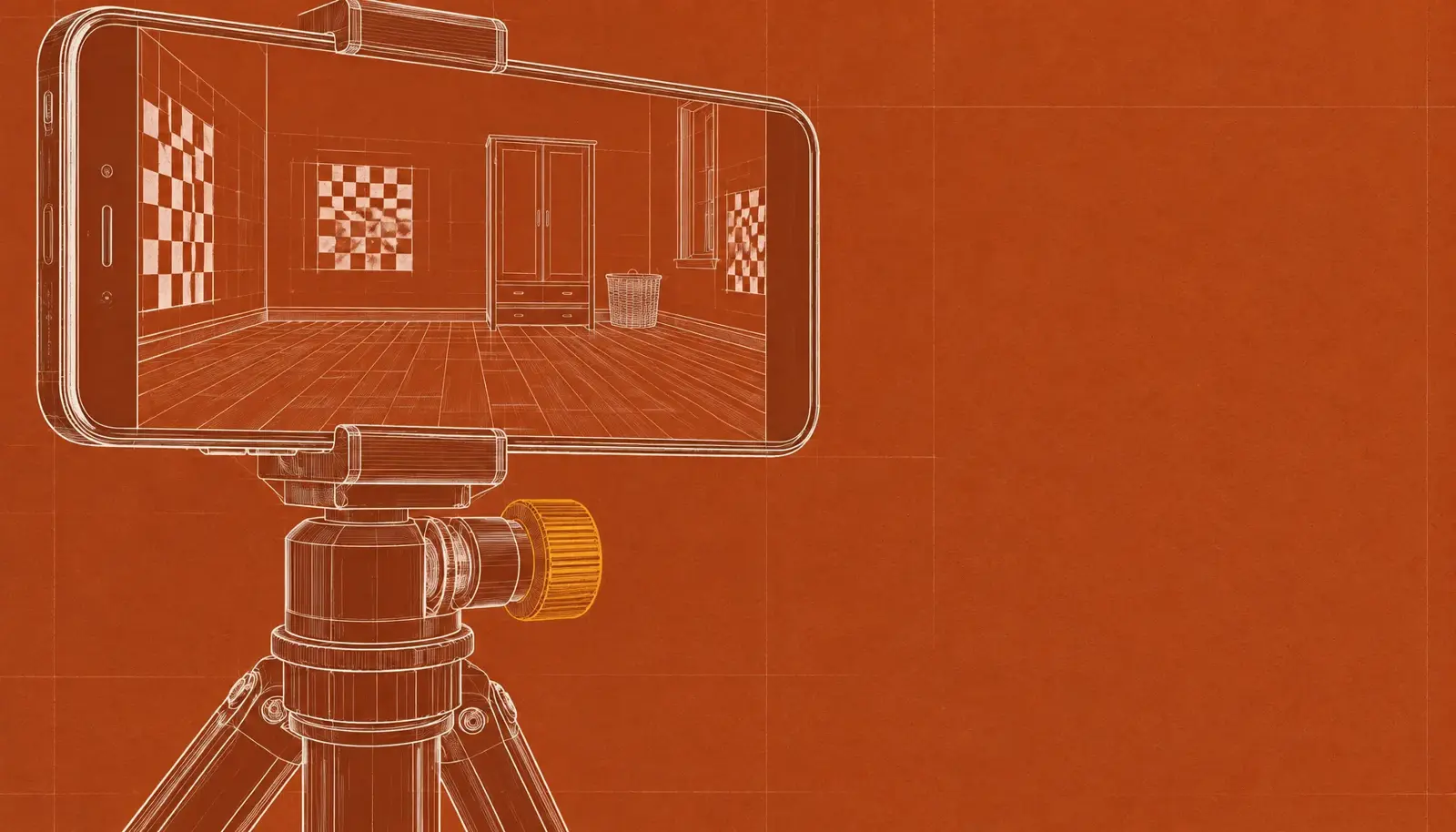
The researchers build a simulated version of the task environment from smartphone images, using Gaussian scene reconstructions for visual appearance and editable meshes for collisions and physical interaction. Their method adapts a small pool of source motions to varied object and robot positions, then uses rollout feedback to correct mismatches between planned motions and simulated execution. The authors say the full data-generation process produced 4,800 successful trajectories across the three tasks.
More simulated examples raised real-world success
The comparison uses GR00T N1.7 policies trained with either 100 real demonstrations per task or 100 or 800 generated simulation demonstrations per task. With 100 simulated examples, the policy averaged 43.3% full-task success, close to the real-data baseline’s 46.7%. At 800 simulated demonstrations per task, its mean rose to 66.7% across the three tasks.
With GR00T N1.7, simulation-only training achieves 66.7% mean full-task success with a 20-percentage-point gain over real-data training under matched configurations.
Dianyi Yang and co-authors, authors of Zero-HLM: Generalizable Humanoid Loco-Manipulation without Real Robot Data, write
The gain was not uniform across every skill. In the banana task, the 800-example policy completed the walk stage in all 20 trials, picked up the banana in 15 and finished the full sequence in 12. The real-data policy also walked successfully in all 20 trials, but completed the full task eight times. In the hat task, the simulation-trained policy placed the hat successfully in 15 of 20 trials, compared with 11 of 20 for the real-data policy.
Expanded setups favored simulation coverage
The authors also tested five settings that shifted the robot’s starting position, moved objects or placement targets, or substituted a bitter melon and plate for the banana and basket. Across 100 trials pooled over those expanded settings, the real-data policy succeeded 23 times; the policy trained on 800 simulated demonstrations succeeded 69 times. For the changed object-and-goal pair, the reported success rates were 20% and 100%, respectively.
Those results concern the tested configurations, not unrestricted transfer to new homes or tasks. The source motions themselves came from 15 successful teleoperated demonstrations per task in simulation, and the physical robot evaluations in the main comparison comprised 20 trials per task. The paper’s percentages therefore describe a limited test set rather than a broad estimate across robots and environments.
The visual gap still complicates mixed training
Zero-HLM’s data pipeline depends on successful simulated rollouts, and the paper reports generation success rates of 33%, 34% and 25% for Tasks A, B and C. Grasp-related failures dominated those attempts. The authors also tested mixing real and simulated data: adding 800 simulation trajectories to 100 real demonstrations per task yielded a 53.3% average, below the 66.7% result from simulation-only training.
A separate small experiment points to one reason. When the team replaced simulated images with real images while retaining simulation-generated action labels, success reached five of five trials in each of two picking regions; the mixed dataset with simulated images reached two of five in one region and four of five in the other. The finding suggests that generated motions can transfer even as mismatched visuals hinder training. For now, the paper’s strongest result is specific: on its three Unitree G1 tasks, 800 simulated demonstrations per task beat the 100-real-demonstration baseline in the reported physical trials.
Sources
- Original source · Preprint arXiv arXiv:2610.35075