The Floor
Autoware group releases compact AutoE2E driving model
The Autoware Foundation’s Robotaxi Working Group has released a 79.9-million-parameter open-source driving model. Its initial version covers trajectory planning, while additional prediction and reasoning layers remain in development.
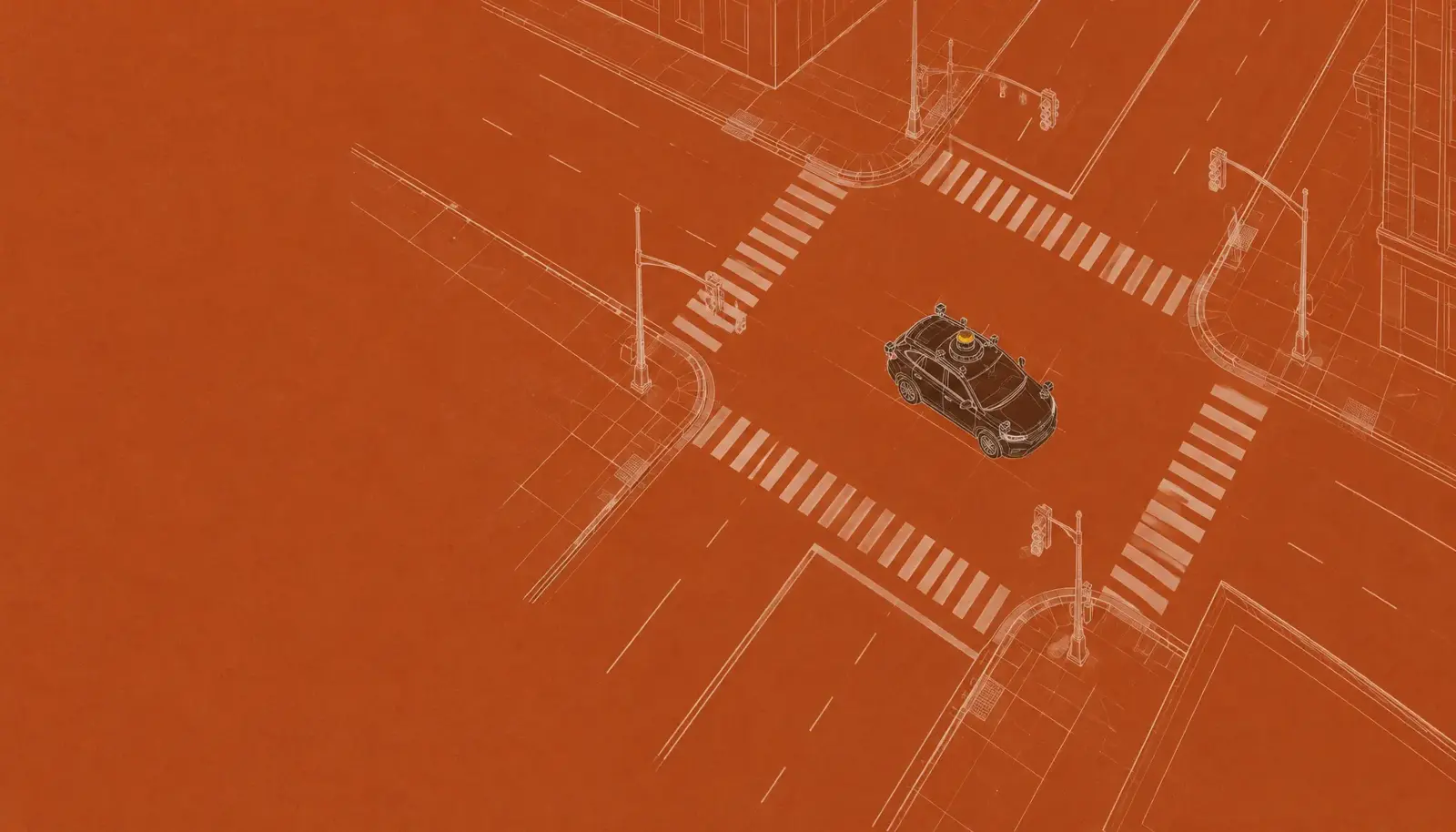
An open-source driving model with 79.9 million parameters is now available for developers to inspect and adapt for autonomous vehicle applications. The Autoware Foundation’s Robotaxi Working Group released AutoE2E with sponsorship from TIER IV.
AutoE2E is integrated with Autoware for open-loop testing and evaluation. The released version contains a reactive model for trajectory planning; separate layers for predicting the surrounding scene and reasoning about driving actions are still being developed.
What the model does
The reactive model combines six camera views into a bird’s-eye representation and plots acceleration and steering for the next 6.4 seconds, according to the foundation. It operates at 10 Hz, or ten times a second, and is the part of the architecture that drives.
The planned world model is designed to predict how a scene will evolve without rendering pixels. The reasoning layer is intended to work out why the vehicle should take an action without generating language. Both slower layers are still in development and are intended to work with the same planner.
According to the foundation, the model supports camera-only sensor setups for hands-free driving on highways and city streets. It can also be paired with LiDAR and radar safety layers for fully driverless applications.
Benchmark and its limits
In an open-loop comparison on KITScenes-Multimodal validation data, the fine-tuned model achieved an average displacement error of 0.744 meters over a three-second horizon, the foundation reported. That result ranked second by average displacement error among eight reported model configurations.
The foundation said all the models in the comparison predicted the next three seconds from logged camera frames. Their predictions were measured against the path taken by the human driver; model inputs varied, and AutoE2E also received a map raster and route.
Code and related models
AutoE2E source code is available on GitHub under the Apache 2.0 license for research and commercial use. The v1.0 model checkpoints are available on Hugging Face.
Developers can inspect the code, retrain or fine-tune the model on their own data, and integrate it into broader autonomous driving systems, subject to the applicable license terms. They can also contribute through the Robotaxi Working Group.
TIER IV says AutoE2E can run on computing platforms beyond NVIDIA hardware. The company is also working on METEOR, an end-to-end driving model primarily intended for privately owned passenger vehicles. METEOR has 16 million parameters and supports images from one to eight cameras, as well as LiDAR and radar data, according to the company.
Testing on the road
The Autoware Foundation and TIER IV are pursuing further model development and optimization for automotive systems-on-chips. The foundation says deployment performance and resource requirements still need to be evaluated for specific platforms.
Real-vehicle closed-loop testing is underway to assess the integrated system in interactive driving conditions. Further on-road trials are planned for 2027 alongside continued development and optimization. The foundation describes L4 driverless capability as a development goal, with the work intended to support eventual commercialization.
Sources
- Original source Autoware Foundation autoware.org
Other pages read
- TIER IV tier4.co.jp