The Floor
Boston Dynamics Rebuilds Stretch Gen 2 Around Uptime
Boston Dynamics unveiled Stretch Gen 2 on November 3, 2026, with hardware and service changes aimed at reducing downtime. The trailer-unloading robot cuts internal cabling by 81 percent and can unload up to 1,000 cases per hour, depending on conditions.
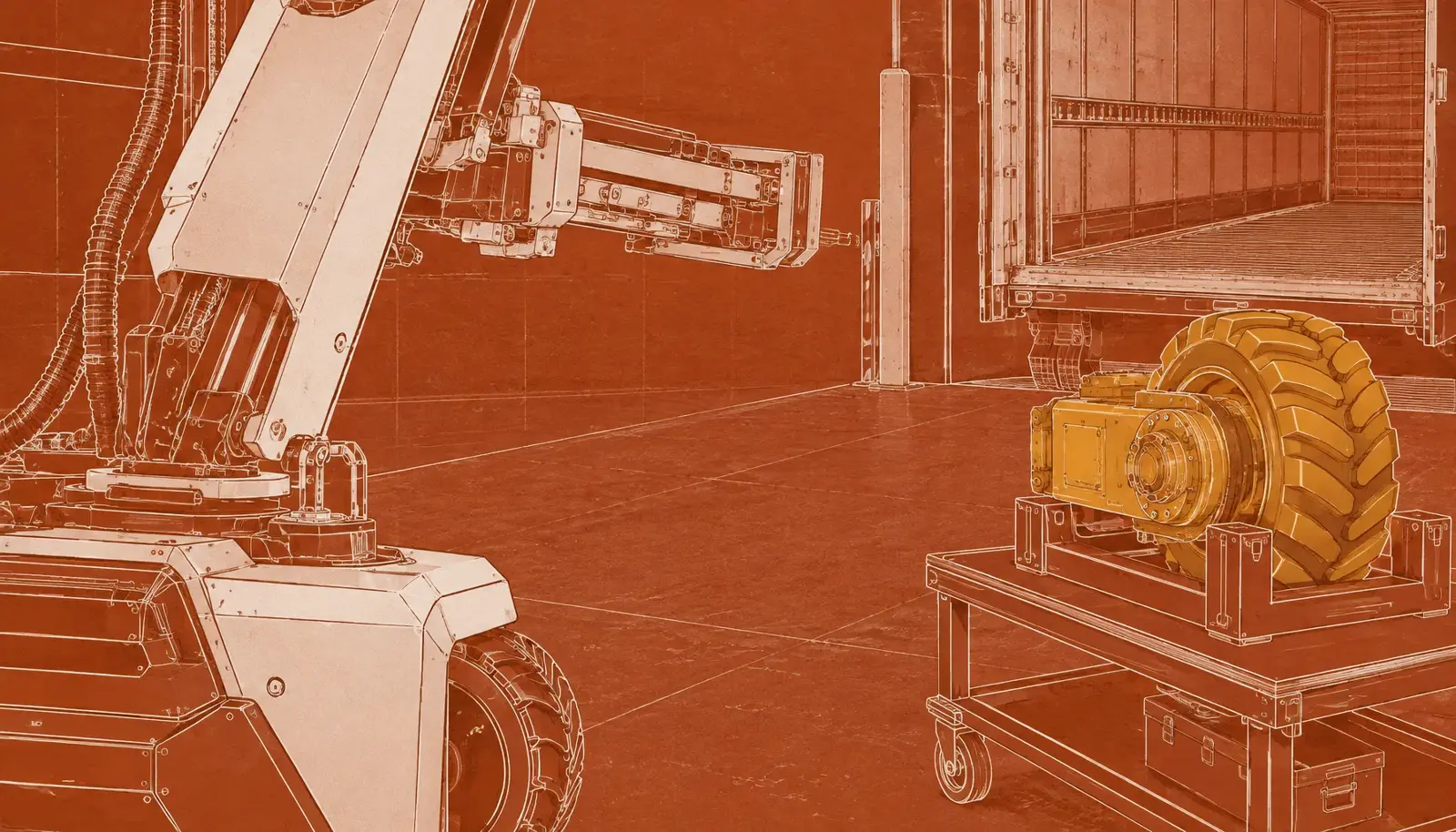
Boston Dynamics based Stretch Gen 2 on data from more than 100,000 operating hours and tens of millions of boxes handled by the first-generation robot. The company used that record to identify common causes of unplanned downtime. Unveiled November 3, the new autonomous mobile trailer-unloading robot pairs hardware changes with a modular design intended to make maintenance easier.
Stretch Gen 2 targets the causes of downtime
“Our customers count on Stretch to keep freight moving, and every hour a robot sits idle is an hour of work that piles up on the dock,” said Brian Donnelly, Vice President & General Manager of Logistics Robotics at Boston Dynamics. He said the team focused on issues that took robots offline during operation. Gen 2 is built to be tougher and simpler to service, the company says.
Boston Dynamics describes Stretch as having more deployments than any competing product in the logistics industry. Its updated modular design supports “plug and play” part swaps. The stated aim is easier maintenance and serviceability in high-volume logistics environments.
Less cabling, fewer mechanical hard stops
Stretch Gen 2 uses heavy-duty automotive-grade connectors designed to withstand vibration from rapid, high-torque box handling and driving over uneven floors. Its upgraded gripper adds new valve systems and more precise sensing for grasping and placement. Continuous-rotation joints can move beyond 360 degrees, avoiding the hard stops that previously caused mechanical stress.
The robot has 81 percent less internal cabling, a reduction Boston Dynamics describes as about a half-mile of wiring. The change addresses the biggest source of intermittent electrical faults and wiring wear, the company says. A lower, recessed emergency stop and new exterior-panel materials are intended to reduce unintentional safety stoppages and panel breakage when boxes fall.
A swerve-drive swap now takes about an hour
When service is needed, a full swerve-drive replacement now takes about one hour, rather than a full day, according to Boston Dynamics. Dynamic cables and complex harnesses are gone, while standardized high-strength fasteners reduce tool changes and hands-on repair time. The redesign is also intended to reduce how often service calls are needed.
New onboard diagnostics and maintenance tools let customer maintenance teams handle more routine service, the company says, reducing reliance on outside support. Stretch Gen 2 also uses a redesigned onboard computing platform. Regular software releases update case detection, motion planning, pick strategies and world modeling across a fleet without requiring hardware changes.
Up to 1,000 cases per hour, depending on the load
Boston Dynamics gives Stretch Gen 2 a maximum unloading rate of up to 1,000 cases per hour, while cautioning that throughput depends on factors including case weight and how neatly or disorderly boxes are stacked. A multipick feature pushes performance to peak rates. The robot’s battery lasts two shifts, and a fast charger brings it to 90 percent in about 75 minutes.
Onboard lighting lets the robot work in dark trailers, and its pre-trained vision system detects most packages from day one without programming, Boston Dynamics says. Those functions sit alongside the service changes: the company’s announced version combines trailer unloading, fleet-wide software updates and faster component replacement in a single robot.
Sources
- Original source Boston Dynamics bostondynamics.com
Companies in this story
Related stories
- Boston Dynamics Gives Atlas Four-Finger Hands With 13 DoF
- Boston Dynamics Tests Wheeled Whole-Body Control on Atlas
- Boston Dynamics Workers Urge Company to Halt ICE Robot-Dog Sale
- Boston Dynamics Taps Amazon AI Leader Rohit Prasad as CEO
- GXO and Apptronik plan up to 1,000 Apollo robots, subject to results