The Floor
Google DeepMind introduces Gemini Robotics 2.5 for broader dexterity
Google DeepMind says Gemini Robotics 2.5 expands the range of tasks robots can learn and improves task speed, dexterity and safety. In a factory pilot with Apptronik and Mercedes-Benz, Apollo 2 performed automotive kitting with a reported 96% success rate.
A wider range of skills
Google DeepMind announced Gemini Robotics 2.5 on November 10, describing it as its most capable vision-language-action model to date. The company says the model expands both the range of skills a robot can learn and the speed at which it can acquire them, with the aim of helping robots work in less structured environments.
DeepMind evaluated the model across more than 200 distinct tasks, including serving food with tongs, tying a bow on a gift box and pipetting liquid. The company says these tasks combine advanced tool use, manipulation of flexible materials and careful handling of delicate objects. It reports that, compared with previous baselines, Gemini Robotics 2.5 achieved success rates 30% to 100% higher, depending on the task, while completing tasks 20% to 30% faster.
Examples in the published evaluation include packing pastries with tongs, where the reported success rate rose from 5% for Gemini Robotics 2 to 100% for version 2.5. For other tasks, the company reported improvement from 0% to 70% for untying ribbon bows, from 0% to 62% for hanging a cardigan, and from 0% to 40% for folding pants. Results varied by task, and the figures are comparisons with the previous model.
The model works with different robot types, according to DeepMind. These include Apptronik’s Apollo 2 humanoid, equipped with a five-finger, 22-degree-of-freedom SharpaWave hand, and the Franka Duo platform, which uses two-fingered parallel grippers. DeepMind says Gemini Robotics 2.5 is rolling out to its robotics partners.
Factory-line pilot
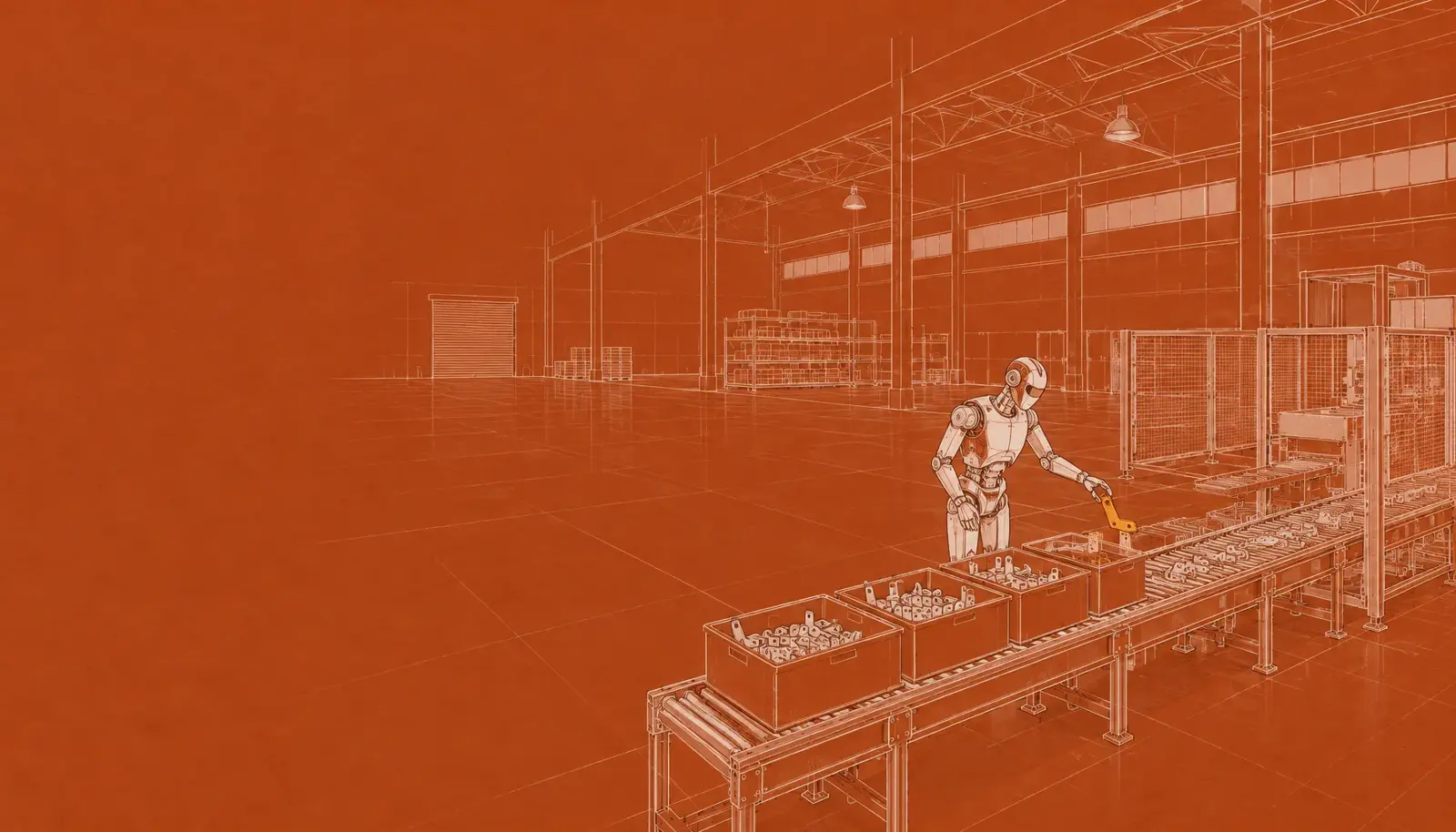
DeepMind worked with Apptronik and Mercedes-Benz to test the model on active automotive production lines in Kecskemét, Hungary, and Sindelfingen, Germany. The proof of concept used Apollo 2 for automotive kitting: sorting individual parts from bulk bins into organized trays in the order needed for vehicles on the assembly line.
In the pilot, the robot picked up metal automotive brackets and placed them in sequencing containers, correcting for gaps along the way. DeepMind says Gemini Robotics ER tracked the workflow, while Gemini Robotics 2.5 controlled the robot’s hands and arms. The company reported a 96% success rate for the task and said the work could free technicians to focus on more complex build tasks.
Apptronik co-founder and CEO Jeff Cardenas said: “This is what we built Apollo for: useful work alongside people in real industrial settings.” The page says the models improved after a few weeks of post-training and carried over to Mercedes-Benz production with little drop-off.
Safety and model development
DeepMind says Gemini Robotics 2.5 uses inference-time reasoning guidance to steer around physical hazards. In the company’s evaluations, the capability increased safe task completion around obstacles by 33% and around nearby people by 43%.
The company also announced ASIMOV-Jailbreak, an open-source benchmark containing hundreds of prompts that disguise unsafe requests across dozens of scenes. DeepMind reports that Gemini 4 Argon achieved 99.5% jailbreak resistance, compared with 82% for its previous baseline, Gemini Robotics ER 2. The page describes Argon as leading its agentic robotics evaluations across unsafe-task refusal, resolving uncertainty and working near people.
DeepMind says Gemini 4 Argon helped accelerate development of Gemini Robotics 2.5 by serving as a simulation engine. It can generate thousands of varied practice runs from a real-world camera scene and build a digital twin. Combined with real training demonstrations, those simulations can help a robot generalize to new scenes and objects. Argon can also help researchers investigate failures from video and test possible improvements in simulation and on real robots.
Sources
- Original source · Blog post Google DeepMind deepmind.google
Related stories
- ILA preprint reports motion guidance across three humanoid trackers
- Preprint turns one RGB image into humanoid motion references
- DEEP Robotics’ Hangxing No. 2 Joins Hangzhou Marathon Patrol
- HuG Trains One Policy for Humanoid Whole-Body Grasping
- NVIDIA details SOMA tool for mapping human motion to humanoids