The Floor
Preprint proposes task-based certification for healthcare robots
A proposed framework would assess healthcare robots against the requirements of specific tasks rather than a single benchmark score. A wheelchair-transfer example sets out possible tests and oversight conditions, but evaluates no robot.
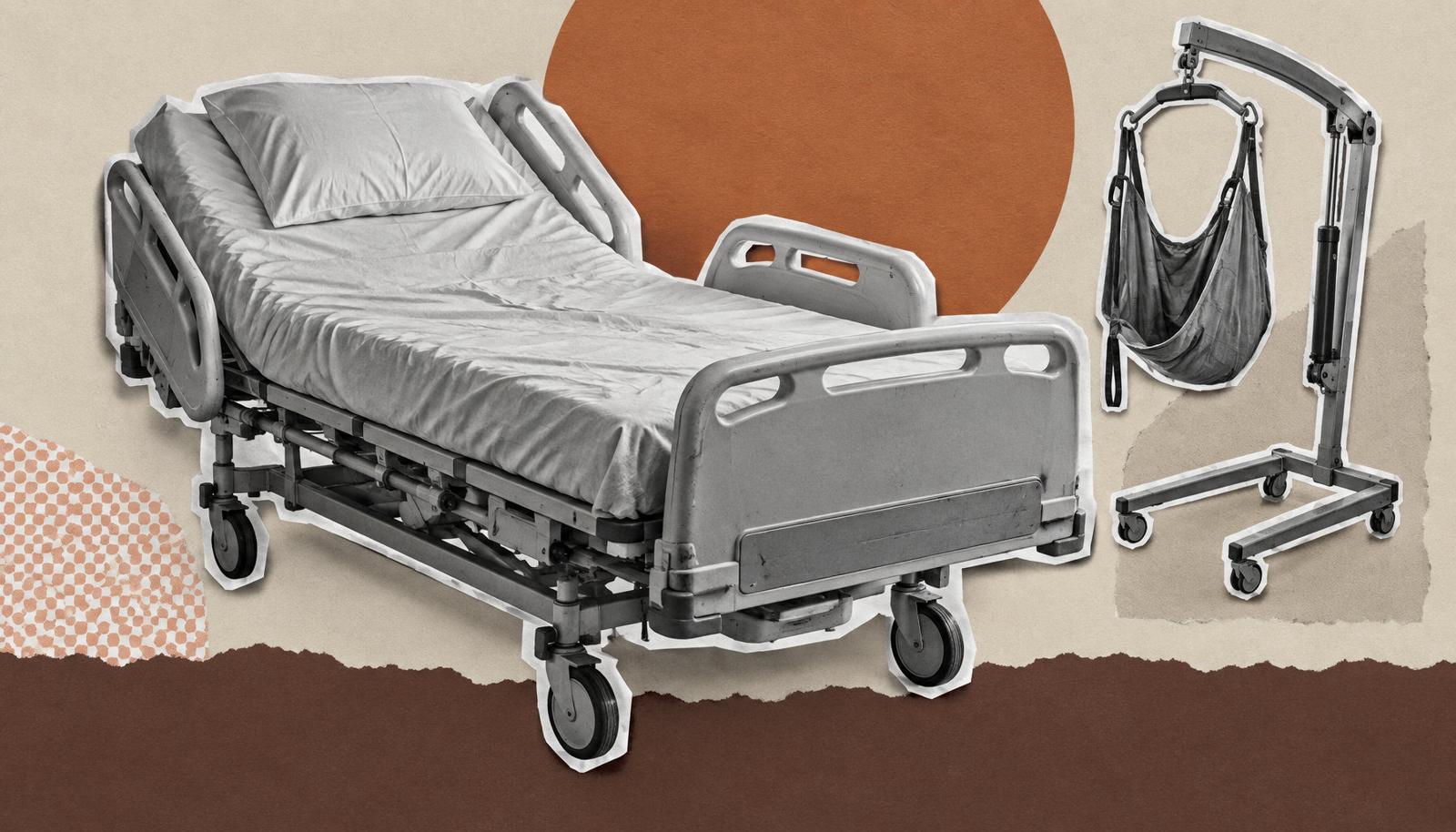
A proposed certification framework would judge healthcare robots against the demands of individual tasks, rather than relying on an overall benchmark score. In a preprint submitted on November 23, Tord Johan Eide and Einar Holt of Wybe Labs call the approach CRAB-H and illustrate it with a profile for transferring a patient between a bed and a wheelchair.
The example evaluates no robot and makes no authorization decision. The paper is a draft for peer review; its authors say the proposal is not an adopted standard or regulatory guidance and does not replace medical-device conformity assessment.
Matching capability to the task
CRAB-H extends an earlier governance architecture that separates model safety validation, cognitive certification and operational authorization. The new proposal adds a Task Requirement Profile for each healthcare activity, specifying the capabilities, evidence and conditions relevant to that task.
A profile is intended to describe the task independently of a particular robot or deployment. It identifies the cognitive capabilities needed, the safety-critical dimensions, acceptable evidence and the constraints under which an activity could be considered for authorization.
The proposed comparison uses a capability margin to assess whether a system meets each critical requirement. A failure on one critical dimension would block certification even if the robot performed strongly on other dimensions; for example, navigation performance would not compensate for inadequate fall detection during a patient transfer.
When evaluators disagree
The framework also calls for an evidence profile recording the observations behind capability assessments. Evaluation scenarios would be derived from the task profile, with scoring based on observable behavior for each dimension.
For safety-critical dimensions, the proposed standard protocol calls for at least three independent evaluators. If an aspect cannot be assessed with sufficient reliability, it would move from cognitive certification to operational requirements, potentially including human oversight, restricted environments or mandatory escalation.
The paper gives a hypothetical dignity-preservation assessment in which evaluator agreement falls below the proposed threshold. In that example, dignity would be handled through operational conditions, including human supervision during each transfer and a mechanism for reporting concerns.
A transfer profile
The wheelchair-transfer profile covers robot assistance with patient stability, dignity and continuous supervision. Its proposed scope includes patients weighing 40–120 kg who can communicate consent signals, an indoor non-slippery floor and a wheelchair within 1.5 m.
The example sets out five critical dimensions for certification: force control and grip, fall detection, distress detection, positioning accuracy, and communication and consent. Dignity preservation is assigned to operational authorization in the illustrative reliability scenario.
For force control, the profile proposes force and torque data from at least 20 complete transfer trials. The authors describe that as a minimum pilot threshold, not a validated guarantee. For fall detection, the example calls for at least 15 simulated instability events across a range of patient envelopes.
Evidence still needed
The authors use published healthcare datasets as illustrative material for constructing task profiles, not as validation of the proposed dimensions or thresholds. They say they did not process raw data from the datasets for the paper.
The preprint also identifies gaps before journal submission. Documentation for the accident corpus used to derive the cognitive dimensions is not yet publicly available in the paper, and the authors call for a full inter-rater reliability study involving at least three evaluators across at least five task profiles.
Sources
- Original source · Preprint CRAB-H: Task-Centric Certification for Healthcare Autonomous Systems arXiv:2611.31470
Other pages read
- arXiv Troller “CRAB-H: Task-Centric Certification for Healthcare…” arxiv-troller.com
Related stories
- Preprint proposes certifying robot safety through recoverability
- Akara raises $5.5 million for hospital AI and robotics
- Preprint adds estimator uncertainty to robot safety reachability
- CATWAY preprint tests when robot agents should act, ask or refuse
- London police to trial longer-range drone ID detection