The Floor
HKUST’s EmArm Spreads Touch Sensing Across 71,000 mm² of Its Arm
HKUST’s EmArm embeds more than 71,000 square millimeters of optical tactile skin inside a robotic arm’s structure. In tests, it classified five kinds of touch, balanced an off-center basketball and replanned around an obstacle hidden from view.
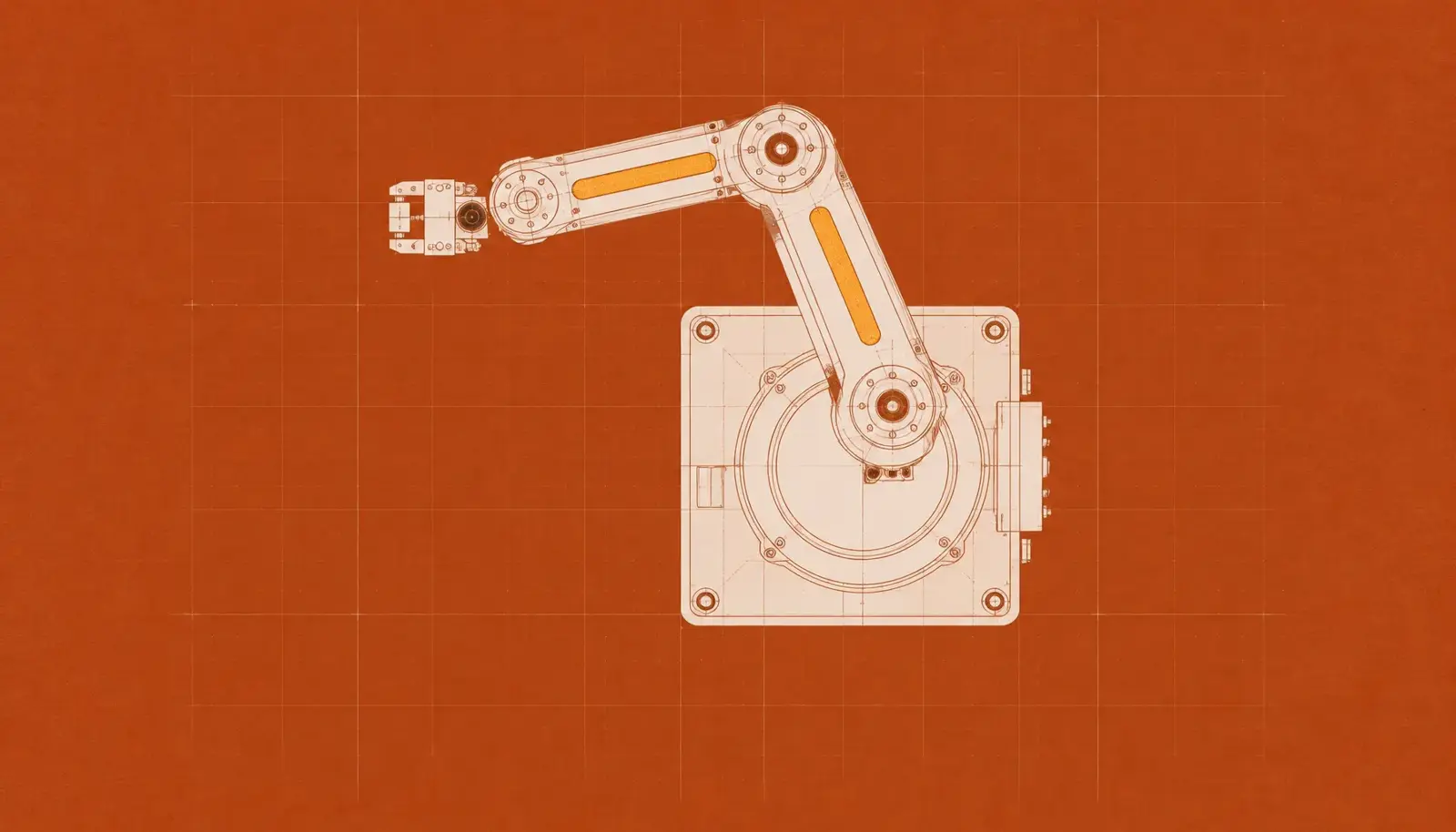
More than 71,000 square millimeters of soft tactile skin cover HKUST’s EmArm, giving the robotic arm contact sensing across its upper and lower sections rather than only at its gripper. The Hong Kong University of Science and Technology described the system on October 16; the underlying study appeared in Nature Sensors on July 20.
The team embeds optical sensing material inside the arm’s rigid skeleton. Small cameras within the structure read how contact forces spread across the skin, while a control system combines those signals with joint-angle data to adjust movement. The design aims to let the arm respond to contact along its links without relying solely on cameras or sparse force sensors.
Inside EmArm’s 71,000-square-millimeter sensor skin
EmArm has a tactile spatial resolution of 0.085 millimeters and a two-point discrimination threshold as low as 18.2 millimeters, HKUST reports. The university compares that threshold with a typical 30-to-50-millimeter range for human arm skin. The study’s abstract describes the system as achieving “submillimetre tactile localization” and combining large-area soft skins with proprioceptive sensing and a closed-loop perception-action framework.
Yifeng Tang et al., authors of the Nature Sensors paper.
In tests, the arm maintained sensing fidelity of up to 97.9% under five types of environmental interference, according to HKUST. The embedded skin did not materially affect repeat-positioning accuracy, the university also reports: the system withstood pressure loads exceeding 15 kilograms and torsional loads of 7.35 newton-meters. Those are laboratory results, not evidence of performance across commercial deployments.
Five touch types feed EmArm’s control loop
The system recognized stroking, pinching, poking, tickling and hitting, with reported accuracy of up to 99.8%. EmArm mapped those interactions to five corresponding expressions—happiness, sadness, curiosity, shyness and anger, HKUST says. The experiment shows classification and response by the robot; it does not establish that the machine experiences emotion.
The control loop also links touch to movement. In a basketball demonstration, EmArm used tactile feedback to adjust its posture and stabilize a ball placed away from its center of gravity. The controller processes contact location, area, force and number of contact points alongside joint-angle information, then sends movement commands to the arm, the team says.
A hidden obstacle triggers a stop and reroute
In another test, a human hand entered the arm’s path where the obstacle could not be detected visually. EmArm sensed the contact, stopped, assessed whether the obstruction was temporary or persistent, and replanned its route, according to HKUST. The demonstration puts tactile sensing to work as part of motion control, not just as a way to label touches.
The work was led by Yajing Shen’s team at HKUST’s Mevita Robotics Lab, with Yifeng Tang as first author. The researchers propose extending the approach to other robot body parts, including legs and torsos. For now, the evidence centers on a single arm and a set of controlled demonstrations; the next practical test is whether the integrated skin and sensing loop retain their performance in longer, less predictable tasks.
Sources
- Original source HKUST School of Engineering seng.hkust.edu.hk
Other pages read
- Nature Sensors nature.com
- The Hong Kong University of Science and Technology (HKUST) hkust.edu.hk
Related stories
- SUSTech Team Builds Humanoid Skin With More Than 10,000 Sensors
- Researchers Present LumiTac, a Six-Axis Sensor With a 12 mm-Diameter Sensing Head
- MERL paper reports TacSushi falls to 37.5% on held-out foods
- TouchTwin uses tactile recordings to build simulated hand demonstrations
- Preprint finds vision features vary across insertion tasks