The Floor
JAKA Debuts Kargo50 and a 50 kg Zu50 Cobot
JAKA unveiled the Kargo50 wheeled humanoid robot and the Zu50 collaborative arm at the China International Industry Fair in Shanghai. The company pointed to Kargo10 deployments as evidence of industrial use, while the new Kargo50’s detailed payload specifications have not been published.
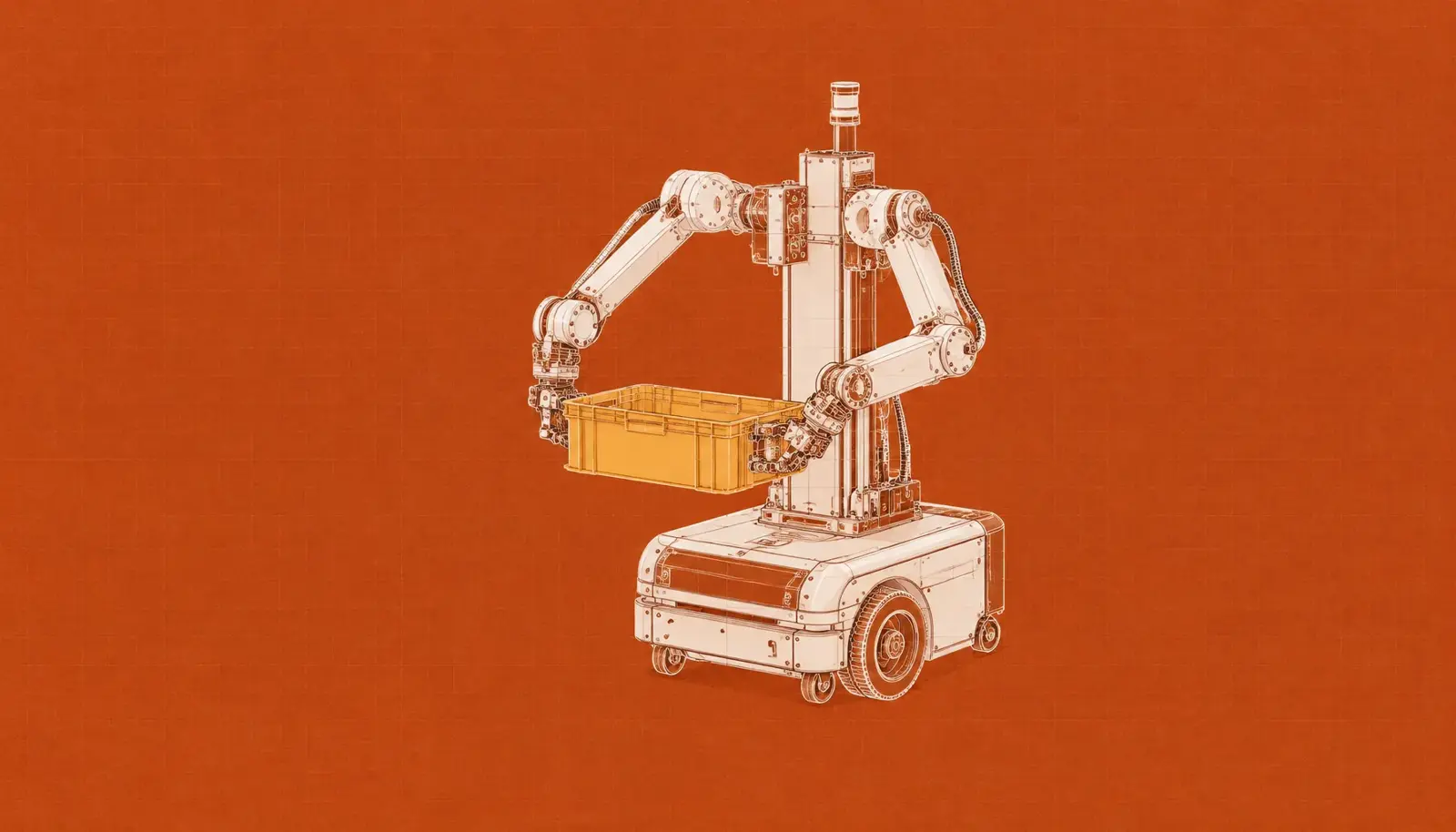
JAKA Robotics introduced two industrial robots at the China International Industry Fair in Shanghai on October 12: the Kargo50, a heavy-duty wheeled humanoid for moving materials, and the Zu50, a collaborative arm with a 50 kg payload. The launches pair a mobile machine designed to move between workstations with a fixed arm aimed at heavier handling tasks. JAKA had announced the planned debuts the night before the fair opened.
Kargo50 extends JAKA’s wheeled robot line
JAKA describes the Kargo50 as part of its established Kargo series and positions it for heavy tote transport and flexible material movement in factories. The company has not published detailed payload figures or a full specification sheet for the new mobile robot. Its name alone does not establish how much the whole machine can carry.
The company’s earlier Kargo10 offers a measure of the experience behind the new model, but its performance figures apply to that robot, not the Kargo50. JAKA says Kargo10 is in large-scale commercial use at automotive-parts and high-end electronics factories. On-site refinement cut the time for a single tote-handling cycle from 105 seconds to 28 seconds, and deployment in a new scenario now takes 57 days, JAKA says. Those figures describe the Kargo10, not demonstrated Kargo50 performance.
Zu50 brings a 50 kg rating to the arm portfolio
The Zu50 adds a 50 kg payload model to JAKA’s collaborative robot range. Product information cited by Interesting Engineering gives the arm a maximum reach of 2,100 millimeters. The model extends the company’s arm lineup toward heavier tasks; the launch report does not specify pricing or delivery dates.
The Zu50 completes a progression across light-, medium- and heavy-payload collaborative robots, JAKA said. That places the arm in a different role from the Kargo50: the mobile robot is intended to move totes and components between locations, while the arm handles loads at a workcell. Manufacturers evaluating the two would need to assess floor transport and station-based handling as separate tasks.
Fair demonstration links mobile robots and a workcell
At the fair, JAKA presented a factory workcell showing two wheeled humanoid robots cooperating on an engine assembly. One robot carried the engine to a designated position, and the other tightened its screws before the machines returned to their starting points. The demonstration showed a coordinated sequence rather than isolated robot movements.
The demonstration used JAKA EVO, an embodied-intelligence operating system the company introduced in 2025, according to Interesting Engineering. The described system divides work among cloud-based intelligence, edge computing and motion control: the cloud handles perception, task planning and skill selection, while edge computing combines rules, motion planning and force control. A dedicated motion controller operates at 1,000 Hz. These details describe the company’s exhibition system, not a published specification for either new robot.
Factory claims rest on the Kargo10’s track record
The evidence JAKA offered for industrial use centered on Kargo10 deployments, not measured Kargo50 results. Its reported cycle-time reduction and 57-day scenario deployment period provide company-reported benchmarks, but they do not establish the new robot’s throughput, operating reliability or cost. JAKA has not disclosed those Kargo50 measures in the launch information.
JAKA was founded in 2014 and had developed collaborative robotics and embodied intelligence as two core product lines, the report said. The report also cited industry data putting JAKA’s share of China’s collaborative-robot market at 21.9% in 2024, ranking it first domestically. JAKA Vice President Chang Li’s statement at the announcement was:
“通用即未来”是全球机器人产业的核心发展趋势。
The launches put the two product lines alongside one another at CIIF: a wheeled robot for moving materials and a high-payload collaborative arm for handling them.
Sources
- Original source Shanghai Securities News · China Securities Network cnstock.com
Other pages read
- Eastmoney, republishing Shanghai Securities News finance.eastmoney.com
- Interesting Engineering interestingengineering.com