The Floor
KAIST team builds flexible display for human and robot vision
A research team from KAIST and Yonsei University developed a flexible reflective display that shows color to people and near-infrared patterns to cameras. The demonstrated prototype has 16 individually controlled pixels and was tested in bright, hazy and low-light conditions.
A display for two kinds of vision
A flexible reflective display developed by researchers at KAIST and Yonsei University is designed to communicate with people and robot cameras through different light bands. KAIST said on November 16 that a team led by Young Min Song, in collaboration with Ki Jun Yu of Yonsei University, had developed the prototype; people can read its visible color changes, while cameras detect near-infrared patterns that are invisible to the human eye.
Source dx.doi.org
The research, published in npj Flexible Electronics, combines visible and near-infrared modulation in a single active layer. Rather than emitting its own light, the display reflects ambient light, and voltage changes control its visible appearance and its near-infrared brightness.
One layer, individually controlled pixels
The display combines a conducting polymer, PEDOT:PSS, with an electrically tunable dual-band Gires-Tournois resonator. The paper reports operation across a voltage range of −2.0 V to +1.0 V, with visible hue variation of 167.2 degrees and a 38% reflectance change at 1270 nm. The reported rise time is 88 ms and the fall time is 165 ms.
The researchers built a 4 × 4 array, or 16 pixels, on a flexible thin-film transistor backplane. Each pixel can be controlled independently. The paper reports an on–off ratio of approximately 106, low off current and high spatial uniformity, which the authors say suppress pixel crosstalk.
KAIST said the team used a gel electrolyte instead of a liquid electrolyte, along with a flexible substrate that lets the device bend to curved surfaces. In a demonstration, researchers attached it to the back of a hand and controlled individual pixels while capturing the visible colors and near-infrared patterns with cameras.
Tests and next steps
The group tested near-infrared pattern recognition under haze and low-light conditions, and under bright conditions for both visible and near-infrared recognition. For the dark-condition test, the researchers used near-infrared illumination so a specialized camera could capture reflected patterns.
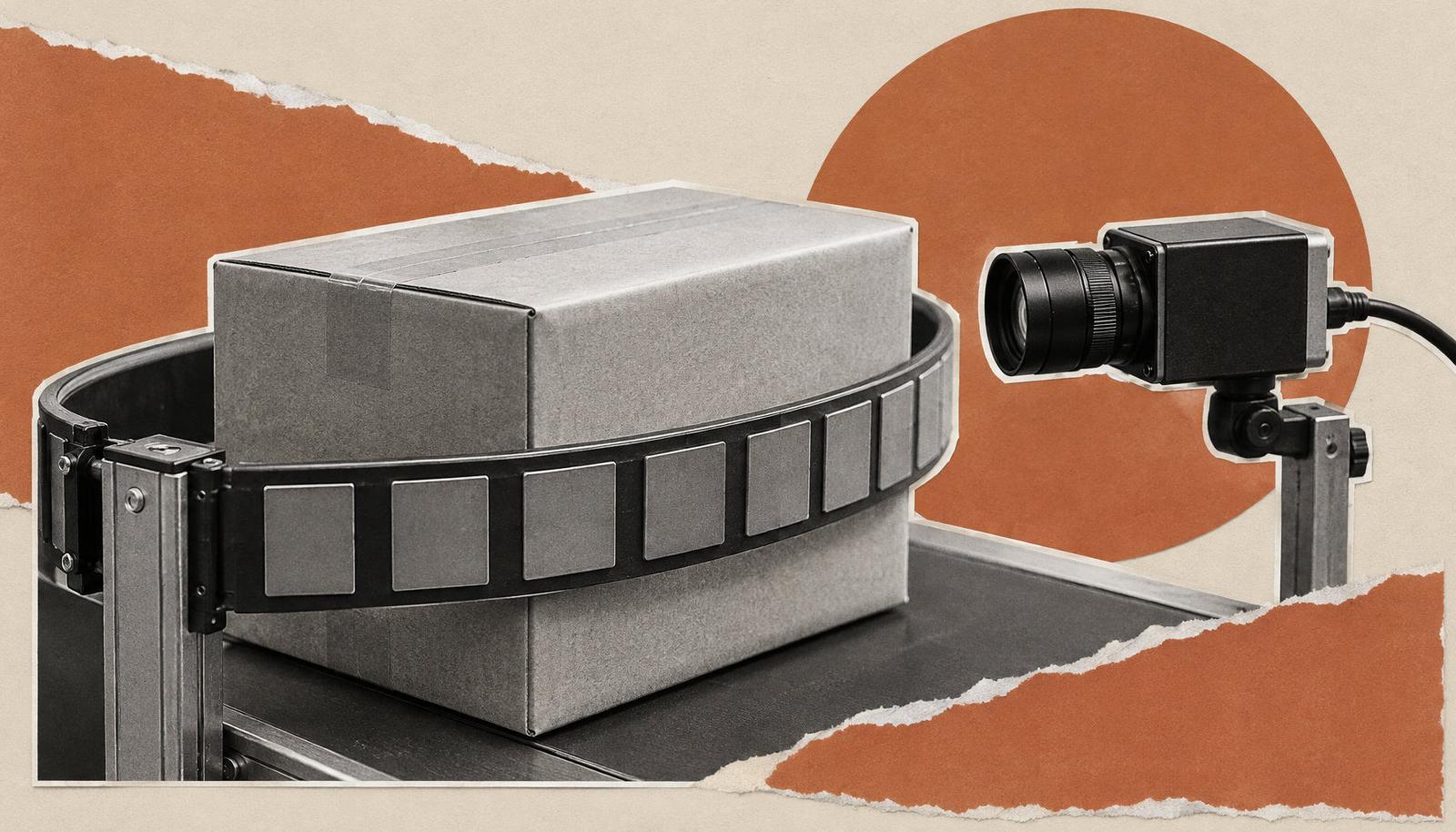
The team describes possible use as an electronic tag on products or equipment, where workers could read colors and robot cameras could read near-infrared patterns. A display on a transport box, for example, could indicate work status to people and provide a pattern for a robot camera. KAIST also identified wearable devices and industrial equipment as potential settings for flexible displays.
KAIST said the prototype remains small-scale and that further work is needed on pixel count, durability during prolonged use and repeated bending, and integration with robotic control systems. The study was published on October 20, 2026, in npj Flexible Electronics.
Sources
- Original source · Paper npj Flexible Electronics dx.doi.org
Other pages read
- KAIST News Center news.kaist.ac.kr
Related stories
- Researchers publish open three-arm surgical robot platform
- Ring announces home security drone and business patrol robot
- Flexible TeCoBot modules join to move and manipulate together
- Elite Robots expands CE-compliant ELITEMISSION mobile-manipulator range
- ROBOTERA opens orders for XHAND 1 Pro-U in a 40-unit release