The Floor
Meta Builds Fourier Humanoid and Starts a Second Version
Meta and Chinese robotics company Fourier built a humanoid prototype called Max in about three months and have begun work on a second version. The effort is for internal research and experimentation, with no plans to sell the units, Meta says.
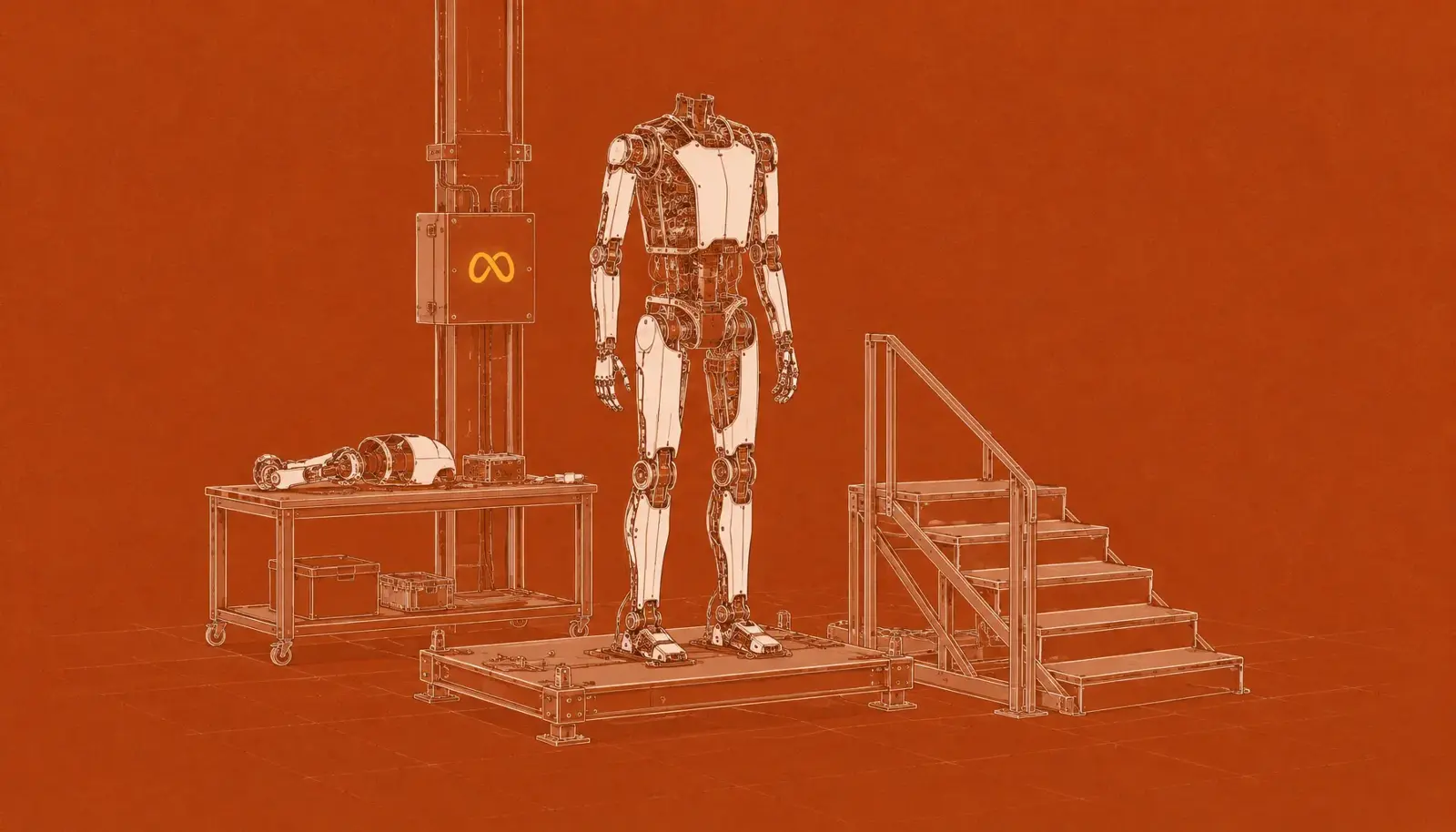
Meta’s home-robot ambitions meet a no-sales pledge
Meta is developing humanoids as possible helpers for homes, The Information reports, but the company says the machines it is building with Chinese robotics company Fourier are for internal research and experimentation, not sale. The distinction frames the project: The Information reports that Meta has built a working prototype and started a second, while a company spokesperson says Meta has no plans to sell these units.
“We face the same realities as the rest of the industry when it comes to sourcing components that are not readily available domestically. However, this effort with Fourier is focused on internal research and experimentation, and we have no plans to sell these units,” a Meta spokesperson told The Information.
Max took three months to build
According to The Information, the first prototype, known internally as Max, weighs about 106 pounds and stands roughly 1.5 meters tall. Meta and Fourier built it in three months, drawing on Fourier’s first three robot generations before changing the height, proportions, head design, display and cameras. They also added hands and shoes.
Max runs on Nvidia’s Jetson Thor chip and a separate software platform for movement, according to The Information. Two speakers sit in its chest; its eyes and mouth can display expressions, the report says. Its five-fingered hands can pick up small bottles and toys. Meta’s team traveled to China to work alongside Fourier, and Meta vice president of product for robotics Li-Chen Miller spent nearly two months at the company’s Shanghai factory, the report says.
Max 2 adds stairs and manipulation work
Meta and Fourier began building Max 2 in September, the report says. The next prototype is expected to have a redesigned torso, hands intended to improve manipulation and a projector for displaying visual content. Additional sensors are intended to help it climb and descend stairs.
According to the report, the first Max was designed around specific home-interaction requirements set by Meta. It is meant to recognize a voice from five meters away, interpret a hand gesture or wave from three meters away, maintain eye contact and signal states such as listening, thinking, speaking and uncertainty. Those targets describe the prototype’s design brief; the report does not establish how reliably it meets them in use.
Chinese sourcing complicates prototype development
The collaboration comes as U.S. officials scrutinize American companies’ dependence on Chinese robotics suppliers. The Federal Communications Commission barred imports of new models of Chinese humanoid robots in July, citing supply-chain and cybersecurity risks, The Information reports. A testing and product-development exemption allows companies to import up to 4,000 units under existing rules; in August, the FCC proposed cutting that threshold to 40 for covered devices unless companies obtain written approval.
That proposal could constrain access to prototypes and components if adopted. Meta is hiring in China for supplier development, product design and technical program management, with job postings describing work that could scale robotics from prototype through mass production, The Information also reports. Those hiring plans sit alongside the company’s statement that the Fourier effort is not intended for sales; the reporting does not say that Meta has committed to manufacturing a consumer robot.
A research prototype, not a product launch
Meta’s broader interest in home robots has gained a new AI rationale: Chief Technology Officer Andrew Bosworth has described humanoids internally as a physical embodiment of the company’s Muse AI agent, The Information says. The report adds that Meta has worked on robotics software and acquired Assured Robot Intelligence, a startup developing AI models for training robots to understand and adapt to human behavior.
For now, the clearest concrete progress is two prototypes: Max, built with Fourier in three months, and a second version under development with redesigned hands, a projector and added stair sensors. Meta does not plan to sell these units, the company says.
Sources
- Original source The Information theinformation.com
Related stories
- Sandia builds 2-by-6-inch crawler for Hanford waste pipes
- Researchers Present LumiTac, a Six-Axis Sensor With a 12 mm-Diameter Sensing Head
- Preprint adds data-aware state exploration to SkiNet-Sim
- SUSTech Team Builds Humanoid Skin With More Than 10,000 Sensors
- AiMOGA Opens Mobo Preorders for Its 0.9-Meter Home Humanoid