The Floor
Sandia builds 2-by-6-inch crawler for Hanford waste pipes
Sandia has built a flexible, two-inch-by-six-inch robot to inspect narrow pipes at the Hanford Site. The crawler carries a camera and lights, and the lab says its next step is testing it at the site.
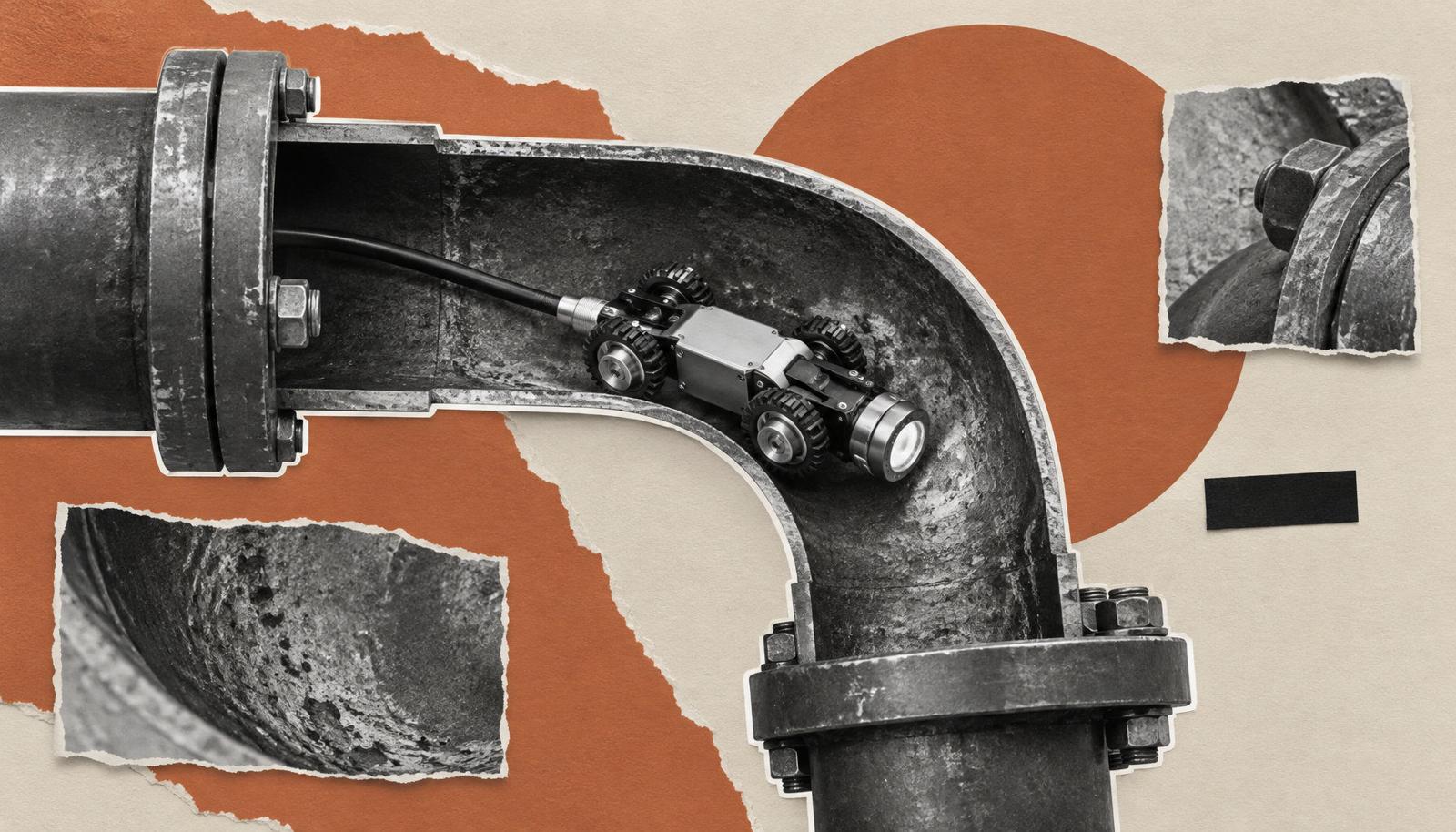
A two-inch-by-six-inch crawler built by Sandia National Laboratories is designed to inspect narrow pipes at the Hanford Site in Washington state. Called SPIINE, the flexible robot carries a camera and adjustable lights, and can steer through tight bends, according to Sandia’s November 19 release.
Inspection in confined pipes
Hanford’s underground network connects storage tanks that hold radioactive waste. The pipes transfer waste between tanks, and are decades old. They are double-walled, run hundreds of feet in different directions and can be as small as two inches in diameter.
Direct visual inspection would mean digging up the pipes, which Sandia says is not realistic or cost-effective and would not establish whether corrosion is occurring from the inside. Earlier inspection approaches also had limits: traditional push cameras could travel only about 10 feet at a time and could not negotiate tight 90-degree turns. Conventional ultrasound probes, meanwhile, are often too bulky for the smaller pipes and their bends.
A flexible crawler
The Sandia team behind SPIINE is led by mechanical engineer Steve Buerger and includes Daniel McArthur, Derya Tansel, Clint Hobart and Josh Ortiz. The name stands for Self-Propelled Interior Inspector for Non-destructive-testing Examination.
The robot has a multi-axis body, adaptive wheels and steering. Its onboard camera sends video in real time, with adjustable LED lighting to suit the surroundings. Operators control it with a standard video-game controller. Sandia says its motors can carry a payload as well as move the robot, including an ultrasonic or electromagnetic-field probe that could measure pipe thickness.
The team’s initial aim is to get a camera view inside the pipes and look for corrosion, cracks or other damage. The flexible body is intended to conform to pipe walls and reorient as needed; the robot may also encounter T-joints, protrusions, sludge and hardened deposits.
More work before Hanford testing
Sandia reports successful tests at the lab, while identifying a real-world test at Hanford as the next step. The team is working on a self-cleaning function for the camera lens or dirty pipe walls, and on a recovery system for cases in which the robot becomes stuck or disabled. Researchers are also exploring microscale ultrasonic sensors that would fit on the robot, because conventional sensors do not fit through a 90-degree turn.
SPIINE is designed to use a single cable to carry power and data while bearing mechanical loads. Sandia says the design can also accommodate multiple robots or propulsion modules connected in series, along with additional payloads.
Sources
- Original source · Government or agency page Sandia National Laboratories newsreleases.sandia.gov
Related stories
- Meta Builds Fourier Humanoid and Starts a Second Version
- Researchers Present LumiTac, a Six-Axis Sensor With a 12 mm-Diameter Sensing Head
- Preprint adds data-aware state exploration to SkiNet-Sim
- Multiply Labs Raises $75 Million for Drug-Manufacturing Robots
- KAIST team builds flexible display for human and robot vision