The Floor
RaMOD preprint reports moving-object detection from radar cubes
Researchers report that RaMOD detects moving road users directly from radar cubes collected by a vehicle-mounted sensor. On their BRIDGE-Liv dataset, it exceeded the strongest compared cube-detection baseline by 15.7 percentage points at an IoU threshold of 0.30.
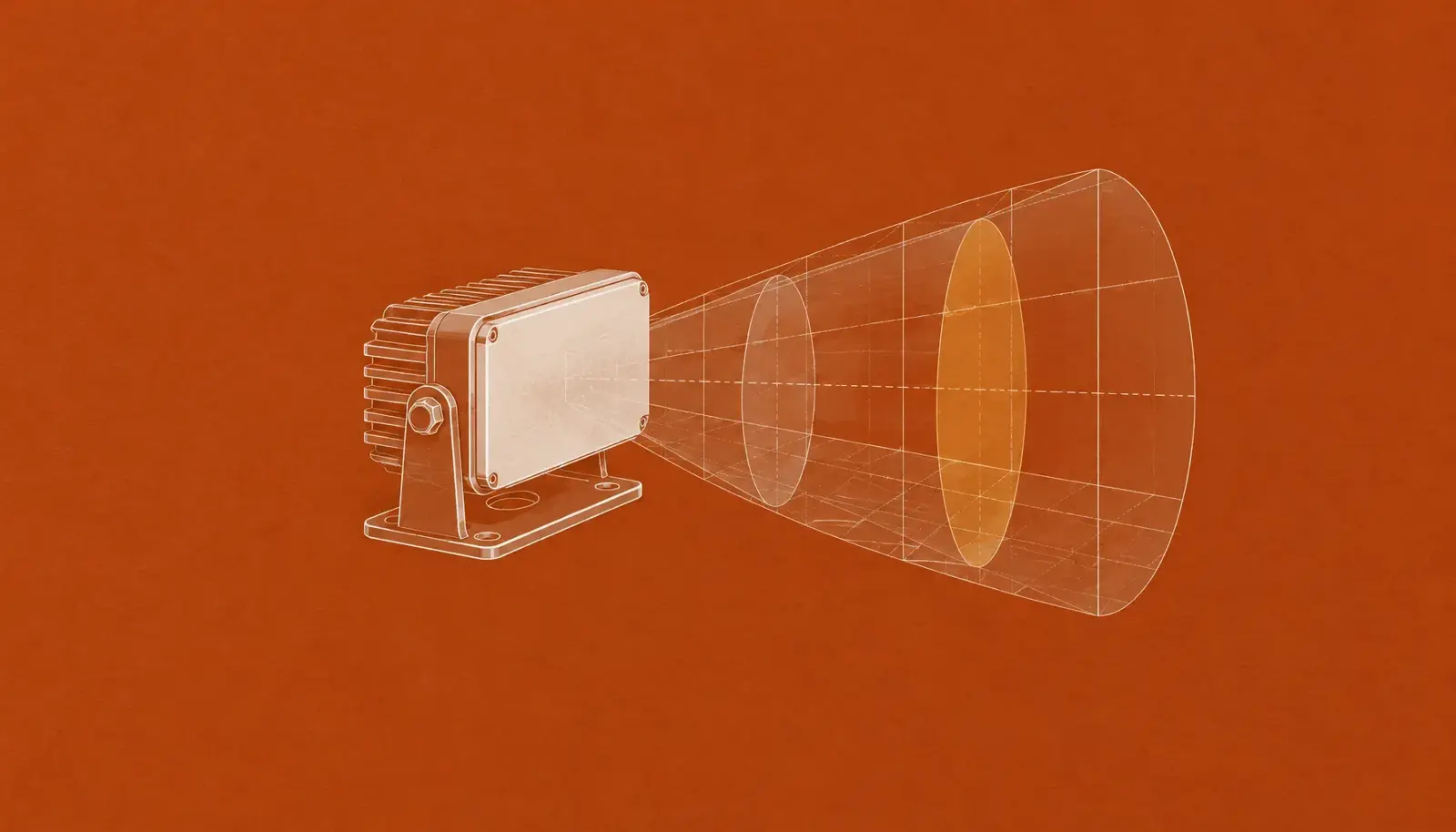
A new radar framework detects moving road users directly from data cubes produced by a vehicle-mounted sensor, while estimating their velocities and the motion of the vehicle carrying it. In a preprint, the researchers report that the system achieved 80.8% cube mean average precision at an intersection-over-union threshold of 0.30 on their BRIDGE-Liv dataset, 15.7 percentage points above the strongest compared radar-cube baseline.
Source arxiv.org
The method, called RaMOD, processes range–azimuth–Doppler cubes rather than relying on the sparse point clouds or projected views often used in automotive radar perception. Its authors describe it as a real-time framework for detecting and estimating the motion of objects from a single-chip radar on a moving vehicle.
Separating motion from background
A moving radar receives Doppler responses not only from moving road users but also from stationary surroundings, including buildings and parked vehicles. Doppler wrapping adds another ambiguity when relative radial velocity falls outside the sensor's unambiguous interval and a return appears in an aliased Doppler bin.
RaMOD estimates the sensor vehicle's motion for each frame and uses its estimated translational velocity to predict a region of returns consistent with stationary structures. It suppresses returns in that region before encoding the resulting cubes into features used to locate and classify objects.
The framework predicts boxes in radar-cube space as well as radial and forward velocities for each detected object. It also predicts whether Doppler wrapping has occurred, using that assessment to select between raw-Doppler and unwrapped velocity estimates.
Road data and annotations
The researchers collected BRIDGE-Liv using a synchronized vehicle platform on urban and highway sequences. The platform also carries LiDAR sensors, cameras and other equipment used in the annotation process, while RaMOD uses data from the single-chip AWR2243BOOST radar.
The dataset contains 76,060 synchronized radar frames, of which 51,833 were used in the study. The test set contained 10,367 frames, and the evaluation covered people, cars, large vehicles and two-wheelers.
Annotations were generated with a semi-automatic pipeline: camera detections and tracks supplied classes and identities, while LiDAR geometry and moving-point information helped distinguish moving road users from parked objects. The researchers say they manually inspected and corrected the annotations, including for projection errors and tracking failures.
Detection and velocity results
At the 0.30 IoU threshold, the reported cube-detection score was 80.8% mean average precision, compared with 65.1% for Mamba-RODNet, the strongest radar-cube baseline in the study. The comparison used the same data split, class categories and annotations across methods. Some baselines were adapted for the evaluation, including Mamba-RODNet, which was adapted to produce radar-cube detections.
On the held-out test split, the final velocity-refined model recorded a velocity mean absolute error of 1.128 m/s and Doppler-wrapping accuracy of 99.87%, according to the researchers.
Runtime and next steps
The researchers also measured the complete evaluation loop at 25.7 frames per second, including data loading, inference, cube decoding and metric accumulation. The model-only measurement was 107.5 frames per second using FP32 at batch size 1 on an RTX 5090; the radar operated at 10 Hz.
The researchers plan to open-source the RaMOD implementation and BRIDGE-Liv dataset. They also plan further work on object heading and planar velocity to relax the method's current assumption about motion along the vehicle's forward direction.
Sources
- Original source · Preprint RaMOD: Moving-Object Detection from Raw mmWave Radar Cubes under Ego Motion arXiv:2611.13271
Related stories
- Preprint Uses Radar Doppler as a Robot Safety Barrier Derivative
- Preprint refines driving policies with human takeover data
- Ego2Flow preprint ranks rule-based driving above learned policies
- Preprint finds hand-written planners beat UniAD in some tests
- Researchers propose vision method to estimate terrain before contact